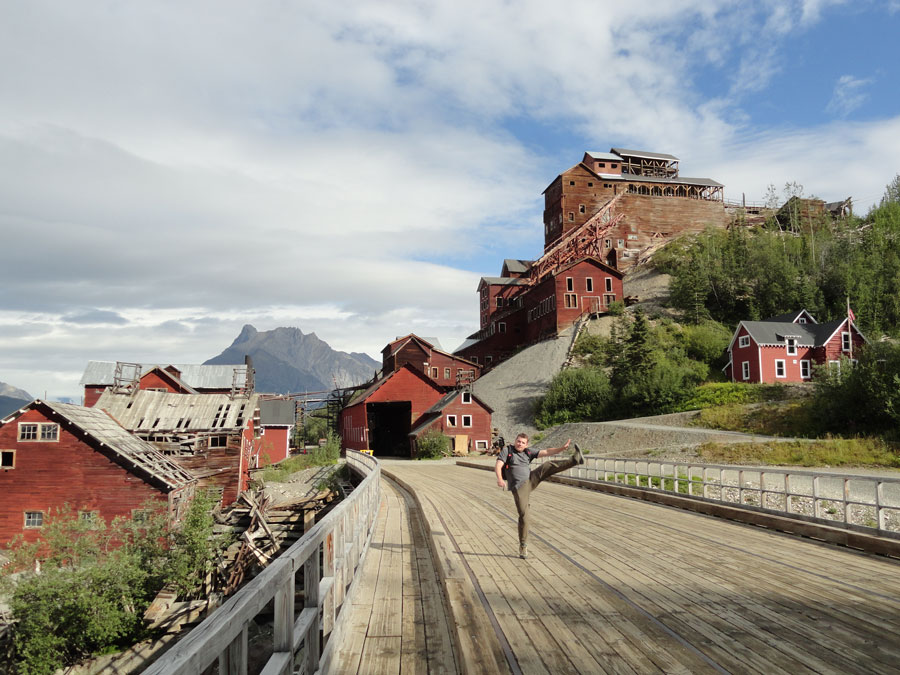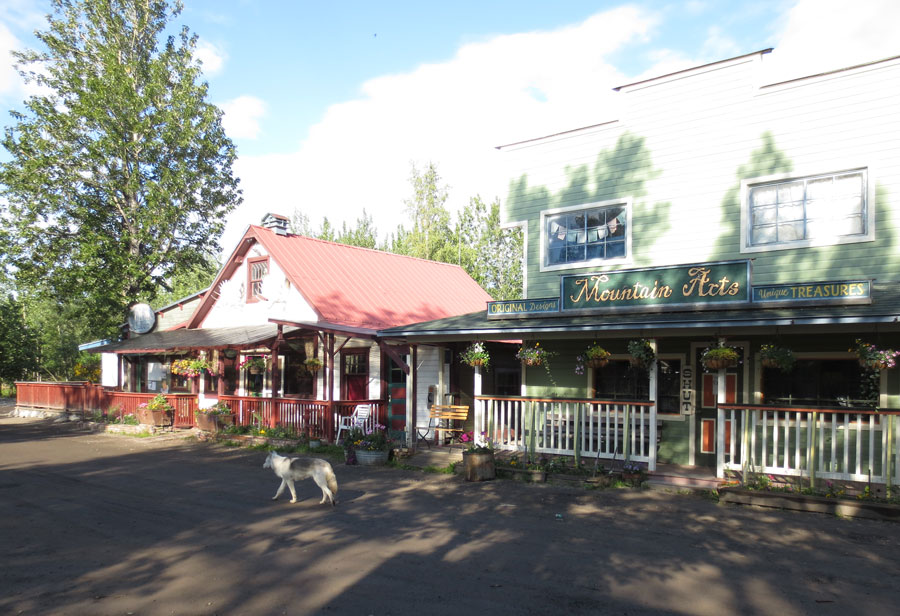
Kick of the Week: Skagway, AK

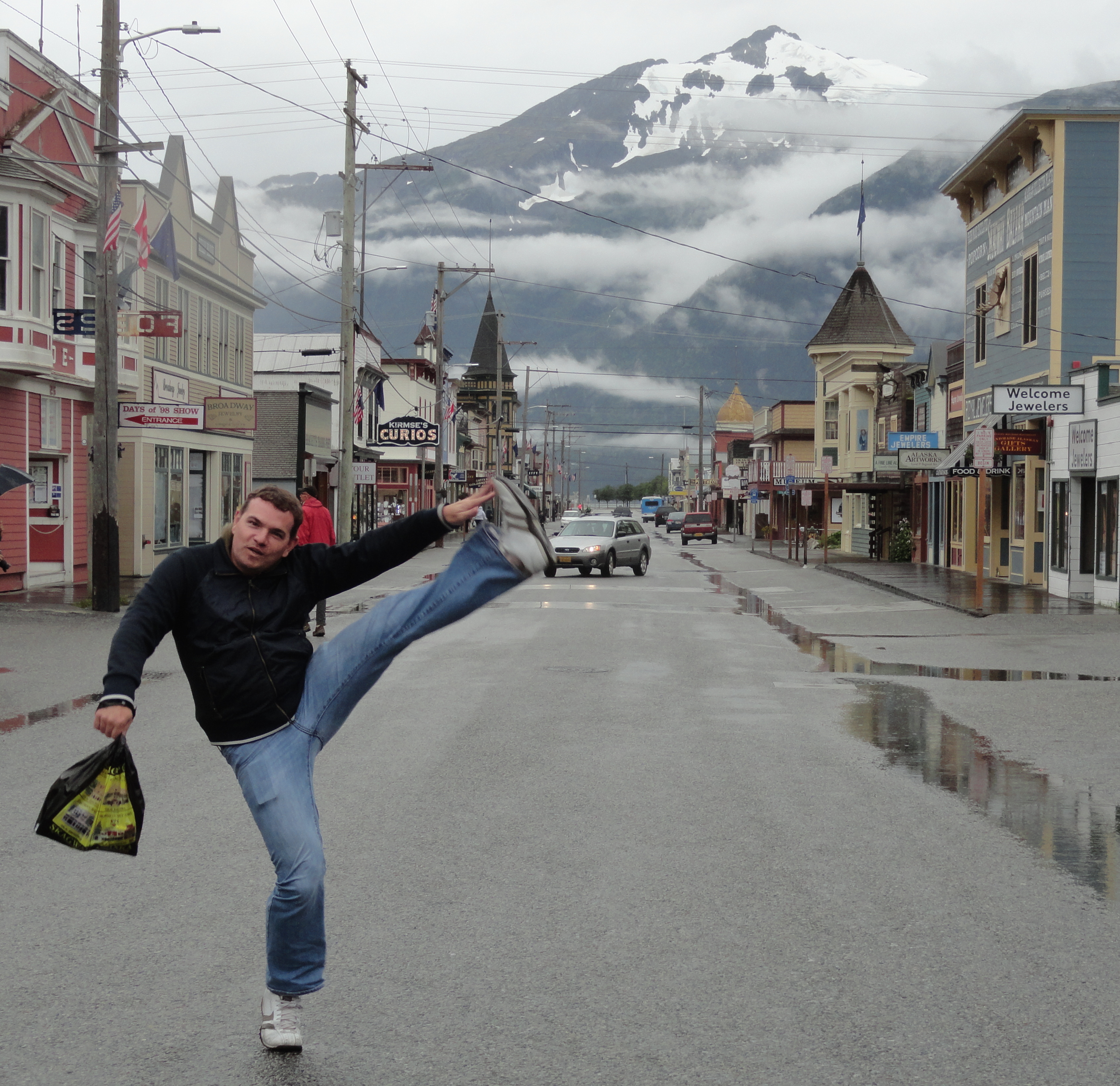
Broadway, Skagway, AK - August 2014

Broadway, Skagway, AK – August 2014

Our favorites:
See: Historic Skagway buildings on a ranger-led tour of the Klondike Gold Rush National Historical Park.
Do: Ride the White Pass & Yukon Route train to the Canadian border and back.
Do: Visit the Skagway City Museum (artifacts and displays of Native American and Gold Rush local history)
Eat (dinner): Olivia’s Bistro (most produce is from their garden; bacon-wrapped caribou medallions were a standout)
Eat/Drink: Skagway Brewing Company (try the Spruce Tip beer!)
Stay: Sgt. Preston’s Lodge (located in historic district; reasonable rates; complimentary shuttle to and from ferry; luggage storage)

Posted in High Kick Photos | Tagged , , , , , , , | Leave a comment

National Park Kick: Mammoth Cave


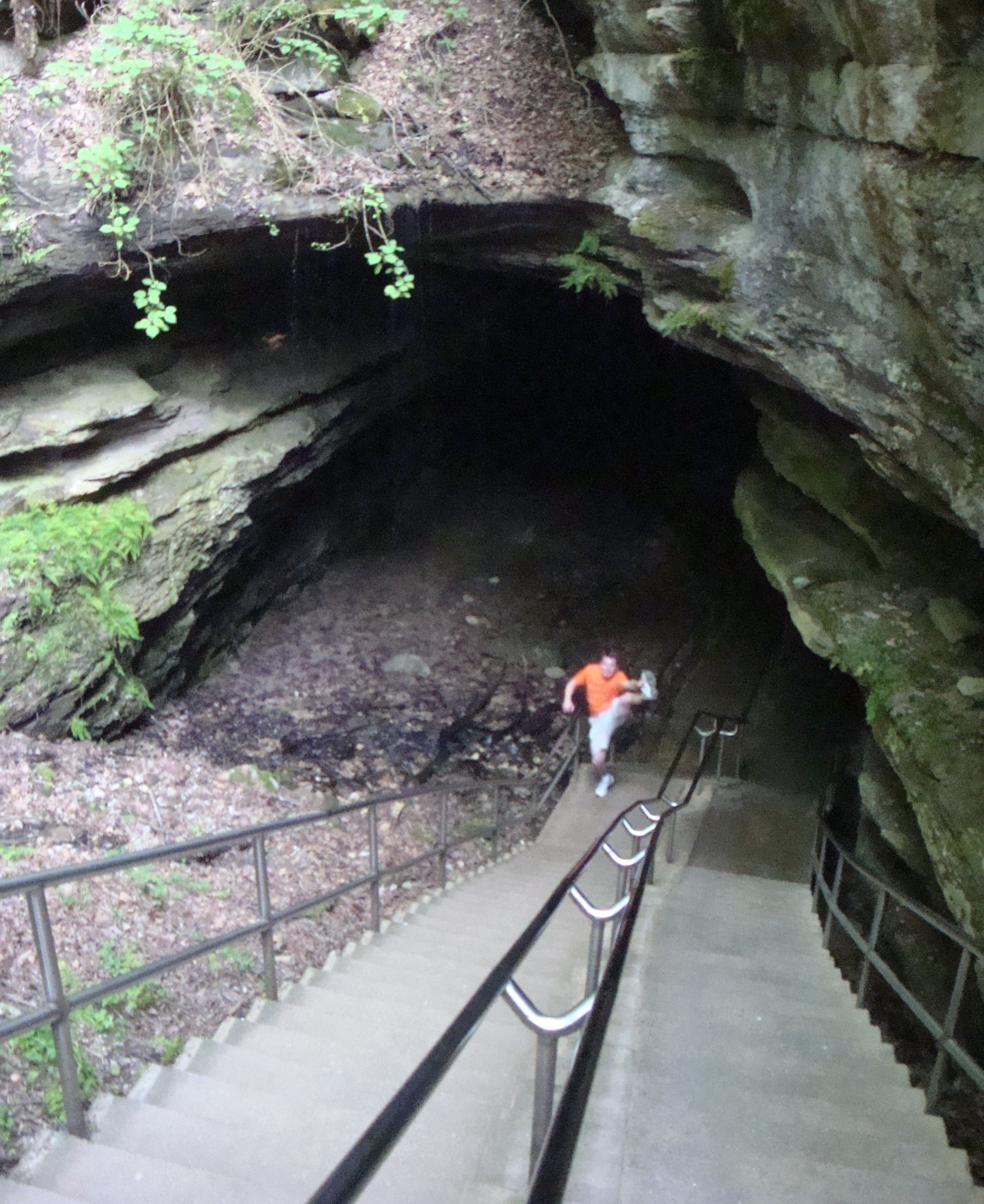
Historic Entrance, Mammoth Cave National Park, KY - May 2010

Historic Entrance, Mammoth Cave National Park, KY – May 2010

Kentucky’s Mammoth Cave is the world’s largest known cave system with more than 400 miles explored and more being found every year. The park is located in the hilly Green River valley just 1.5 hours south of Louisville and 45 minutes northeast of Bowling Green.

As the weather turns colder, it’s nice to know that the temperature inside Mammoth Cave remains a near-constant 54 degrees, making the park a year-round destination. A winter visit inside the cavern would be no different than a summer visit, with the exception of much smaller crowds. Obviously the main attraction is the cave tours and there are many to choose from, exploring different sections or historical aspects of the cave complex. All cave tours are led by a park ranger who stops throughout to give informational talks. When we visited, we opted for the New Entrance (now renamed Domes and Dripstones) and Violet City Lantern tours. Highlights of the New Entrance tour were the Grand Ave and Frozen Niagara sections of the cave, and a moment of total darkness during the ranger talk. The Violet City Lantern will appeal to visitors who want a historical experience. The park ranger impersonates a variety of characters from the cave’s past as you explore by oil lantern light.

The most convenient place to stay is the Mammoth Cave Hotel, the only in-park lodging option other than camping. For traditional hotel accommodations the Heritage Trail Rooms will do, although we found the Hotel Cottages provided a more unique experience – the solitude of a cabin in the woods with the convenience of being walking-distance from the visitor center and hotel restaurant. Additional eating options can be found in nearby Cave City.
Note: the counties surrounding the park are “dry” so establishments do not sell any alcohol. Plan ahead and bring your own for those night caps!

In addition to the cave itself, there are nearly 84 miles of trails in the park. Make sure to allow time for some above-ground exploration.

Posted in Destinations, High Kick Photos | Tagged , , , , | Leave a comment

Kick of the Week: Cleveland, Ohio

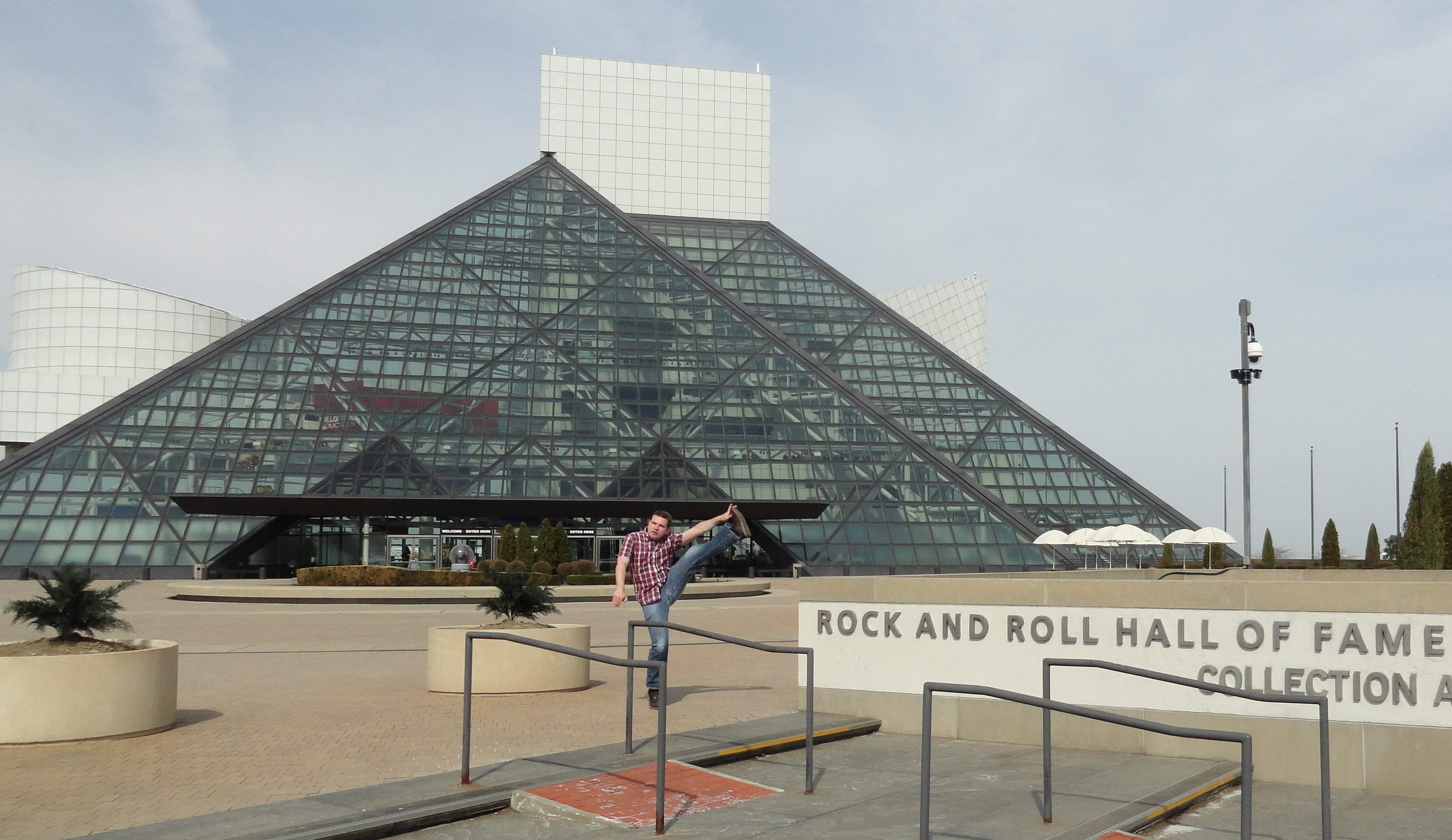
Rock and Roll Hall of Fame and Museum, Cleveland, Ohio - April 2014

Rock and Roll Hall of Fame and Museum, Cleveland, Ohio – April 2014

Last spring we stopped in Cleveland on our return trip from Washington, DC. With a variety of good eating and drinking options and quality museums, Cleveland made for a nice overnight stop to break up the drive. We arrived on Easter Sunday, not realizing how much would be closed – something to remember when planning future trips. We still found some tasty pub fare and home-brews at the Market Garden Brewery in the Ohio City neighborhood.
The next morning we grabbed coffee and pastries at Phoenix Coffee Company, a local chain of coffee shops, and headed to the Rock and Roll Hall of Fame and Museum. With its expansive collection of artifacts and interactive displays, this museum is a must for any music lover! The self-guided exhibits are organized chronologically, covering the last century of music in the United States. Although you could stay here all day, allow a good 2 to 3 hours to explore the museum.
After a brief walk around the downtown area we headed to the Greenhouse Tavern for lunch (including some outstanding poutine!) before setting off for Chicago. A mere 10 miles from Cleveland lies Cuyahoga Valley National Park, which we visited in August 2010. Had we had more time we would have loved to return there for a brief hike.

Posted in High Kick Photos | Tagged , , , , | Leave a comment

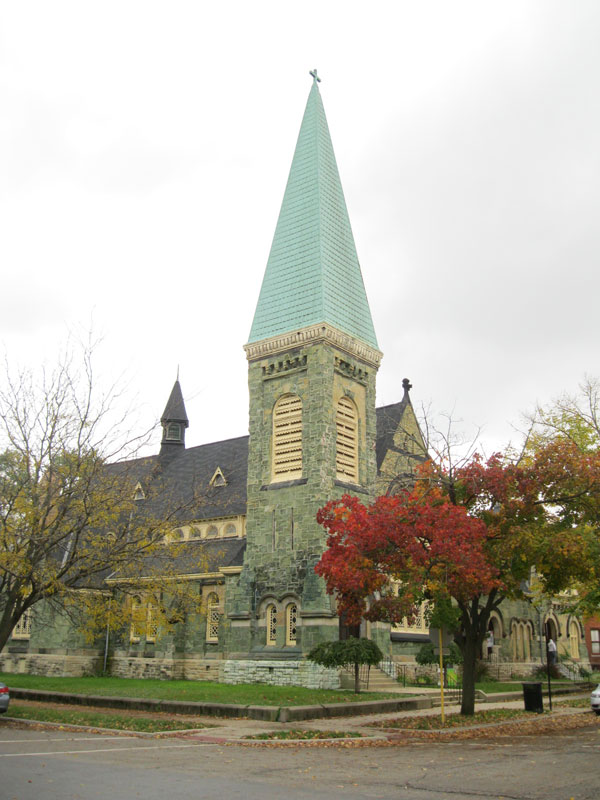
Kick of the Week: Pullman Neighborhood, Chicago

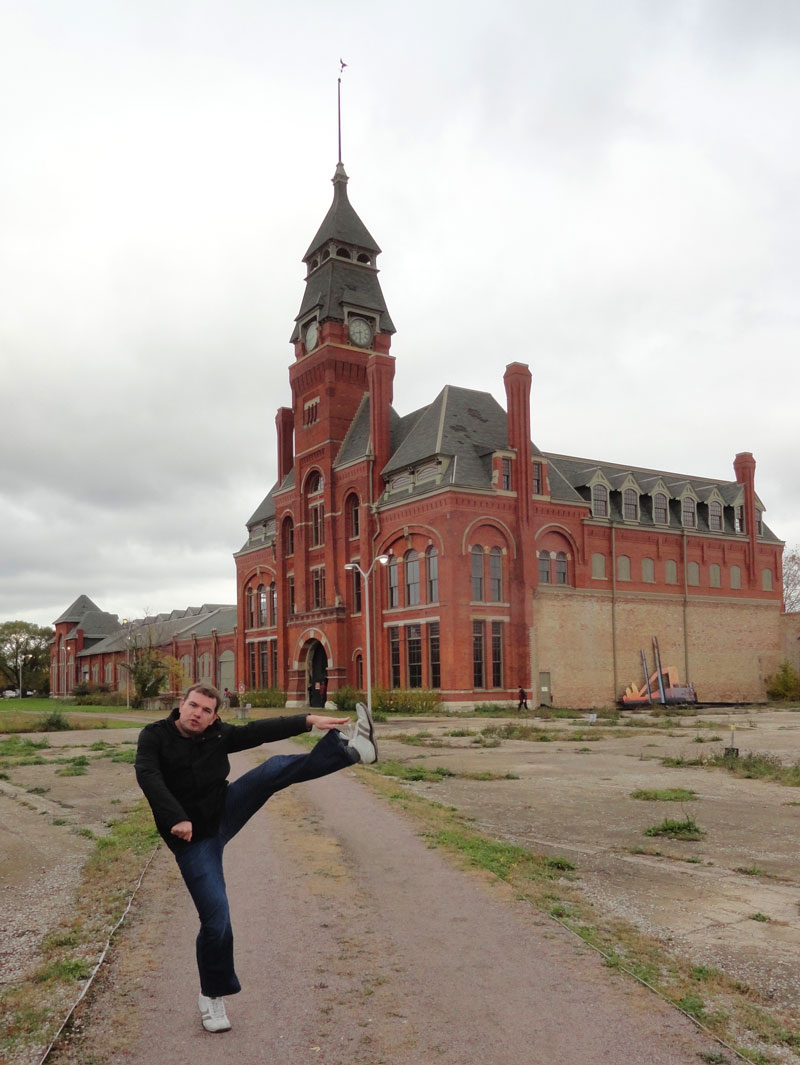
PullmanFactory

Pullman clock tower and factory.

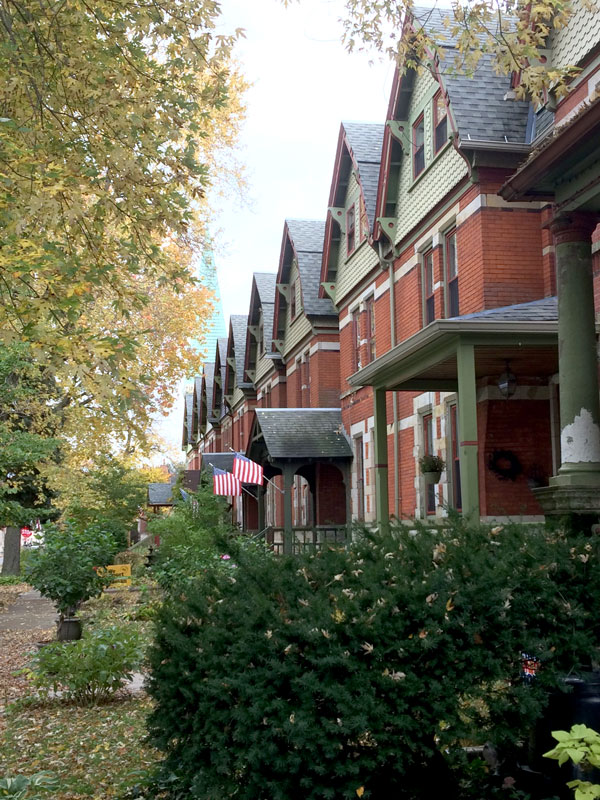
During this year’s annual Open House Chicago event (October 18-19, 2014), we took a trip to the far South Side to visit the Pullman Historic district, site of the first planned company town in the United States. It was envisioned by George Pullman as a place where his rail car company employees could live near the factory. He believed happy employees were loyal, hard-working employees, so he hired architects to turn his idea into reality with beautiful housing and spacious parks. In 1896 Pullman was even voted the “World’s most perfect town” at the Prague International Hygienic Exposition. The dream lasted only a few decades though, with the housing becoming privately owned in the early 20th century and eventually the whole town being incorporated into the expanding city of Chicago. After demolition threats in the 1960s, strong neighborhood preservation efforts have stabilized and improved the neighborhood and helped it achieve landmark status at federal, state and city levels. Today it feels more like a quaint small town than a neighborhood within the country’s 3rd largest city. Major buildings have been restored and the Historic Pullman Foundation operates an on-site visitor center.

We especially wanted to visit because the neighborhood is in the process of applying to be a branch of the National Park Service. If all goes well, it will become the 402nd unit and would most likely receive the designation “Pullman National Historical Park.” While in the area, you can also check out the Argus Brewing Company for some post-exploration beverages.

PullmanChurch

Greenstone Church.

PullmanHouses

Pullman housing.

Posted in Destinations, Travel Resources | Tagged , , | Leave a comment

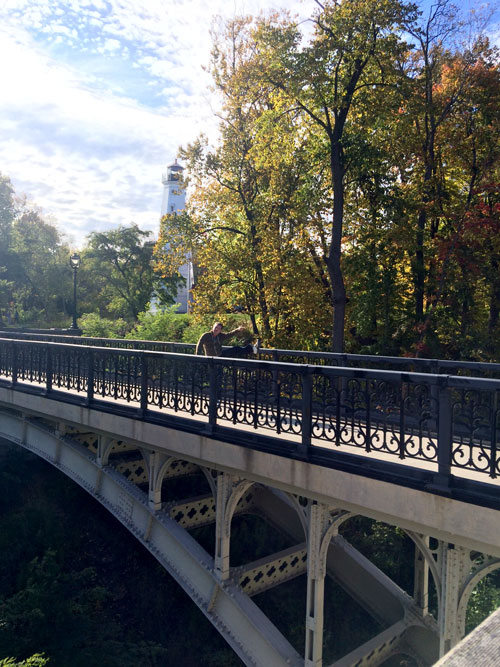
Kick of the Week: Milwaukee 2014

Lake Park, Milwaukee, WI - October 2014.

Lake Park, Milwaukee, WI – October 2014.

In what’s becoming a yearly pilgrimage, we spent the Columbus Day weekend in our favorite weekend getaway city, Milwaukee. Each time we go, we like to check out some new sights, so here’s what we’re adding to our recommended list for 2014. View our previous visits below the list:

Eat: (Brunch) Honeypie Cafe. Bloody Marys and brunch casserole, say no more.
Eat: (Dinner) Goodkind. Fantastic cocktails and dinner.
Drink: Brenner Brewing. Casual tour and great beers in Milwaukee’s newest craft brewery.
See: Frank Lloyd Wright’s American System-Built Homes. Experience FLW’s vision for affordable, prefab housing with high design. Only 13 still exist and 6 of them are side-by-side on Burnham Ave. “Wright In Milwaukee” is currently rehabilitating one duplex and has purchased two more homes for future restoration. 2nd & 4th Saturdays of each month 12:30-3:30, $10 per person.
See: North Point Lighthouse. Climb the 74 foot lighthouse tower and tour Great Lakes maritime exhibits in the keeper’s home. Located in beautiful Lake Park.
Do: Mitchell Park Conservatory Domes. View indoor garden exhibits inside three giant glass-enclosed domes. One features tropical plants, one desert plants and the third houses rotating show exhibits.
Do: Milwaukee County Zoo. Probably the best collection of animals and habitats we’ve seen in a zoo. Easy 15 minute drive west of downtown.
Stock Up: Woodman’s Market right off I-94 near Kenosha has a huge selection of beer including New Glarus and Alaskan (neither is available for sale in Illinois).

See our previous Milwaukee picks by year:
2011 |  2012  |  2013

Posted in High Kick Photos | Tagged , , , , , | Leave a comment

Alaska Part 5: Skagway and the Alaska Marine Highway

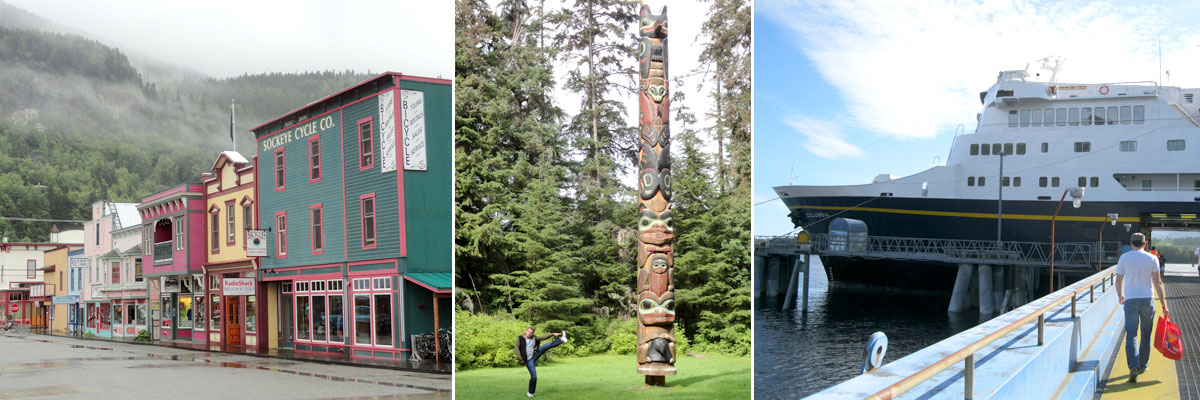
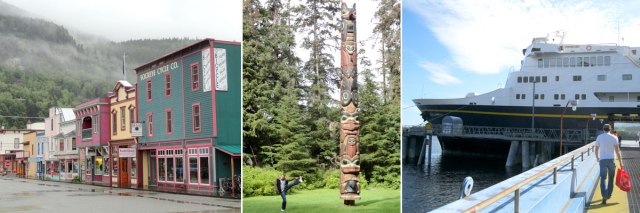
Broadway Street in Skagway, Totems in Sitka and the Columbia docked in Ketchikan.

5th Avenue in Skagway, Totems in Sitka and the Columbia docked in Ketchikan.

Getting there: We arrived in Skagway via the Alaska Marine Highway vessel Malaspina, a 5.5 hour ride from Juneau. A couple of small, local airlines operate flights to Skagway and it is also connected by road to Whitehorse in Canada’s Yukon Territory. The vast majority of visitors arrive by giant cruise ship, and that is a shame.
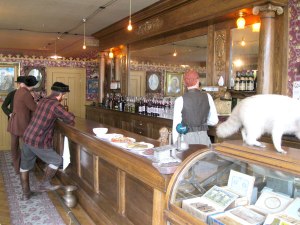
The historically restored Mascot bar in Skagway.

The historically restored Mascot bar in Skagway, complete with mannequin drinkers.

Skagway is located in a narrow valley in the most northern fjord of the Alaskan portion of the Inside Passage. It is known as the “Gateway to the Klondike” for the prominent role the location played in the 1898 gold rush. Prospectors arrived by boat from points south and set off over land to the gold fields in the Yukon Territory. As a result of all the activity, Skagway boomed to a maximum population of 30,000. Today it’s considerably sleepier with just over 900 year-round residents. Population doubles in the summer tourism season and on days when there are multiple cruise ships in town there can be an influx of thousands more. Much of the town and surrounding area is preserved as part of Klondike Gold Rush National Historical Park. The main business strip along Broadway street is mostly historic (or at least historically accurate) buildings. Many have been purchased by the National Park Service to be restored and used as interpretive displays, while others are rented to local businesses. Sidewalks are of the wood plank variety, which is great for old-timey feeling, but not so good for tripping hazards. The overall effect is an authentic atmosphere, and while there are still plenty of jewelry and souvenir shops, they are more tastefully done here and had overall higher quality offerings. (Especially Sevigny Studio Southeast where Nick bought a cool piece of metal moose artwork and I bought a kick-ass moose hoodie.)

Because of Skagway’s large tourism industry, there is an impressive number of places to eat and drink for such a small town. Plenty of cafes line Broadway with breakfast and lunch options; Sweet Tooth Cafe was a favorite. You can also eat at the famous Red Onion Saloon at the foot of Broadway, but we just stopped in for a beer. One of our most memorable meals in all of Alaska was at Olivia’s, where we ate delicious bacon-wrapped Caribou medallions. After hours, the town empties out and we found ourselves the only people within sight after 9:00pm. We finished both evenings with beers at the open-late Bonanza Bar & Grill, where we were introduced to Skagway Brewing Company’s Spruce Tip Blonde, one of my favorite Alaskan discoveries. It’s a delicious nod to history, as the fresh buds of spruce trees were known to prevent scurvy (turns out they’re high in vitamin C). Natives shared this information with the recent American arrivals and taught them how to brew a spruce tip tea. The prospectors mainly heard the word “brew” and the rest is history. It’s a unique blonde, a bit citrusy and slightly like an IPA but without the bitter aftertaste.

Sergeant Preston’s Lodge was our hotel for two nights. The rooms are large and they provide free rides to and from the ferry terminal (when was the last time you rode in a Ford Aerostar?) as well as a place to stash your bags between check out and your ship departure time. The location is central, so the whole town is walkable from there.
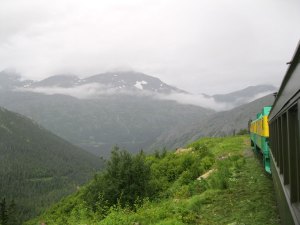
White Pass and Yukon Railroad clings to the side of steep mountains.

White Pass and Yukon Railroad clings to the side of steep mountains.

Skagway’s most popular tourist attraction is the White Pass and Yukon Railroad, an International Historic Civil Engineering Landmark. It was built over difficult terrain in just over two years to ease passage of prospectors and equipment over the White Pass to Dawson City and the gold fields 500 miles north. Unfortunately, by the time the railroad was in operation in 1900, the gold rush was already mostly over. The route did become an important freight transportation link between the Yukon Territory and the port at Skagway, but it eventually went out of business in 1982. Since 1988 it has operated purely as a scenic railway, carrying passengers from Skagway to as far as Carcross, Yukon. Nearly 400,000 passengers take a ride each May to September season. We selected the White Pass Summit excursion that goes just across the border into Canada. It is a 3.5 hour, 40 mile round-trip that ascends 2,865 feet and passes through two tunnels and crosses several bridge trestles and cascading waterfalls. A narrator on board explains the history and calls out sights as they pass by. Even on our somewhat overcast day there were amazing views down into the valley and up into the towering mountains and glaciers. Toward the summit you can look into a ravine and see the Trail of 98 still visibly worn into the rocks by prospectors’ boots. An obelisk marks the Canadian border at the summit and then the engines switch to the other end of the train to carry the passenger cars back to sea level. There’s also a steam train excursion for an even more retro experience.

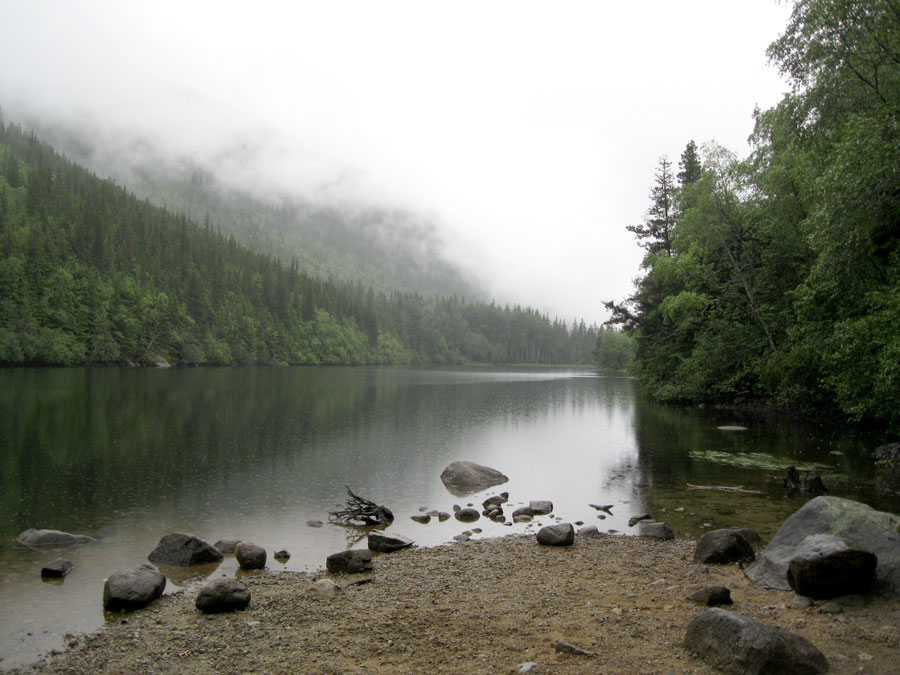
Lower Dewey Lake on a  misty afternoon.

Lower Dewey Lake on a misty afternoon.

The Skagway area offers more hiking than we realized ahead of time. Access is easy, with several trailheads right at the edge of town. We hiked up to Lower Dewey Lake and around the circumference for a total distance of 4 miles. It’s a nice, scenic trail through thick woods, and the elevation gain is only around 500 feet, so it’s fairly easy. Taking the same trail farther eventually leads to Upper Dewey Lake and Devil’s Punchbowl, another 3,800 foot climb. We also hiked a couple miles to Yakutania Point and Smugglers Cove, an easy walk with little elevation gain but some nice views from water level. Those looking for a tough multi-day backpacking adventure can take the infamous 33-mile Chilkoot Trail from the former townsite of Dyea over Chilkoot pass to Lake Bennet, British Columbia. Keep in mind that it has been referred to as the “meanest 33 miles in history” though.

We took in plenty of entertainment while in Skagway, heading to the National Park visitor center’s auditorium multiple times for ranger presentations and movies. In addition to the introductory film, “Gold Fever: Race to the Klondike,” we watched “The Meaning of Wild,” a documentary created in honor of the 50th anniversary of the Wilderness Act. Ranger-led walking tours also leave from this building. Each ranger chooses his or her own focus topic and leads guests on a walk around town. Our ranger’s topic was gardens, as we learned that Skagway was and is known as Alaska’s Garden City because of its favorable growing conditions for vegetables and flowering plants. Residents in the early 20th century advertised beautiful gardens to attract visitors (after the gold rush economy had collapsed) and the tradition remains today, with gardens visible in many yards and public areas around town. There was also a great program about the music of the gold rush era, where we learned about the role music played in prospectors lives and what songs were popular. The ranger performed them on recorder and accordion. On our last night in town we got an extra special treat when local celebrity singer/songwriter Steve Hites did an hour-long show that he usually only performs on board the cruise ships. Since all the ships had left town already, we were left to enjoy it with an audience primarily of park rangers and local residents. After that it was time to board a ship of our own, the M/V Columbia for the long trip south to Bellingham, Washington.

While most visitors experience the Inside Passage region by booking a cruise, we went the do-it-yourself route and Nick invented our own itinerary using the Alaska Marine Highway system. I can’t recommend this travel method highly enough. We were able to spend more quality time exploring the towns of the inside passage than if we were being herded off and on a ship in time for the dinner buffet. It was also a bonus to experience places like Juneau and Skagway during the hours when there were no ships in town, it felt much more genuine. When locals would ask “What ship are you on?” and we answered that we had come in on the ferry, they were impressed; instant Alaskan street cred. The Marine Highway takes more effort to figure out a workable itinerary, but the benefits are well worth the time. In 2005 the Marine Highway routes were designated an “All American Road.”

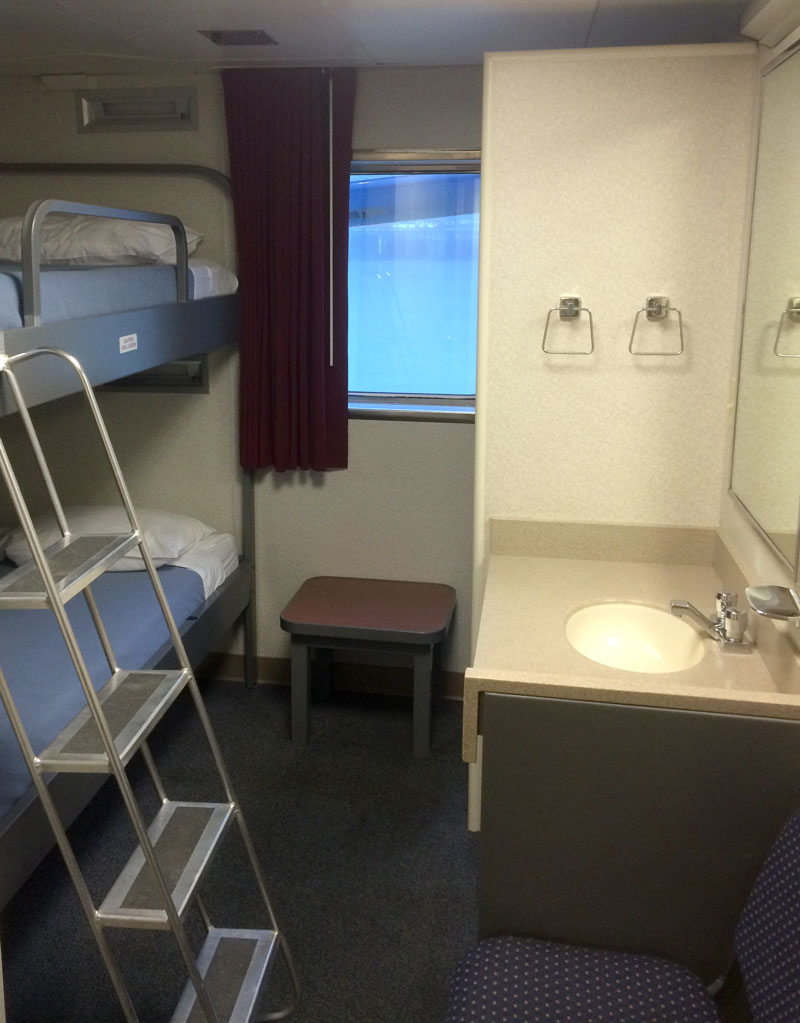
Our cabin on board the Columbia.

Our cabin on board the Columbia.

The fleet is made up of 11 ships ranging in capacity from 150 to 500. We took the smallish LeConte from Glacier bay to Juneau, the bigger Malaspina from Juneau to Skagway and the flagship Columbia for the 4-night journey from Skagway to Bellingham, Washington. For our first two ferry legs (5 or 6 hours each) we checked our luggage and passed the time in the observation lounge or cafeteria. For our long journey on the Columbia we rented a state room that provided us a decent set of bunk beds and a private bathroom that included a surprisingly large shower. More adventurous folks can opt to pitch a tent and sleep on designated areas on the back deck. Interesting, but not our style. We passed most of the time relaxing in observation lounges, drinking in the fantastically 70’s cocktail bar, catching a documentary in the movie lounge or just enjoying the sunshine and cool breezes on the outer decks.

There are two dining options on board, a snack bar for light bites or daily specials and the dining room that offers restaurant-style meals with a server. The cocktail lounge doesn’t have an extensive booze selection, but anyone should be able to find something to imbibe, and with pitchers of Alaskan Amber going for $18 we had no complaints. The bar decor is straight out of 1974, it is actually so outdated that it’s cool again. Flocked wallpaper and gold mirrored ceilings? I’ll drink to that. One interesting fact is that since the employees on the ship are state employees, they are not allowed to accept tips. Also there is no state tax, so that $18 pitcher of beer costs you exactly $18, no odd change required. Do keep in mind that you are on what amounts to Alaskan public transportation, so while the service is generally good, these are not luxury liners. Adjust your standards accordingly.

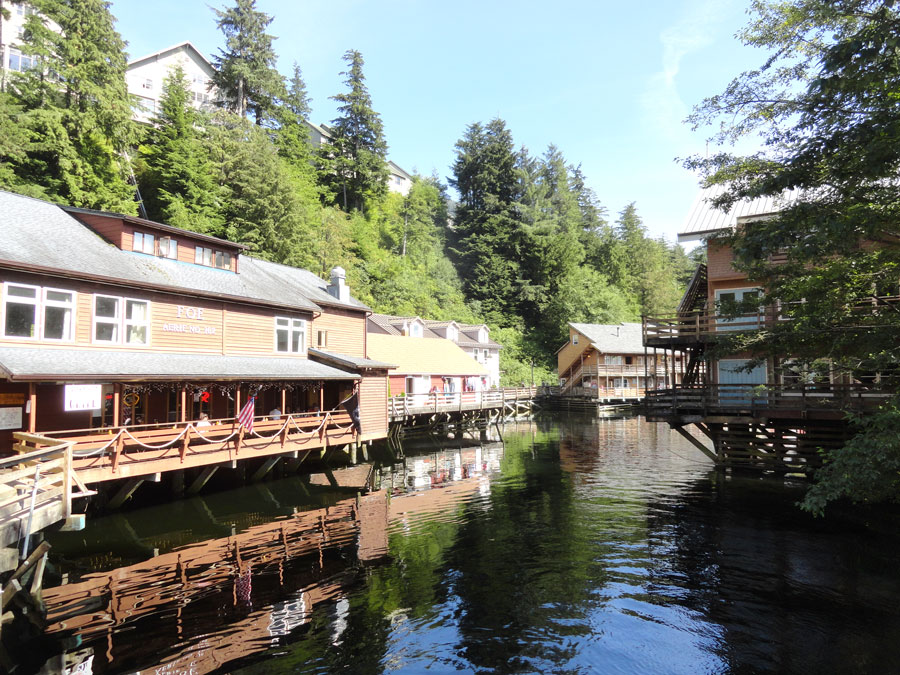
Creek Street in Ketchikan.

Creek Street in Ketchikan.

Between the Monday night departure from Skagway and the Friday morning arrival in Bellingham, the Columbia made scheduled stops in Haines, Juneau, Sitka, Petersburg, Wrangell and Ketchikan. Only Sitka and Ketchikan were long enough for us to disembark and poke around town a bit. At Sitka, bus companies meet the arriving ferries at the dock and offer rides downtown for $10. Our entertaining guide was a local of Tlingit descent who gave us lots of information about the town and what it was like growing up there. He dropped riders at either the center of town or a mile farther at the Sitka National Historical Park. We chose the latter to stroll the Totem Walk to see the huge collection of totem poles. From there we went back downtown on foot to see the Russian architecture of St. Michaels Cathedral and the view from Castle Hill, site of Tlingit and Russian forts and where Alaska was formally handed off to the United States in 1867. Unfortunately our Sitka time was very brief and we were quite rushed to see what we did, but the town has a lot to offer and would definitely be worth a longer visit. In fact, it was the territorial capital before Juneau under both Russian and American rule. The following day in Ketchikan, Alaska’s fourth-largest city, our stopover was a bit longer allowing us to explore a little more. We caught a cab downtown and checked out the Creek Street district, which was formerly the town’s red light district but now is full of some nice souvenir and art shops. Just up the hill, we witnessed salmon swimming upstream to spawn in Ketchikan Creek and then a short walk through town brought us to the central plaza along the waterfront with its sculpture commemorating the towns differing eras of settlers. Another place that would be worthy of more time.

Perhaps the most awe-inspiring thing about floating through the inside passage is the fact that you go hours at a time without seeing any sign of human development. You look at the shore and you see only trees and mountains, no roads, no houses, no cell phone towers, just nature. It’s great to be reminded that there are still places so untouched. For the most part, you are cut off from civilization unless you’re near enough a town to receive a cellular signal. While traveling through Canadian waters, we spent a day and a half with no connection to the outside world at all. That evening the Columbia sailed alongside a pod of killer whales, checking off yet another unforgettable wildlife experience. No place in the Lower 48 will ever feel wild again. We must return.

Part 1: Seward and Kenai Fjords
Part 2: Denali National Park
Part 3: Wrangell-St. Elias National Park
Part 4: Glacier Bay and Juneau

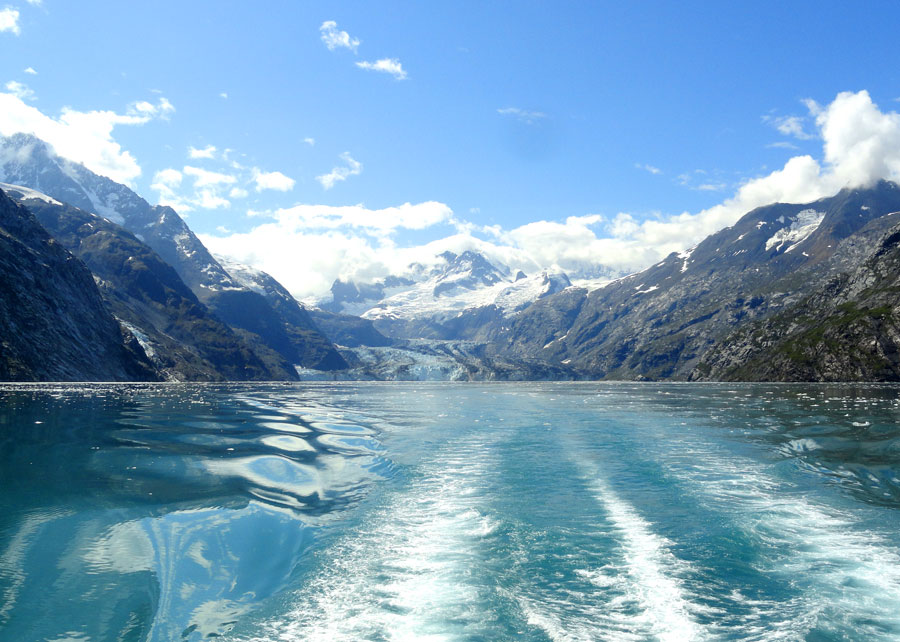
Parting shot.

Parting shot.

Posted in Destinations, Travel Resources | Tagged , , , , , , , , , , , , | 4 Comments

Alaska Part 4: Glacier Bay and Juneau

Arriving in style, Glacier Bay Lodge, Mt. Roberts Tramway above Juneau.

Arriving in style.  Glacier Bay Lodge.  Mt. Roberts Tramway above Juneau.

Getting there: Alaska Airlines operates one flight daily to Gustavus, the gateway to Glacier Bay National Park. In the most unusual flight experience we’ve ever had, we boarded a 737 with fewer than 20 passengers for a 13-minute flight that topped out at 4,000 feet. We descended stairs directly onto the tarmac and picked up our luggage without going indoors. It felt like a private jet, normal air travel is ruined forever. The only other way to arrive is by boat. We used the Alaska Marine Highway system with twice-weekly ferry service to/from Juneau. Cruise ships and charter boats can also get you access to the park. Either way you arrive, shuttles will deliver you to the lodge/visitor center 10 miles away in Bartlett Cove.

Glacier Bay National Park preserves 3.3 million acres of mountains, glaciers, rainforest and deep fjords. Just 250 years ago the entire area was filled with a massive tidewater glacier that had advanced during the “Little Ice Age” between 1550 and 1850. By the time John Muir arrived in 1879 it had pulled back 40 miles. Currently it has retreated 65 miles up into its gorge, exposing new land as it goes and providing the perfect location for scientists to witness the process of plant succession. The small remnants of that enormous glacier can now be seen flowing down from mountaintops into the water of Glacier Bay. The park is like a living lab for climate change, with some glaciers retreating still further, while a few others (mostly on the West side of the park) are holding steady or advancing.

johnshopkinsinlet

On board the Baranof Wind in Johns Hopkins Inlet.

Since the park is primarily made up of water, almost all visitors see the park from a boat. Giant cruise ships can come into the bay on a limited basis, but the best way to experience the park is the daily 8-hour wildlife and glacier watching boat cruise. Once a day during summer the Baranof Wind cruises 65 miles up into the bay, passing popular animal hangouts and pausing at one of the active glaciers (Johns Hopkins or Margerie depending on the day). On our tour we witnessed humpback whales, brown bears, mountain goats, sea lions, harbor seals, sea otters, countless birds and one napping wolf. Ranger Jeanine provided informative commentary and wildlife spotting duties, while the boat crew kept us caffeinated and fed. One deckhand even fished an iceberg out of the bay so we to could touch the 250 year old glacier ice. For me the best part was when the boat parked near the head of Johns Hopkins glacier. For an hour we drifted silently watching giant chunks of ice calve off the 250-foot high glacier wall. Each piece that fell slammed into the water with enough force that it sounded like thunder and sent waves that rocked the boat a mile away, it was awesome.

Hiking opportunities are limited for average guests. There are four easy, flat trails near the main visitor center and lodge at Bartlett Cove. We walked the Forest Trail loop and parts of the Beach, Tlingit and Bartlet River Trails. The rest of the park has no roads or marked trails at all, so unless you’re up to date on your wilderness survival training, venturing into these areas is probably best done with a guide company to handle the logistics. With adequate time and ambition it would be an amazing way to experience the park for serious backpacking, camping and mountaineering. Another popular activity in Glacier Bay is sea kayaking, which we would have loved to do, but the timing didn’t work out. Kayaks can be rented by the day or the half day, or the adventurous can kayak for days and camp along the shore at night. The Baranof Wind sightseeing boat can be arranged to make pickups at remote locations.

Sunset reflected on Bartlett Cove from the deck at Glacier Bay Lodge.

Sunset reflected on Bartlett Cove from the deck at Glacier Bay Lodge.

The Lodge at Glacier Bay is an ideal hotel option because it is the only non-camping lodging within the park and offers all guest services, dining and the visitor center in one central location. The cabins are modern and comfortable with resident porcupines providing entertainment along the connecting boardwalks. The main building houses the restaurant where you will most likely be eating all of your meals. Dinner options were tasty, there is a breakfast buffet in the morning and the back deck is a great spot to have an Alaskan Amber Ale and watch the sun set over the water. Nightly ranger talks in the upstairs auditorium were both informative and entertaining as each ranger presents his or her own program including scientific information as well as personal stories about living and working in Glacier Bay. Fun fact: The town of Gustavus has a population of 400 people and 400 moose. After our two nights in the park it was time for our first voyage on the Alaska Marine Highway, a 5-hour ferry ride from Gustavus to Juneau.

Evening in downtown Juneau.

Peaceful evening in downtown Juneau.

Alaska’s capital city is appropriately quirky. Home to about 32,000 people, it is the 6th smallest state capital in the U.S. and has no road connection to, well… anywhere else. This is becoming a theme in southeast Alaska. Juneau has been the political center since 1906 when the territorial capital was moved from Sitka. Since statehood in 1959 it has survived multiple attempts to move the government to “mainland” Alaska nearer the majority of the state’s population, but for the time being its status appears to be safe.

The ferry terminal is located about 10 miles north of downtown Juneau, as is the airport, so a cab or shuttle is necessary to get to the center of town. Our hotel, the Driftwood Lodge offered a free shuttle with a cranky driver who got us there in one piece, if just barely. The hotel is centrally located for walking to any destination in downtown Juneau and had the best wifi signal we’d experienced in a couple weeks. The room was a two bedroom suite with a living room and mini kitchen, and for people who have been fishing they offer freezer space, because apparently that’s a common requirement in Alaska.

Much of the main drag along Franklin Street is unfortunately devoted to the typical souvenir and jewelry shops catering to cruise ship passengers’ style. We found that by staying just a few blocks farther north and slightly uphill, we lost that crowd and were able to find some great local dining options. We had a wonderful dinner at the upscale restaurant Salt that specializes in creative Alaskan cuisine. They were even featured recently on the show Brew Dogs for their quality beer list. Another great dinner experience was Rookery Cafe, with a more casual atmosphere, but equally unique food. They also get bonus points for having an awesome logo. For pastries and coffee in the morning the locally-loved Heritage Coffee (5 locations around town) hit the spot. In the evening the historic Alaskan Hotel and Bar was a popular watering hole for locals and tourists alike. It has made several appearances on Esquire’s “Best Bars in America” list for its live music, fascinating clientele and Victorian era decorating. It’s a nice dose of authenticity on a stretch of Franklin Street more dedicated to selling tchotchkes.

State capitol undergoing renovation.

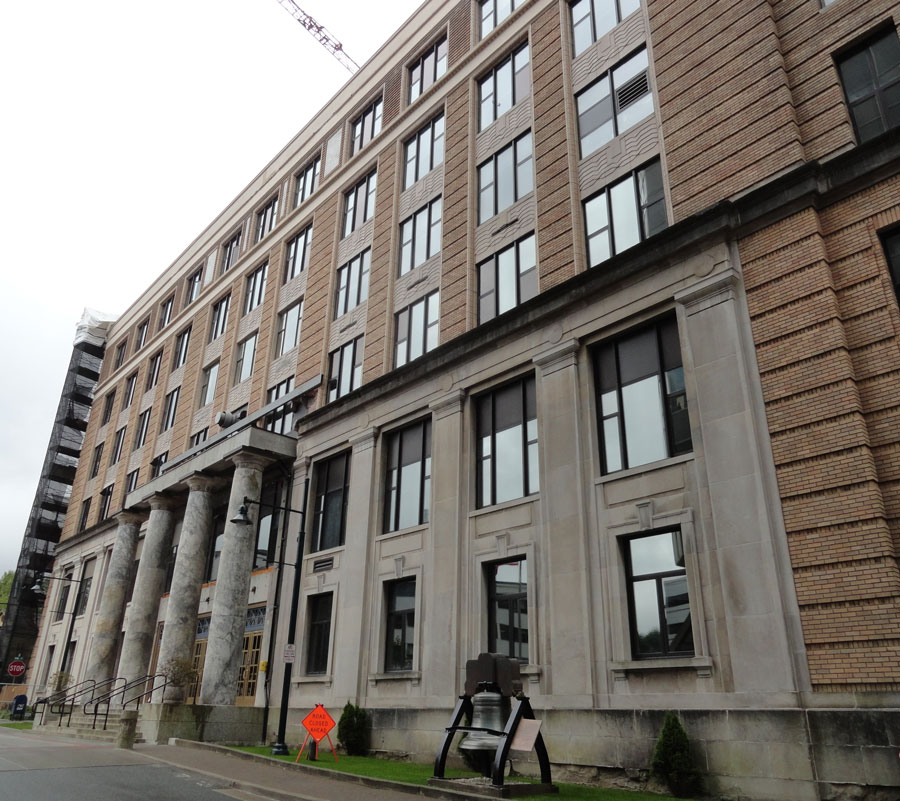
Alaska’s state capitol is currently undergoing renovation.

One morning we stopped by the state capitol building to have a look. The building was built in 1929 as a territorial office building and became state capitol in 1959. It’s non-traditional by American standards because unlike most state capitols it has no dome. It is basically a six story office building with Art Deco detailing. In typical Alaskan fashion there was no line, no security check and no metal detectors. A friendly young man offered us a tour and immediately took us upstairs to begin. We learned a lot of additional facts about the state and its history and were even able to step right into the House of Representatives chamber. It was rather quiet that day as the legislature is only in session from January through April (Alaskans are busy people). One interesting governmental fact we learned is that their representatives are required by law to vote for bills with a yes or a no. If a lawmaker tries to skip out on a vote, they send the state troopers after them. They don’t mess around.

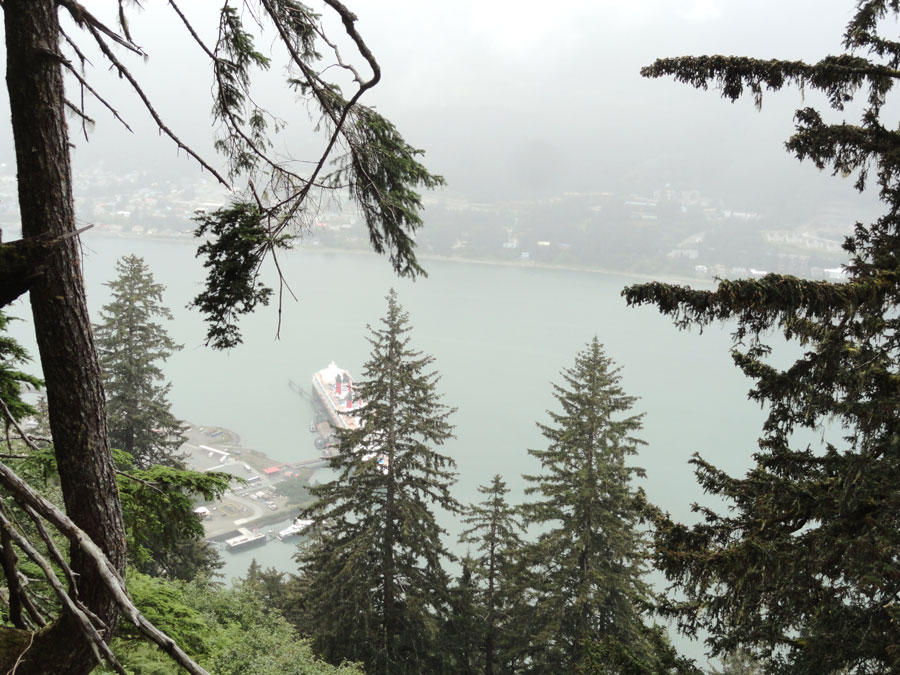
Looking down at the Gastineau Channel from the Mt. Roberts Trail.

Looking down toward Gastineau Channel from the Mt. Roberts Trail.

One of the busiest tourist attractions in Juneau is the Mt. Roberts Tramway located just south of the downtown area near the cruise ship docks. The tramway was completed in 1996 and takes visitors to an overlook 1,800 feet above the city on one of the most vertical cable tramways in the world. At the top is a restaurant, nature center, gift shop and a theater showing a movie on native Tlingit culture. Naturally, we don’t like to do things the easy way, so we decided that instead of paying $32 to ride up in comfort, we’d hike up the steep Mt. Roberts Trail instead. One minute you’re walking down a city street, the next you’re climbing a mountain, it’s pretty cool. We enjoyed lunch at the Timberline Grill at the top, watched the movie and did a little hiking on the trails at the top. As a bonus, we got a free ride down on the tram after showing our lunch receipt to the operators. Back at sea level we wandered toward the hotel, but were distracted by the Alaskan Brewing store. We stopped in thinking maybe we could sample some brews there, but it is only a gift shop and not a bar. Luckily, we had arrived just in time to be sold a shuttle ride to the actual brewery in the Mendenhall Valley area of town. A white van simply marked “Liquid Alaska Tours” dropped us off and the driver said he’d be back for us in an hour and a half. To be honest, we’d probably get into any unmarked white van if there was a promise of beer at the other end. The tour was laid back and mostly consisted of an intro video and an employee describing the beers and filling our glasses with samples. If you are in Alaska or if you’re lucky enough to live in a state where they sell it, get your hands on an Alaskan Smoked Porter; it’ll change your life.

So that was our time in Alaska’s capital city. It always comes down to beer, doesn’t it? Early the next morning we were scheduled to board the Malaspina ferry for our trip up to Skagway, Gateway to the Klondike Gold Rush.

Up Next: Skagway and the Inside Passage

Part 1: Seward and Kenai Fjords
Part 2: Denali National Park
Part 3: Wrangell-St. Elias National Park

Posted in Destinations, Travel Resources | Tagged , , , , , , , , , , | 4 Comments

Alaska Part 3: Wrangell-St. Elias National Park

Wrangell-St. Elias entrance, Moose sighting in Chitina, Bonanza Mine hike.

Wrangell-St. Elias entrance, Moose sighting in Chitina, Bonanza Mine hike.

Getting there: The park headquarters and visitor center at Copper Center are about a 4-hour drive east of Anchorage. Only two areas of the park are accessible by car, Nabesna and McCarthy, and both are at the end of lengthy gravel roads. We chose McCarthy because it offers more activities and lodging. McCarthy is another 3.5 hours from the Visitor Center. The only other way to get to the interior of the park is to charter a plane into one of the small airstrips.

Wrangell-St. Elias National Park is enormous. It is by far the largest park in the United States, and at 13 million acres is as large as Switzerland. Approximately 70% of the area is preserved as wilderness. Combined with the adjacent Glacier Bay National Park and Canada’s Kluane National Park, it creates the second largest contiguous protected area on the planet after Antarctica. Four mountain ranges converge in the park, the Wrangells, the Chugach, the St. Elias Mountains and the Alaska Range. Nine of the sixteen tallest mountains in the country are found in Wrangell-St. Elias. The overall landscape is a seemingly never-ending scene of mountains, glaciers and rivers.

A good starting point is the gold rush-era settlement of Copper Center, where the main visitor center is located. We stopped by the excellent, new facilities on our way from Denali National Park. There are the usual interpretive displays, a movie and some short trails nearby. We walked the Boreal Forest Loop that gives a good overview of the Copper River Valley and the mountains beyond. We also took some time while in Copper Center to check out the George Ashby Alaskan History Museum. It’s a couple of small log cabins  filled with historic documents and artifacts used by mining prospectors. It’s worth a stop if you have an interest in the gold rush. I have a particular interest because I have some ancestors who participated in the 1898 Klondike gold rush in this region. Copper Center is where many of the people who came over the Valdez Glacier route passed through. I knew my family had set up camp a ways down the Klutina River because I have copies of their letters home. The man at the Museum gave us directions to a trail that runs alongside the Klutina so we headed that way. It felt cool to stand in the area where my ancestors had been over 100 years before.

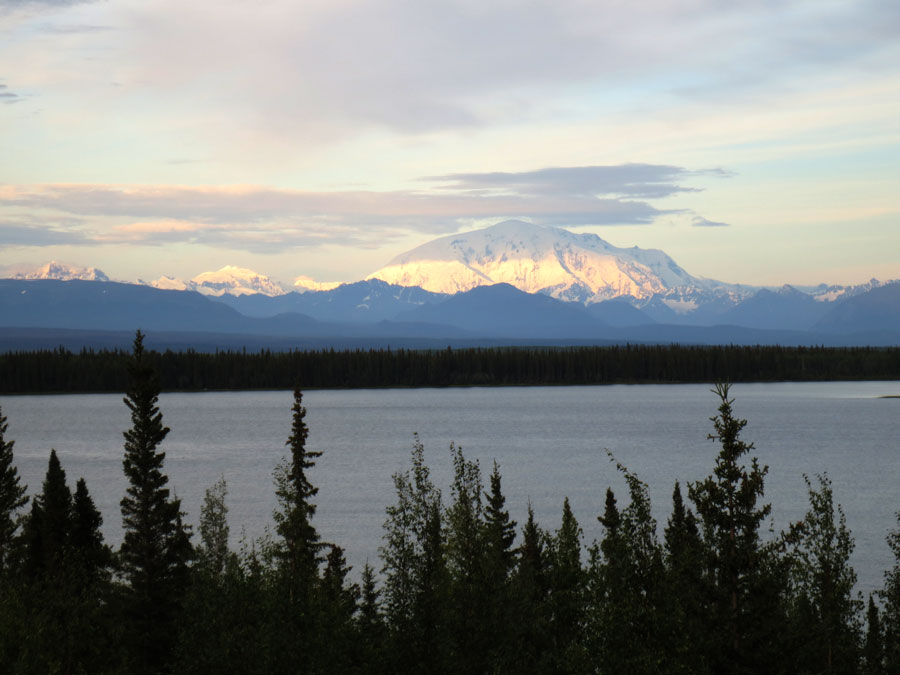
View of Willow Lake from Richardson Highway. Mt Blackburn in the background.

View of Willow Lake from Richardson Highway. Mt Blackburn in the background.

Our first night’s lodging in the area was not inside the park, but located a short drive south of Copper Center. It turned out to be our favorite overnight stop of the entire trip. Willow Lake Bed and Breakfast is a guest cabin built by former Chicagoans Jim and Linda Marchini next to their personal home right on the shore of Willow Lake. The construction is incredible and there is an album full of photos documenting the process from the cutting of the trees to the carving of the the ridge pole. One feature missing is a room key… you simply don’t need to worry about locking things up when you’re this far off the beaten path, it’s quite refreshing. Dining options in the area are obviously sparse, but Linda recommended the Tonsina River Lodge down the road for some Russian cuisine. Back at the cabin, we amused ourselves with some wine, an electric mosquito zapper and a view of gorgeous mountains. What more could you need? In the morning Linda prepared delicious sourdough pancakes while Jim took us on a tour of their amazing home and showed off his extensive taxidermy collection. The filling breakfast was perfect preparation for the long day we had ahead of us. Off to McCarthy!

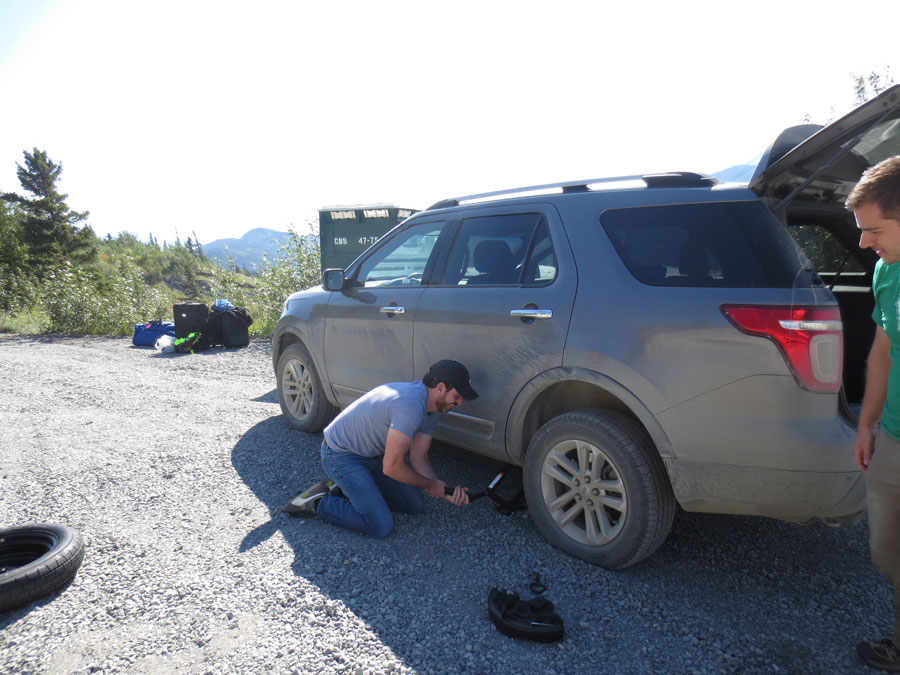
Flat tire on McCarthy Road.

Flat tire on McCarthy Road. We most likely picked up the shard in a construction zone on the Edgerton Highway.

mccarthyroadend

Footbridge at the end of McCarthy Road. Continue on foot.

About an hour south of Willow Lake is the town of Chitina, the end of the well-maintained roadway. At the edge of town, you enter the McCarthy Road, a 62-mile gravel route that heads into the center of Wrangell-St. Elias. We knew it was notorious for rough going, but it seemed like a joke when our Explorer announced “Low Tire Pressure” literally the moment we drove onto the road. We had been on gravel for 5 seconds, so clearly it must be mistaken. We hopped out and all the tires looked fine so I cautiously continued up the road. A Subaru was limping back toward Chitina with a destroyed tire flopping on its rim. Not a good sign. After about 5 miles we arrived at the first river overlook pullout and jumped out to take in the view. That’s when I heard the telltale hiss of air leaving the rear driver’s side tire. We had a 3:30 tour of the Kennecott copper mill scheduled, so there was not a lot of time to spare, no pun intended. We performed a quick evacuation of all our luggage, popped on the tiny donut spare (thanks a lot Ford) and turned back to Chitina where Nick had spotted a tire repair shop. If there’s a million dollar idea, it’s to open a tire repair shop at the end of the McCarthy Road. Some guy patched it up in two minutes and we were on the road again. The silver lining of the flat tire was that we saw the one and only moose of our entire trip wading in a pond as we returned to Chitina. Plus we get to tell the story about the time we got a flat tire in Alaska, which may top our “almost running out of gas in Maine” story. Without any further incidents, we made it to the end of the McCarthy Road, where you have to park your vehicle, walk across a footbridge and catch a shuttle van into town. You’ll be happy to know that after all that action we made it to Kennecott just in time to make our tour.

Kennecott mill town.

Kennecott mill town.

The neighboring towns of McCarthy and Kennecott are smack in the middle of the national park and provide the best options for activities. They are truly remote, probably the most remote place we’ve ever visited, and have a lifestyle all their own. Their boom-and-bust history revolves around the fortunes of the early 20th century copper mining operations in the area, and now they are primarily tourism driven. As such, our first planned activity was a St. Elias Alpine Guides tour of the former company town and National Historic Landmark of Kennecott. Three times a day their knowledgable guides take guests through various buildings that date from when the town was a noisy, bustling industrial area. The National Park Service maintains many buildings in various states of decay, stabilization and restoration. The centerpiece is the surreal-looking mill building. This all-timber, 14-story construction houses the remnants of the giant ore processing equipment that refined the raw material coming out of the mines high up on the mountains. Raw ore from five mine sites was hauled down the mountain on a ski lift-like tramline, dumped into the top of the mill building and sent down through multiple crushers and sorters to separate regular rock from valuable copper. From the base, it was loaded onto trains that followed tracks (now the McCarthy road) for shipping out of the state. $200 to $300 million in copper and silver was taken out of the surrounding mountains between 1911 and when the plant was shuttered in 1938.

Morning in bustling downtown McCarthy.

Morning in bustling downtown McCarthy.

Just a 5-mile shuttle ride away is the town of McCarthy. While Kennecott is owned and maintained by the National Park Service, McCarthy is a normal, tiny town that contains lodging and dining/drinking options as well as a hardy bunch of locals who call the place home. Around 30 people live here year-round, but the population increases during the summer season with visitors and seasonal workers. Even with the increase, I wouldn’t call the area heavily populated, so you won’t be feeling crowded. Hotel options are few this far from civilization and as a result are expectedly pricey. For an economical option we chose Lancaster’s Backpacker Hotel, which offers simple accommodations with bunk beds in the rooms and shared bathrooms downstairs. Again there are no locks on the doors, but fear not, because nobody who takes the time and energy to get to McCarthy has any interest in stealing your iPad. A brief walk around town revealed fun loving locals at the Golden Saloon, friendly dogs trotting around town greeting visitors and picturesque rusting trucks from decades past. It obviously takes some effort to get stuff in and out of here.

Both mornings we were in town we enjoyed breakfast at The Potato, a little screened-in shack serving breakfast lunch and dinner. The breakfast options were tasty and they have great coffee. For our picnic lunch we stopped by the McCarthy Center Store and bought deli sandwiches to go. For a casual dinner we loved the Golden Saloon with its gastropub-ish menu and great beer list. They offer live bands most nights, but we found plenty of entertainment just sitting on the outdoor patio with a beer watching McCarthy life pass by. Right next door (connected actually) is the McCarthy Lodge, which is a well known fine dining destination. It is highly recommended by the Michelin Guide, Bon Appetit and Food & Wine Magazine among many others. The night we were there featured a 3-course chef’s menu for only $38. It’s a wonderful surprise to find this kind of dining at the end of a 62 mile gravel road and it really hit the spot after a strenuous 9-mile hike up and down a mountain.

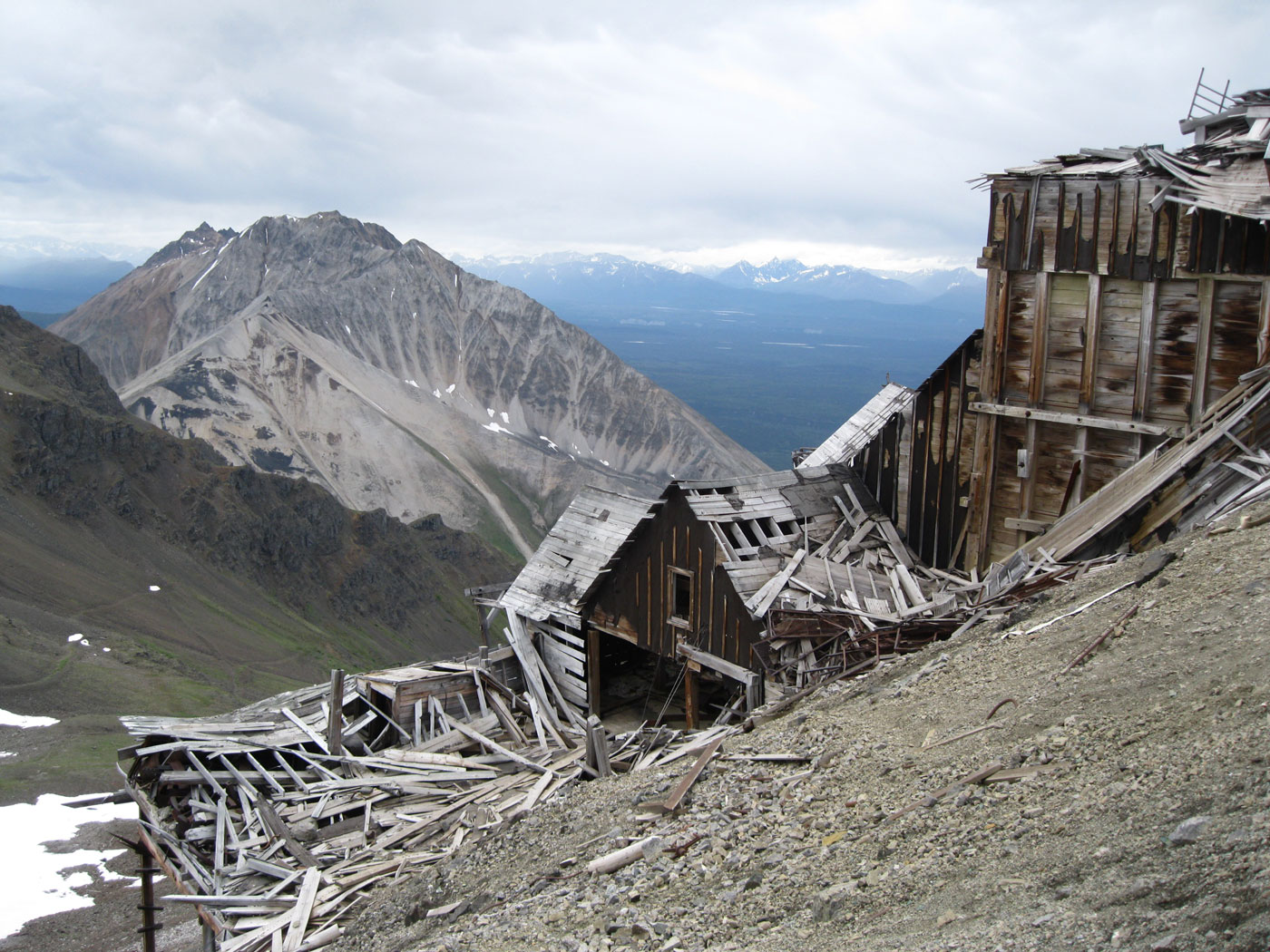
The torture is worth the view from above the abandoned Bonanza Mine buildings.

Abandoned Buildings at Bonanza Mine site.

On the subject of hiking, Wrangell-St. Elias provided us with probably the most strenuous and spectacular single hike of the trip, the Bonanza Mine Trail. Starting at the mill in Kennecott, the trail rises 3,800 feet in 4.5 miles to the site of the abandoned Bonanza Mine, which was connected to the mill by tram. There are many visible relics of the mining days littering the sides of the trail especially at higher altitudes. The trail starts out moderately steep, but gets continually steeper the higher you go, with the last push seeming nearly vertical. Trekking poles really helped out on this hike, I highly recommend them. At the top of the trail the remains of the mine buildings and bunkhouse are mostly piles of timber at this point. Views stretch to the Kennicott and Root Glaciers below and on clear days you can see 16,391 ft. Mt. Blackburn.

Wrangell-St. Elias may have been our favorite overall National Park experience in Alaska. The combination of remote isolation, history, hiking and unexpected dining made it the perfect place to experience authentic Alaska. After a day of travel back down the McCarthy Road and the Glenn Highway to Anchorage, the road trip portion of our adventure ended. The next day, Emily and Jake headed back to Iowa while we made our way to the watery southeastern panhandle of the state.

Up Next: Glacier Bay and Juneau

Part 1: Seward and Kenai Fjords
Part 2: Denali National Park
Part 5: Skagway and the Inside Passage

Posted in Destinations, Travel Resources | Tagged , , , , , , , , | 4 Comments

Alaska Part 2: Denali


Alaska2

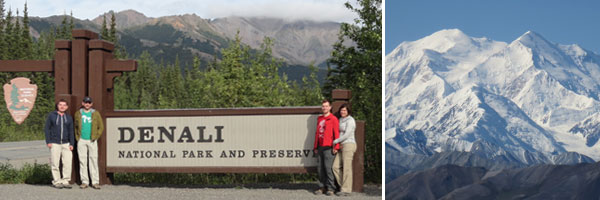
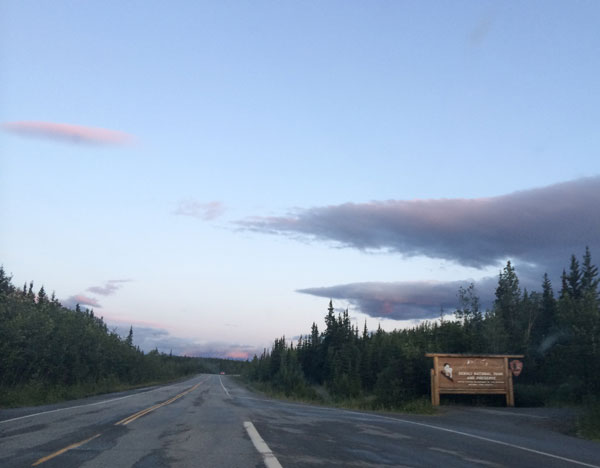
Denali entrance sign. The mountain basking in the rare sunshine.

Getting There: Denali National Park is an easy 4.5 hour drive north of Anchorage. Alternatively the Alaska Railroad offers service between the two locations.

The literal high point of the trip is 20,237 ft Mt. McKinley, the highest point in North America. Denali translates to “High One” or “Great One” in the native Athabaskan language. The mountain is the centerpiece of Denali National Park, a 6 million acre park and preserve made up of taiga, tundra, rock and glaciers. We approached from the south driving up the George Parks Highway from Anchorage. It was a clear day so even from a couple hundred miles away the mountain stood looming in the distance. What makes it appear even more impressive is the fact that the land around the Alaska Range is only about 2,000 feet above sea level. That gives McKinley the largest base-to-peak height of any mountain entirely above sea level. An 18,000 foot wall of rock and snow is an imposing sight from any angle. There is a phenomenon known locally as the 30% club, because the mountain’s tendency to be completely shrouded in clouds means only a third of visitors every actually see it. In fact, we were told many Alaskans have never seen it up close. By pure luck we arrived when the mountain came out in a cloudless sky three days in a row. A park ranger confirmed that it had not been so clear in 5-6 weeks.

The only lodging available within the borders of the park is at six designated campgrounds. We’re more the cabin type, so we chose to stay at the Carlo Creek Lodge about 10 miles south of the park entrance. This was not the most charming cabin we stayed in, but the staff was friendly and the office offered free wifi. There is a nice little cluster of restaurants around it as well. We did our share to support McKinley Creekside Cafe as we purchased breakfast, dinner and two days of sack lunches there. The cinnamon rolls are epic.

A shuttle bus making its way toward Eielson Visitor Center.

A shuttle bus making its way toward Eielson Visitor Center.

The following morning we booked a shuttle bus into the National Park. Private vehicles are only allowed in as far as 16 miles, only buses are allowed beyond that. The tickets can (and should) be booked in advance through Aramark to ensure you get a seat at the departure time of your choice. Buses leave every half hour from the Wilderness Access Center and you have options for how far into the park you would like to go. We chose the 7:00am bus with a four-hour ride to the Eielson Visitor Center at mile 66. We were lucky and got a shuttle driver named Craig who has backpacked and camped all over the park and shares his extensive knowledge of the animals that live there. He provided a running commentary the entire trip (not all drivers do that) that made the ride extra enjoyable. We saw caribou, brown bears, dall sheep and a wolf from the bus. The park road is the only developed area within the park, and most of it is just a gravel path carved into hillsides. The Eielson Visitor Center is where the majority of people go, but you can opt to extend your bus ride to Wonder Lake or Kantishna 26 miles farther down the road. The center has great displays on the geology and history of the park and a spectacular view of McKinley 30 miles away.

Hiking options in Denali are interesting, as there are not many marked trails in the park. There are some easy ones near the entrance, a couple in the Savage River area and a few around the Eielson Visitor Center. For the most part, hiking is of the backcountry variety. If you see a place you want to hike, you simply tell the bus to stop and take off across the tundra on foot. We chose to hike the Eielson Alpine Trail that rises 1,000 feet from the visitor center to a ridge on Mt. Thorofare. It was the best backdrop for a picnic lunch imaginable. The next day we returned to the park for more hiking by taking a free shuttle 16 miles to the Savage River. Because we love to punish our knees, we chose the 4-mile Savage River Alpine Trail that climbs and falls 1,500 feet in elevation and ends at a campground where we were picked up by a return bus.

sleddogpolly

Sled dog Polly chilling on her rooftop.

Before we left the park we couldn’t possibly pass up a chance to visit the famous Denali sled dogs. The specially-bred huskies help rangers patrol the park in winter months, carrying people and supplies to the farthest corners of the wilderness to make sure everything is under control. The kennels are located behind the main park headquarters next to a gravel loop where they hold sled dog demonstrations 3 times a day. The real treat is showing up early and getting to greet the dogs before the show starts. They are the friendliest, happiest dogs you’ll ever see and they love meeting their fans. When the rangers ran through the kennels to pick 5 lucky dogs to pull the demonstration sled, they all barked and howled as if saying “pick me, pick me!” Definitely a must-see bit of free entertainment. Fun fact: because of their adaptations to the cold climate, the dogs are most comfortable at -10 degrees fahrenheit. Brrr.

11:15 pm

11:05 pm

A fun personal milestone was reached during our time here, we went farther north than any of us had ever been before. Latitude 66 degrees, 44 minutes north was our extreme point, putting us in line with places like Trondheim, Norway; southern Greenland and Siberia. Denali was also the location of the latest sunset we experienced. 11:05 PM was the magic hour, with twilight lasting until after midnight. It’ll definitely mess with your senses, but is great for maximizing time for activities.

The general lack of highways in Alaska meant there there were three route options to reach our next destination, Wrangell/St. Elias National Park. We could backtrack through Anchorage, make a large northern arc through Fairbanks or cut right across the wilderness on the 135-mile gravel Denali Highway. We picked option 3 of course. Before the construction of the Parks Highway connecting Anchorage and Fairbanks in 1971, the Denali Highway was the only road access to Denali National Park. Today it is lightly traveled and only open from mid-May through October each year. Online research warned us of difficult driving and rutted surfaces, but it turned out to be in fine condition for an unpaved road and it cut 2 hours off our travel time. It’s rather isolated out there, but we managed to find a good lunch at the MacLaren River Lodge. As we completed the Denali Highway and turned south onto the Richardson Highway, Mt Drum came into view, beckoning us toward Wrangell/St. Elias National Park.

Up Next: Wrangell-St. Elias and McCarthy

Part 1: Seward and Kenai Fjords National Park
Part 3: Wrangell-St. Elias National Park
Part 4: Glacier Bay and Juneau
Part 5: Skagway and the Inside Passage

Posted in Destinations, Travel Resources | Tagged , , , , , , , | 4 Comments

Alaska Part 1: Seward and Kenai Fjords

Alaska1

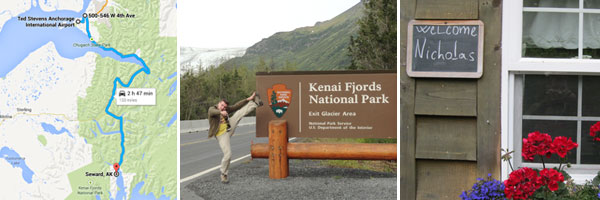
Anchorage to Seward route, Kenai Fjords entrance and our welcome to Salmon Creek Cabins.

Getting there: Alaska Airlines offers direct service from Chicago O’Hare to Ted Stevens Anchorage International Airport. It’s a six hour flight, but that’s much faster than having to stop in Seattle, which is what most other airlines make you do.

We wasted no time in finding some local flavor upon landing in Alaska’s largest city. Immediately after picking up our rental Ford Explorer, we headed downtown to sample a reindeer dog. Yeah that’s right, reindeer. Welcome to Alaska.

Our first major destination was Kenai Fjords National Park, a 2.5 hour drive south of Anchorage. The town of Seward was our base for exploring the park so we booked 2 nights at Salmon Creek Cabins. This was our first hint of how truly laid back Alaskans are. We found a cabin with “Welcome Nicholas” written on a chalkboard in front. The door is left unlocked with the keys inside and they just ask that you leave your payment (cash or check, no credit cards) on the table or in the guestbook when you depart. Can you do that in your neighborhood? Browsing around the main part of town, we found the 0 mile marker for the original Iditarod trail and had some satisfying food and beer at Seward Brewing Company. Three of the four of us enjoyed the “Lamb Mac Daddy” and highly recommend it. The first night also gave us a look at the long summer daylight hours Alaska is known for. It’s a strange feeling to have bright daylight after 11:00pm when you’re trying to get to sleep.

exitglacierharding

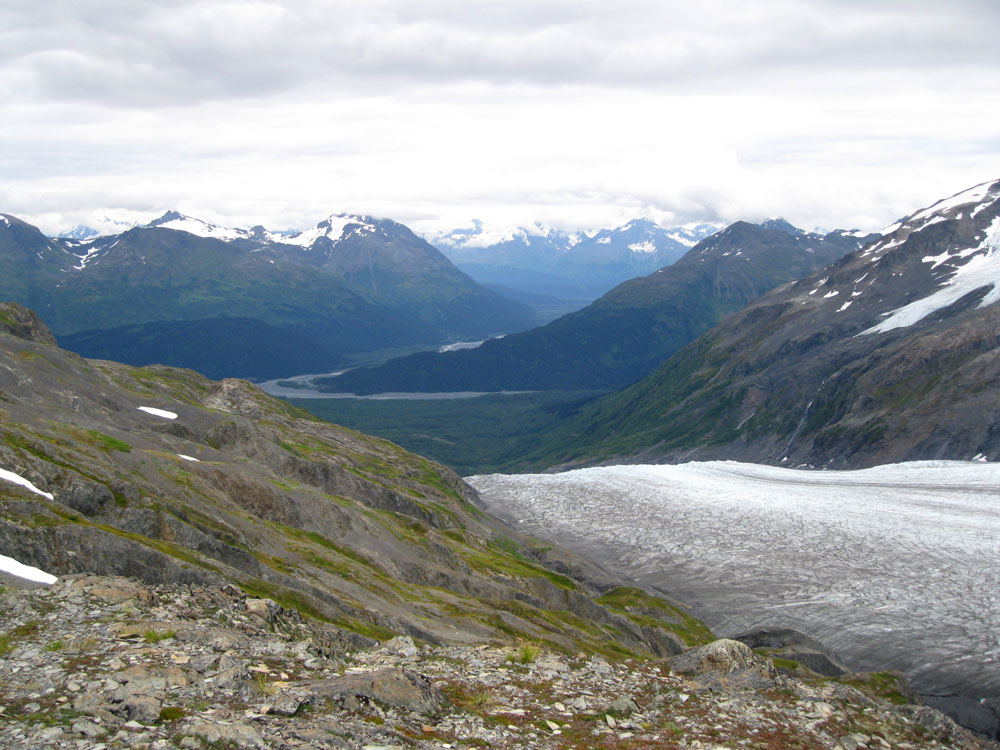
Looking down on Exit Glacier from Harding Icefield Trail.

The next day we headed to the only part of Kenai Fjords that is accessible by car, Exit Glacier. This area features a nature center and several hiking trails that allow a closer look at the river of ice creeping down the mountain. As you approach the base of the glacier, signs mark where it ended in previous years; the amount it has receded is shocking to see first-hand. Our first major hike of the trip was to climb the Harding Icefield Trail to get a glimpse of the 300 square miles of solid ice at the top. The trail is 9 miles round-trip and rises 3,000 feet. It’s a difficult climb with lots of terrain changes, but the view is worth it. Over 400 inches of snow fall at that elevation each winter and it’s this ice field that feeds more than 40 glaciers that pour over its rim and scour out the fjords that give the park its name. We took in the view with our picnic lunch and then headed back down to the base, having our first Alaska bear sighting in the process. With sore knees, we returned to our cabin to prepare for the more relaxing portion of our Kenai experience.

kenaicruise

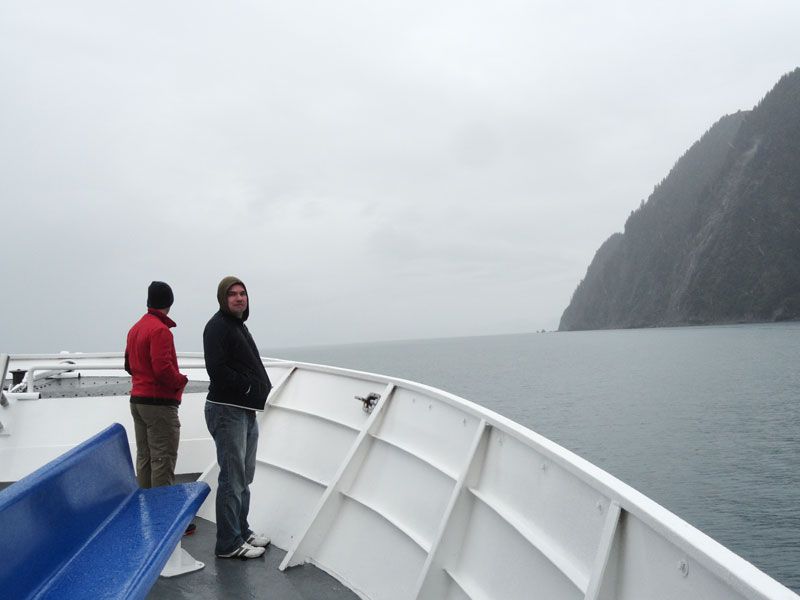
A benefit of the wet weather was we had the deck to ourselves.

Since Exit Glacier is the only part of the park that is reachable by car, most visitors take to the water for a better view. Major Marine Tours offers cruises between 3 and 8.5 hours in length, with the longer routes traveling deeper into the park and its more distant fjords. The 4-hour evening wildlife viewing cruise fit our schedule best and for an additional $20 each we added a salmon and prime rib buffet. The other main reason we chose Major Marine is that they guarantee a national park ranger on board each ship, and you know how we love a park ranger. Ranger Rebecca narrated the landscape, spotted wildlife and brought materials on board to help in our understanding of the geography, climate and habitats of the Kenai Peninsula. Among the animals we saw that night were sea otters, harbor seals, Dall porpoises, puffins, and Steller sea lions. We found the cutest to be the sea otters that appeared to wave at us from the water, and the most exciting the Dall porpoises that like to race the boat and play in its wake, so cool.

Weather in coastal Alaska can be gloomy and wet, but we found it doesn’t hurt the experience any, with mistiness and low clouds only adding to the unique beauty. It was mostly clear while we were hiking, but rained pretty much continuously during our boat tour. Either way the scenery is fantastic, so even if you’re wet, you’ll enjoy it.

lebarnappetit

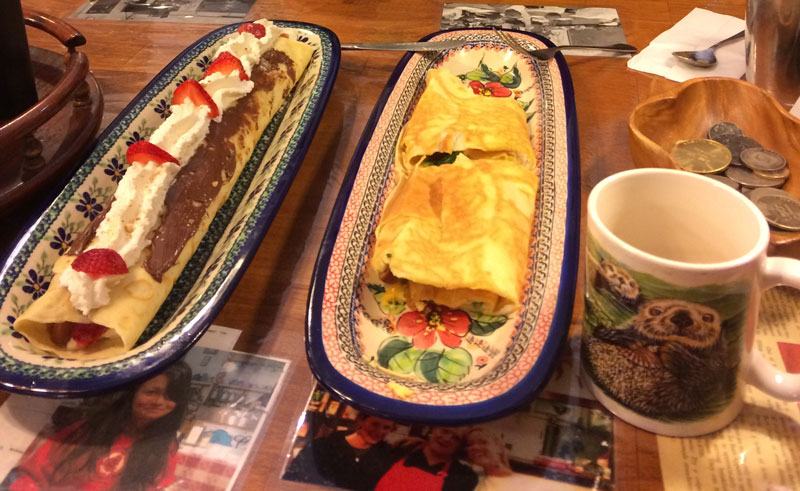
Epic crepes and a sea otter mug at Le Barn Appetit.

After our second night in the cabin, it was time to head out of town, but not before breakfast. We found Le Barn Appetit on TripAdvisor and it lived up to the rave reviews. The huge 16-inch crepes will satisfy any appetite. Nick and I split one sweet crepe with strawberries, rhubarb and nutella and one savory crepe with cheese, spinach and (drumroll) reindeer sausage. Yes, we ate Rudolph for breakfast … and it was fantastic.

Up Next: Denali National Park

Part 3: Wrangell-St. Elias National Park
Part 4: Glacier Bay and Juneau
Part 5: Skagway and the Inside Passage

Posted in Destinations, Travel Resources | Tagged , , , , , , , , | 4 Comments