
The White House, Washington, DC – April 2014
Happy 4th of July!
The White House, Washington, DC – April 2014
Happy 4th of July!
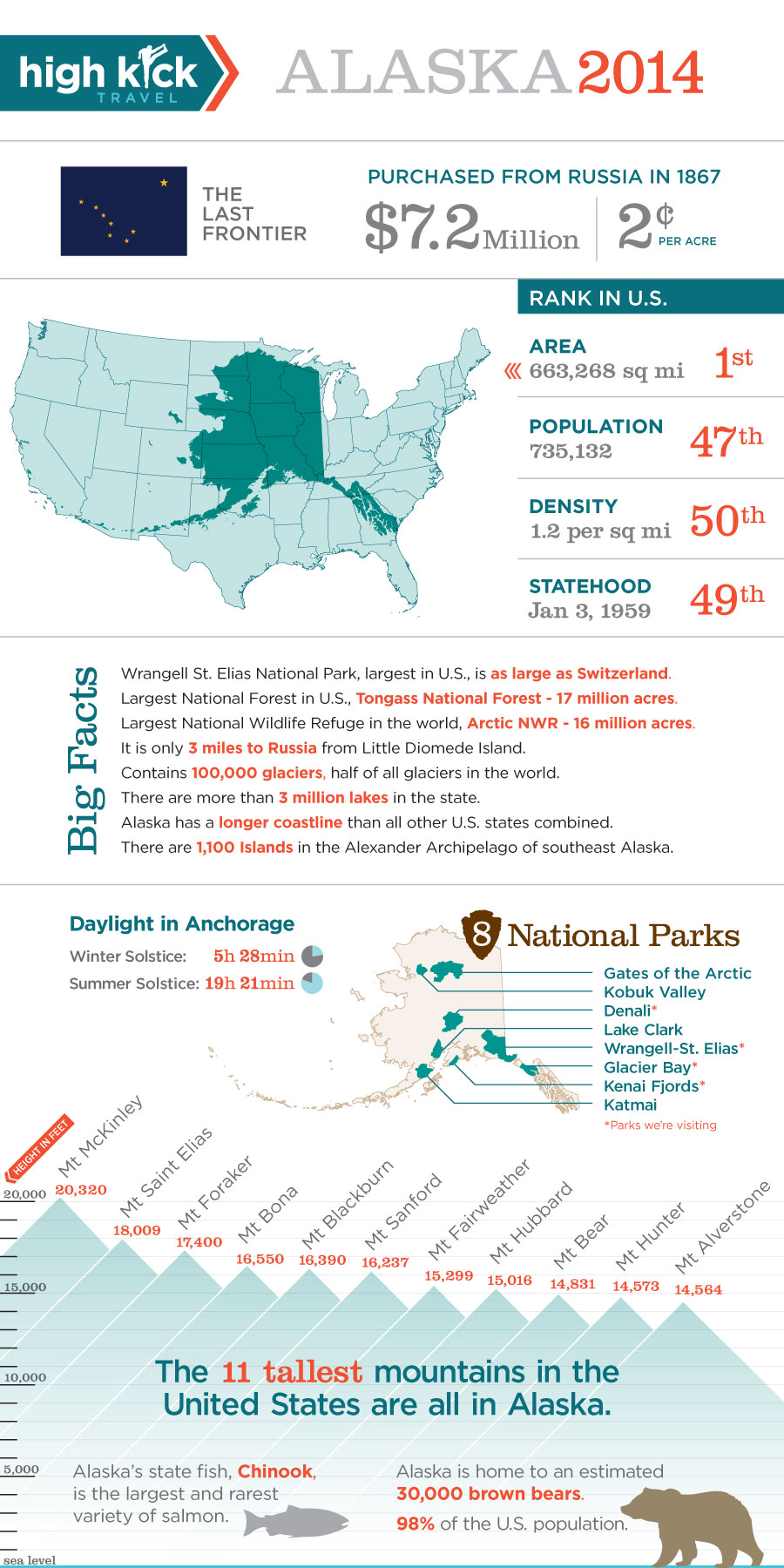
Alaska is a land of extremes. Just the size and the variety contained within it is hard to comprehend. Here is an assortment of facts to put into perspective the enormity of our northern outpost. Click for full-size view.

The Route

Denali National Park
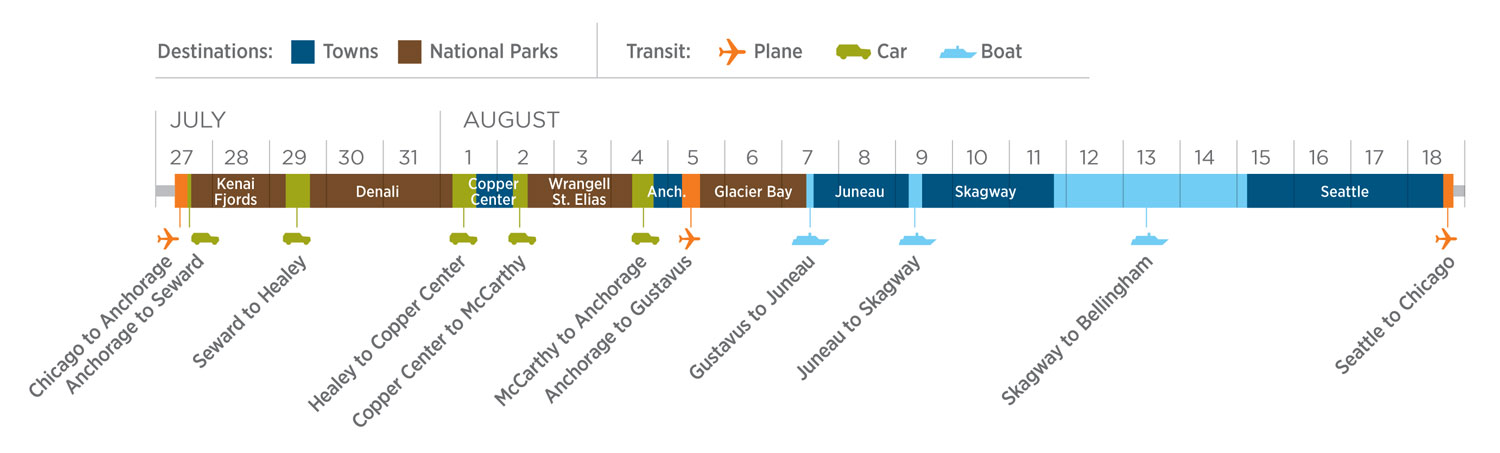
With only five weeks before our departure, it is now time to turn our attention fully to Alaska. (Who am I kidding, our attention has been on Alaska for months.) We began serious researching last fall and locked in our plans by purchasing transportation in January. Our itinerary is pretty well planned at this point. After flying to Anchorage with our favorite partners in crime, Emily and Jake, we’ll head south for two nights in Seward, which will be our base to explore Kenai Fjords National Park. We’ll then drive into the Alaskan interior to Denali National Park for three nights, followed by a drive across the 135-mile gravel Denali Highway to the Copper River valley. Copper Center is the home of the main visitor center for Wrangell St. Elias National Park. We’ll spend one night in the single-cabin Willow Lake B&B before tackling yet another lengthy unpaved road to reach the town of McCarthy in the heart of the park. After two nights there, we’ll drive back to Anchorage. Total driving miles should be about 1,200.
Glacier Bay National Park
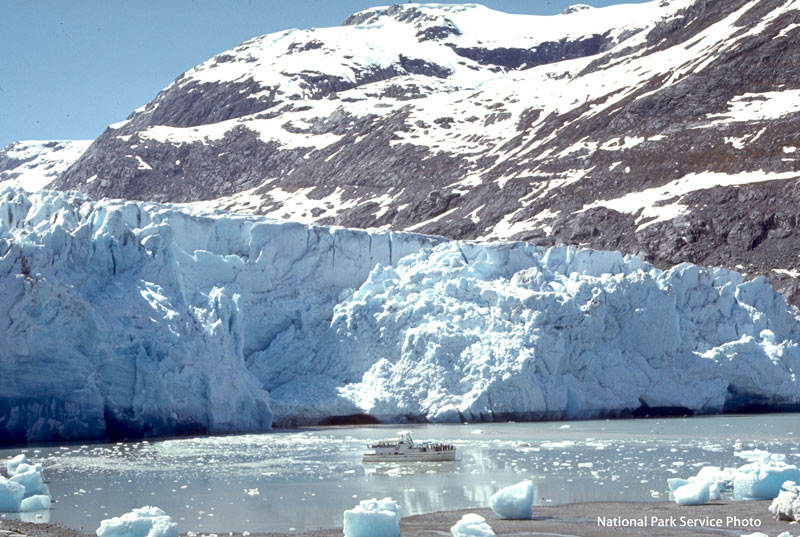
After that, Emily and Jake return to the lower 48 while we make our way by air to Glacier Bay National Park where we’ll meet up with our next travel companions, Nick’s parents. Our exploration of the inside passage region of Alaska will be primarily on board the ships of the Alaska Marine Highway system. No, we are not doing a cruise, as everyone asks. None of us has any interest in being on board a boat with 4,000 people, so we created our own transit plan by taking advantage of the ferry system used by locals. We’ll still get a cabin on board, but we are only using the boats to travel between towns. After Glacier Bay, we’ll spend two nights in Juneau and two nights in Skagway before taking the long 4-night sail to Bellingham, Washington. We’ll conclude the trip with a couple days in Seattle before flying home to Chicago.
The timeline: click for larger view
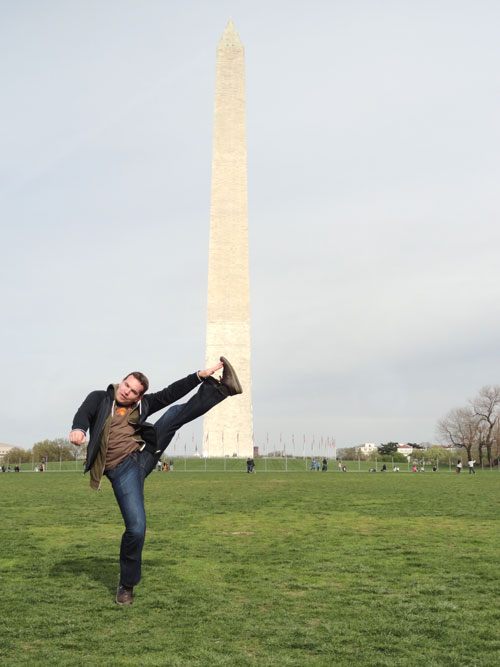
Washington Monument, Washington, DC – April 2014
Some of our favorites:
See: Any of the Smithsonian museums – pick just one and take your time exploring it (we chose the National Museum of American History).
Do:Newseum – informative museum highlighting the role of journalism and media.
Do: Use Capital Bikeshare as your mode of transportation. We found it to be the best way to get around the National Mall and all of its memorials.
Drink:DACHA Beer Garden – good outdoor bar in the Shaw neighborhood
Eat (dinner): Sticky Rice – fun sushi/Asian place (sticky balls are a must!)
Eat (brunch): Ted’s Bulletin
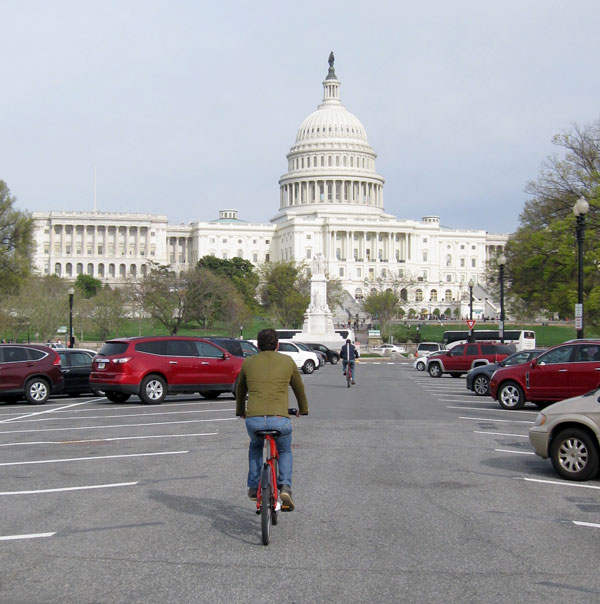
For just $7 a day, Capital Bikeshare makes getting across the National Mall quick and easy.
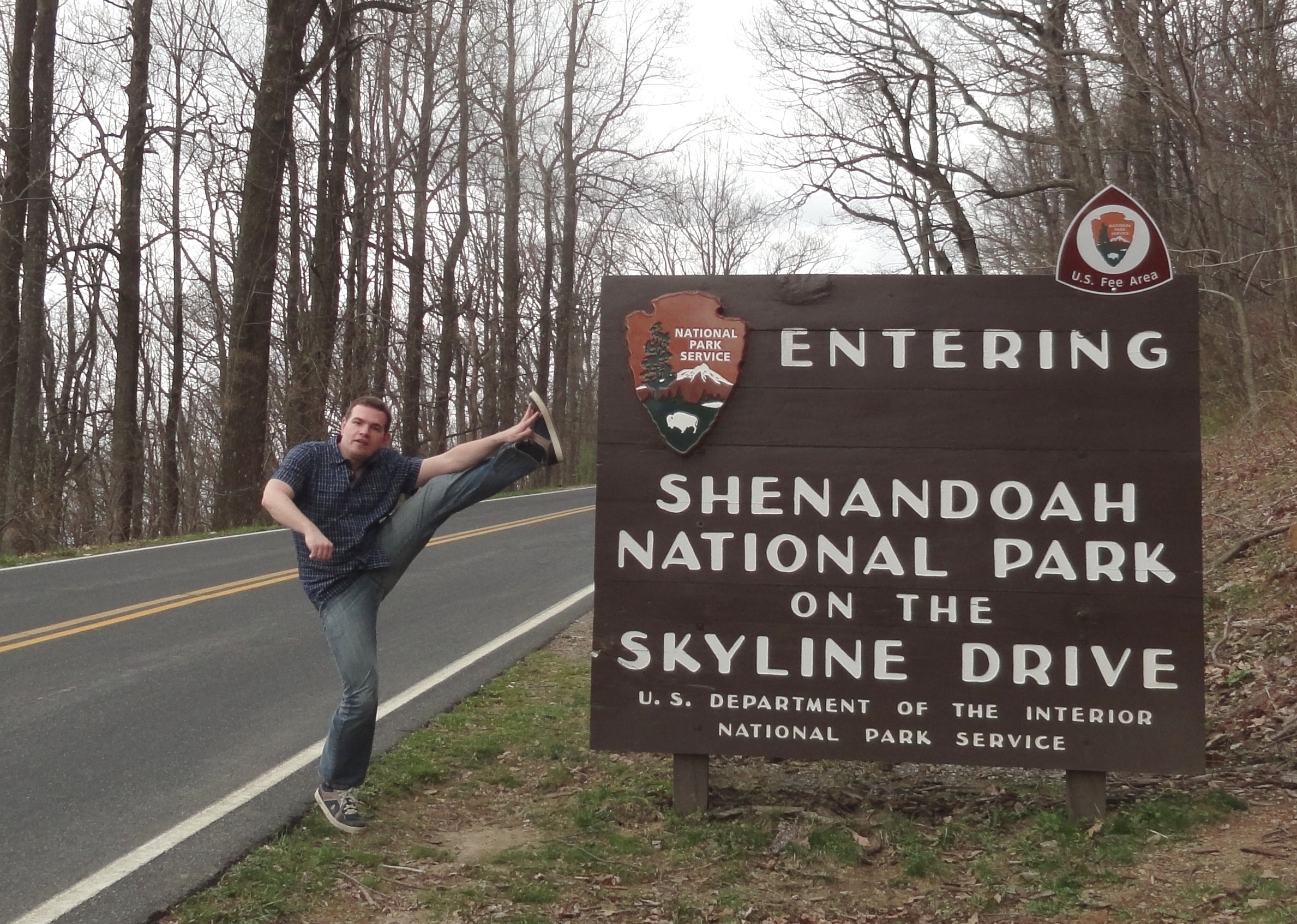
Rockfish Gap Entrance, Shenandoah National Park, VA – April 2014
Established in 1935, Shenandoah National Park is known for its spectacular vistas from the 105-mile long Skyline Drive as well as countless waterfalls and hiking trails. The park is especially popular in the fall, when visitors come to enjoy the changing foliage. Our early spring trip allowed for an uncrowded visit, driving from south to north with an overnight stay at Skyland Resort.
For some moderate hiking right off the Drive, we suggest:
-Dark Hollow Falls: This was the most crowded of the trails we did. It’s the shortest hike to any waterfall in the park (1.7 mi r/t to the base of the falls)
-Hawksbill: Spectacular views of the Shenandoah Valley from the highest peak in the park (2 mi r/t)
-Stony Man: This 1.6 mi loop to the park’s second highest peak offers great views and includes a section of the Appalachian Trail.
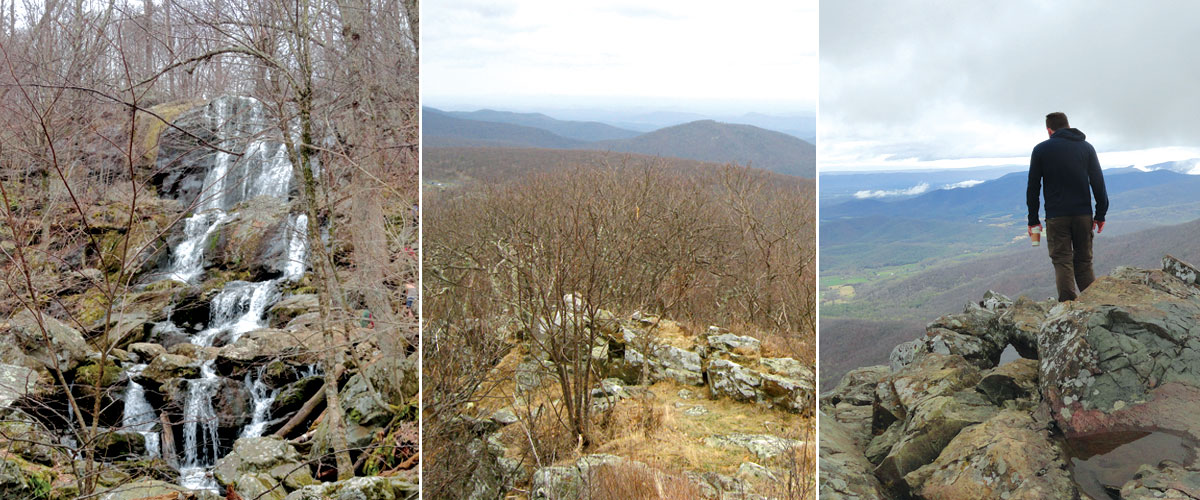
Shenandoah Trails: Dark Hollow Falls, Hawksbill and Stony Man.
click for larger version
Northalsted Market Days, Chicago, IL – August 2010
As Chicago’s weather warms up, so do its many neighborhoods. Each year over 400 street festivals and events take place between May and October. Whether you’re in the mood for arts and crafts, local products and live bands, or a refreshing drink, there’s something for everyone. Many festivals are free or charge a nominal fee – usually $5-10 suggested donation – which goes toward supporting local organizations and businesses.
Some of our perennial favorites include Do-Division (May 30-June 1, 2014), Andersonville Midsommarfest (June 6-8), Glenwood Ave Arts Fest (Aug. 16-17), and Design Harvest (Sept. 20-21). This year, we will also check out some newer festivals like Square Roots (July 11-13) and City Made Fest (Sept. 20-21).
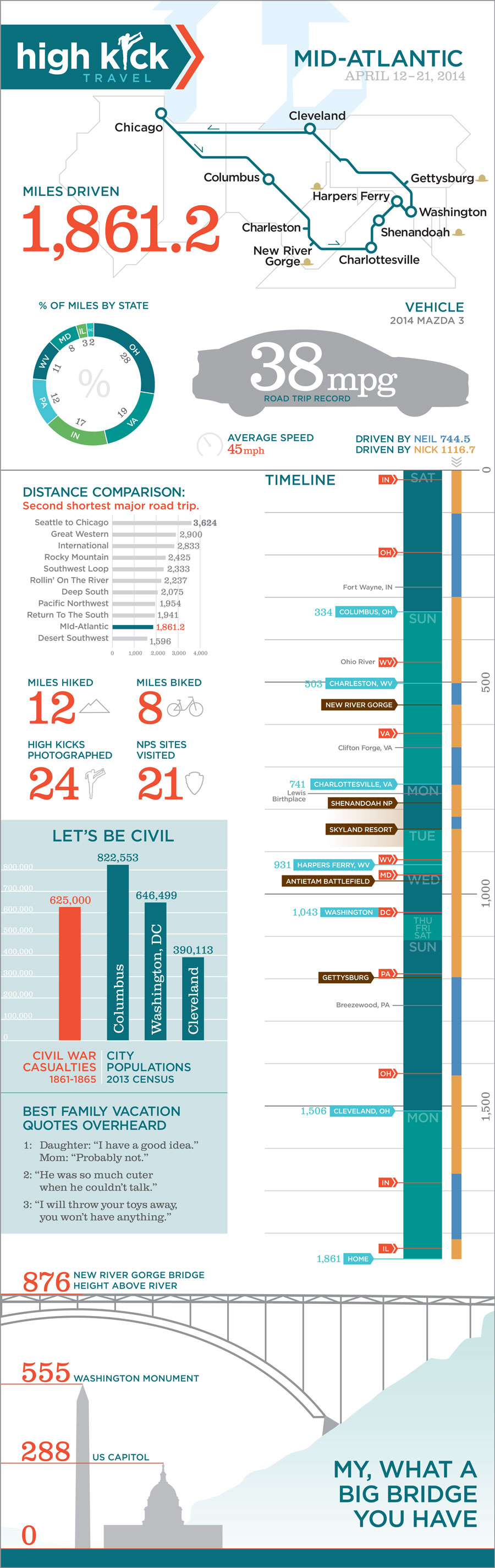
The continuation of our journey between Chicago and DC. First part is here.
Monticello
 High on a hill above Charlottesville, Virginia our third President lived a pretty sweet life. Thomas Jefferson was a true renaissance man, studying languages, architecture, engineering, geography, botany and basically any subject that interested him. His home, Monticello, was his masterpiece of neoclassical-inspired American architecture where he integrated his own clever design solutions for things like keeping time, opening doors and discreetly replenishing wine in his dining room (spoiler alert: there were slaves in the basement loading a wine elevator). A ticket buys you admission to the house and grounds for a full day, with a specific time allotted for your guided tour. A museum at the visitor center has displays explaining Jefferson’s life, presidency and house. A shuttle bus then takes visitors to the top of the hill where tours of the grounds and slave quarters are offered in addition to the house hour. Taking the experience full-circle, the Jefferson family cemetery is located a short walk downhill from the house. An interesting side trip we made is to stop by the University of Virginia campus to see more of Jefferson’s idyllic classical architecture on display and in use.
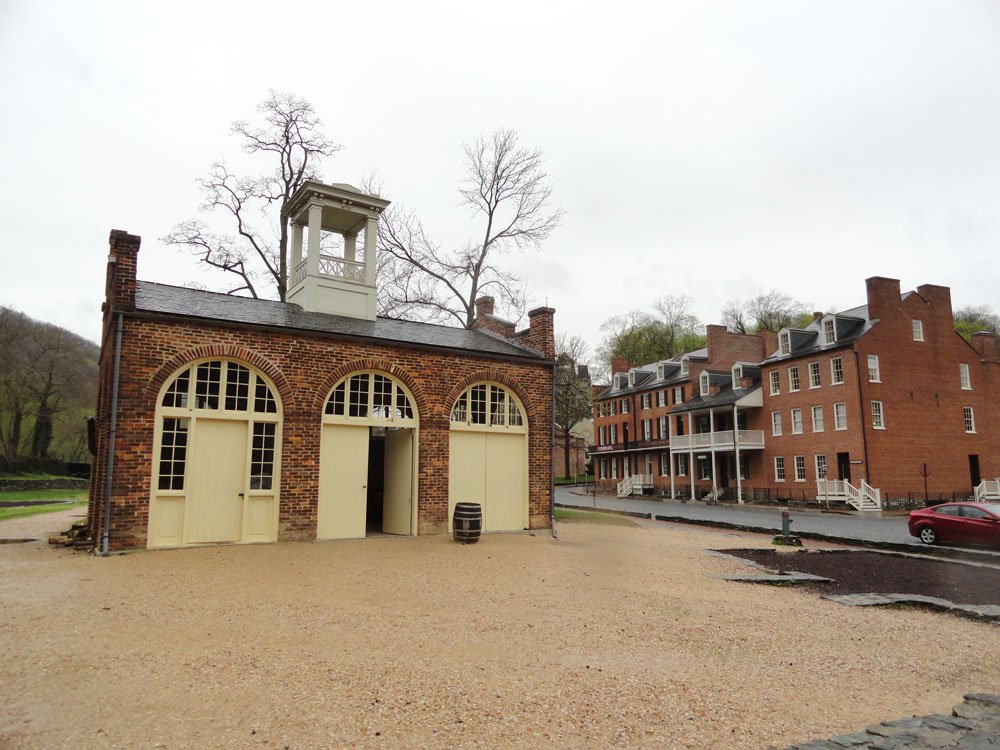
John Brown’s Fort in Harpers Ferry National Historical Park
Harpers Ferry
This tiny town that began as the site of a simple river crossing probably has more history per square mile than almost any other place in the country. In the late 1700s the natural beauty of the area was already well known with Thomas Jefferson declaring the view “worthy of a journey across the Atlantic”. In 1794 President George Washington proposed the site as the location of a United States armory/arsenal because being inland from the coast gave it a natural protection from enemies. Most of the small weapons for the army were produced in Harpers Ferry. The huge amount of available water power from the Potomac and Shenandoah rivers transformed it into an industrial center. Then in 1833 the Chesapeake & Ohio Canal reached Harpers Ferry and a year later the B&O Railroad came through town, making it a major crossroads between Washington DC and points farther west.
Another famous visitor was Meriwether Lewis, as the armory was where the guns for the Corps of Discovery were crafted. He also designed an iron-framed collapsible boat he planned to use when he arrived in the Rockies (it unfortunately was an epic fail). There is a series of Lewis sites marked by signs and linked by a trail including a replica of his boat frame on the site of the armory.
Probably the single most prominent event that took place in Harpers Ferry was John Brown’s Raid. It was an attempt by the abolitionist to capture the arsenal’s weapons and start a slave revolt that would spread throughout the South. They succeeded in capturing some hostages and a few armory buildings, but word got out about the uprising and Brown and his men were surrounded and unable to complete their plan. In the end 9 people were killed and John Brown and some accomplices were tried and hanged in nearby Charles Town, WV. The raid is largely remembered as an early sign of the issues that led to the Civil War that began a couple years later. During the course of the Civil War, Harpers Ferry changed hands between Union and Confederacy at least 7 times. It was seen as a strategic location by both sides. As a result of this fighting, the armory was destroyed, bridges were blown up and the general population was repeatedly terrorized by one army or another passing through and making a mess.
Industry recovered somewhat after the war, but the town’s prominence began to fade. Several damaging floods in the 19th and 20th centuries sealed the fate of Harpers Ferry and it went into major decline. In the 1950s, preservationists realized what a special place it is and began to stabilize and restore many of the old buildings, ultimately creating Harpers Ferry National Historical Park. Many of the town’s buildings have been turned into small historical museums on a variety of relevant subjects.
Another historic site is the campus of Storer College, which was one of the first racially integrated schools in the country. The Appalacian Trail Conservancy and Appalachian Trail Headquarters also call Harpers Ferry home. There you can learn about the trail and the mission of the Conservancy and flip through albums of Polaroids of hikers who pose for a photo as they pass through.
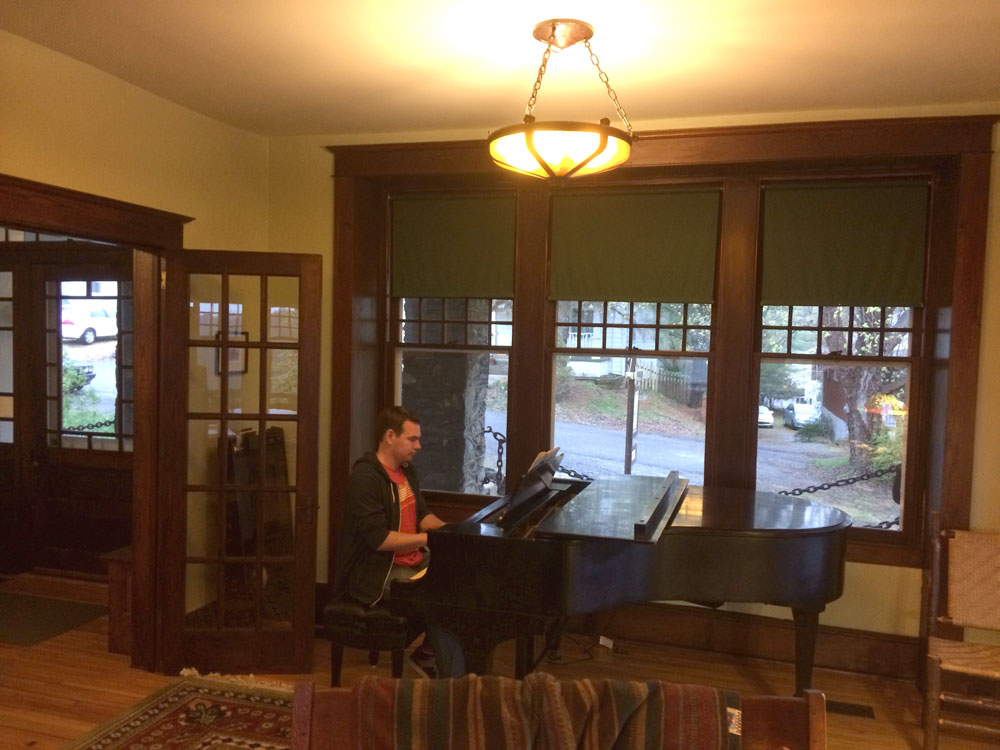
Nick trying out the baby grand in the living room.
Laurel Lodge
This B&B high on a bluff above the Potomac River turned out to be the perfect place from which to explore all this history. From the always-available coffee and cookies to the Steinway baby grand piano in the living room (which Nick made use of) to the fireplace, everything was inviting and comfortable. The innkeepers, Chris and Ed purchased the property in 2001 and have restored it to its 1915 appearance. The house itself has a quirky style as the original builder had an appreciation for artifacts. All over the house things like Civil War bayonets, bullets and belt buckles are embedded into stone and cement, it makes for an interesting self-guided treasure hunt. At breakfast in the morning we were served homemade coffee cake, fresh fruit and frittata. For entertainment, a bald eagle swooped and glided over the trees just outside the window while we ate. Overall the perfect place to stay in Harpers Ferry and one of our all-time favorite inns.
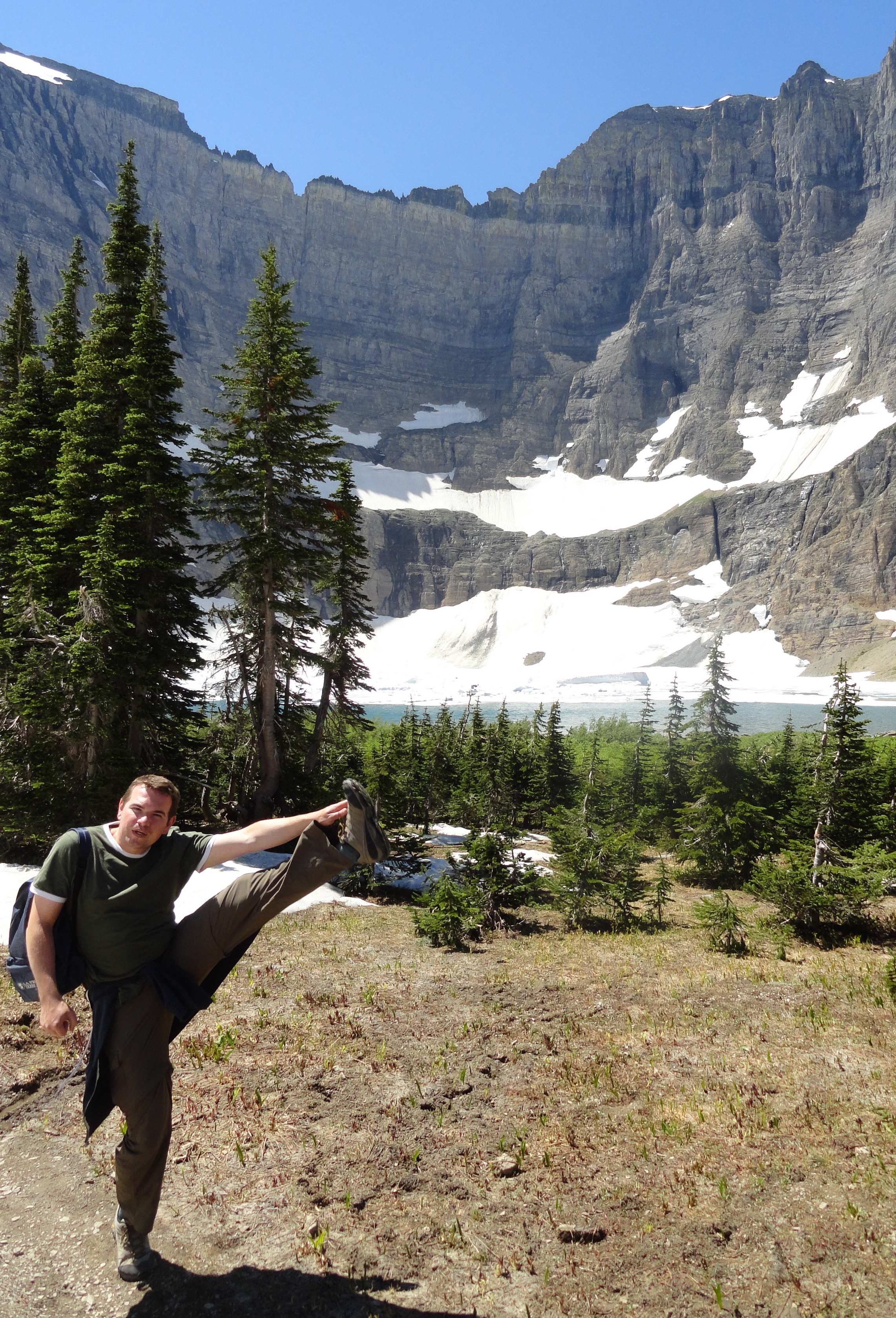
Iceberg Lake, Glacier National Park, MT – July 2013
Happy 104th birthday Glacier National Park!
Established in May 1910, Glacier is the 5th largest national park in the Lower 48, at over 1 million acres. Although less than 25 glaciers remain today, the park was created to protect the valleys they carved over time as well as the region’s native plant and animal species. In 1932 the park was combined with its Canadian counterpart – Waterton Lakes National Park – to form the world’s first International Peace Park. That same year the Going-to-the-Sun Road opened, an engineering marvel and absolute must for any road tripper in need of scenic vistas. Click here to read more about our stay in the park last summer.
In selecting our route from Chicago to Washington, DC, we wanted to add some new High Kick territory. We also try not to backtrack on the same path coming and going, so on the way east we avoided the quickest route through Cleveland and dipped a bit farther south, passing through Columbus, OH and West Virginia. Along with helping us avoid a double helping of Interstate 80, it introduced us to some great new places. Here are a couple highlights from the first two days.
Columbus, Ohio’s German Village neighborhood
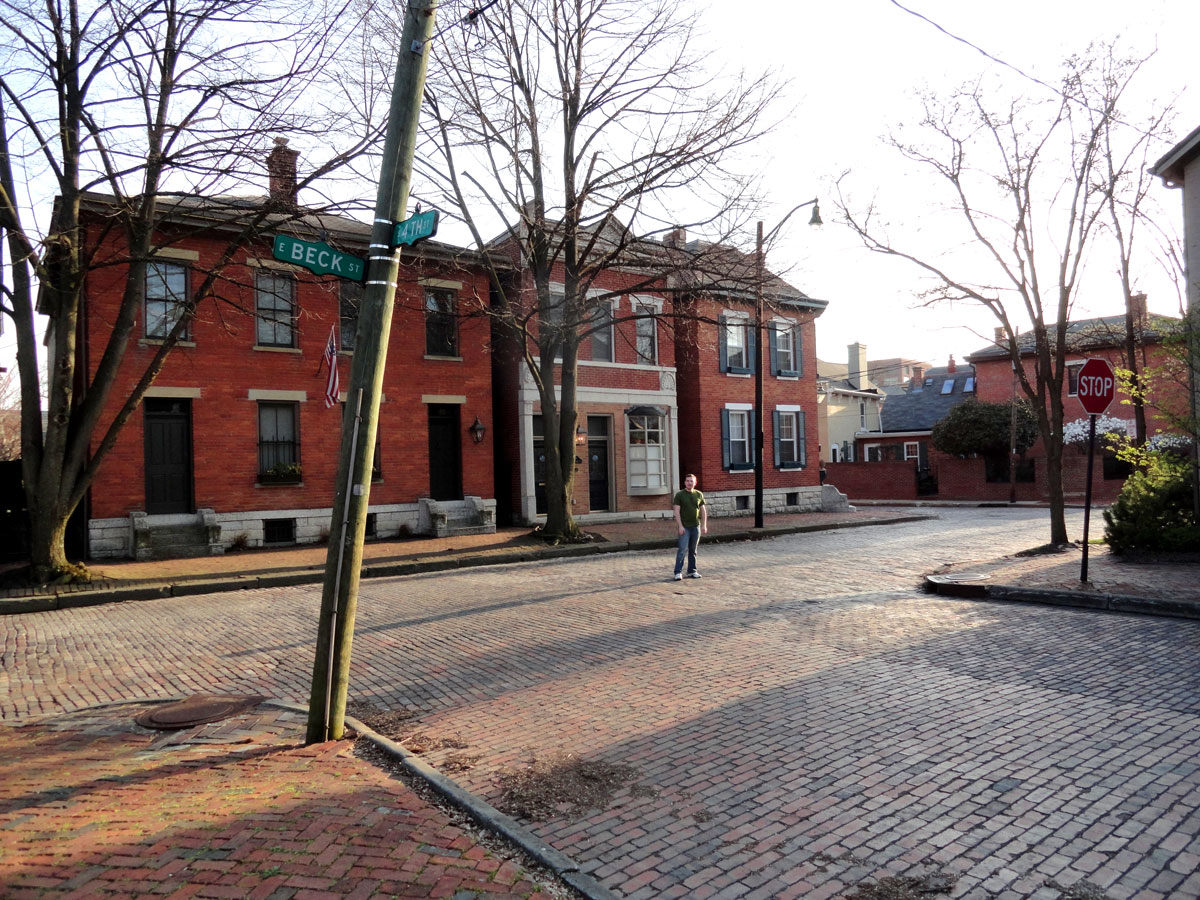 When recommending where to eat and drink in Columbus, most websites and people pointed us to the Short North neighborhood. While we enjoyed some great late-night cocktails at Mouton with some fantastic people-watching on High Street, it was another neighborhood that we found the most charming. The German Village was originally settled in the early to mid 19th century and is located just south of downtown. In the 1950’s the area was a slum and threatened by demolition, but locals started a movement to save it and today it is one of the best preserved historic hoods in the country. Before researching our trip, we had no idea it even existed, but that’s part of what makes it so great, it’s not over-hyped or crawling with tourists. While primarily residential feeling, there are lots of little businesses and restaurants tucked in the corners. Most of the streets are brick and the houses are beautifully preserved. Overall it feels more like a European village than part of a sprawling American city of 800,000.
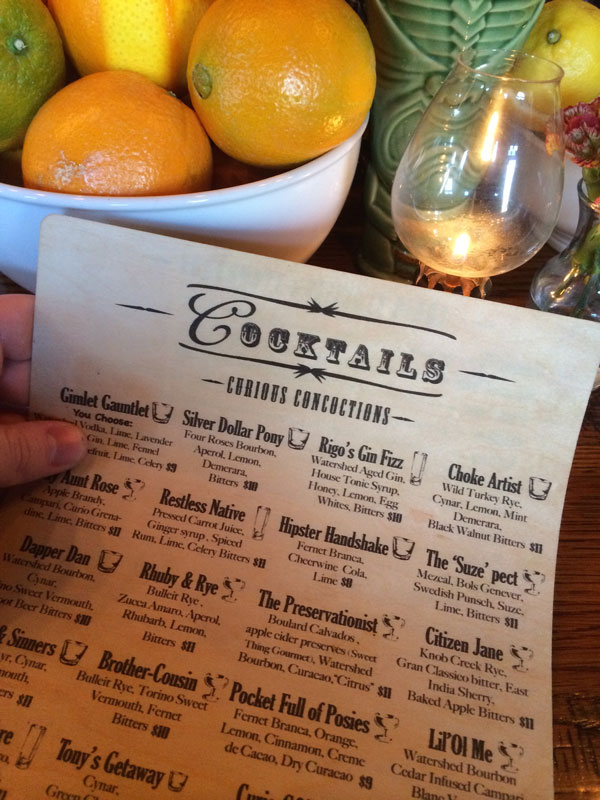
Cocktail menus at Curio
We had read up on a few food options in the neighborhood before arriving and decided that Harvest Pizzeria sounded good. Unique wood-fired pizzas, locally sourced ingredients, sustainable … you know the drill. Right next door the same owners operate a cocktail bar called Curio. We bellied up and enjoyed a couple drinks while waiting for our table at Harvest. Curio had it all, from classic cocktails to inventive creations, awesome decor, fantastic menu design and most importantly, knowledgeable bartenders. There’s something really satisfying about having some great booze and then walking down a charming street that is not full of drunken Ohio State bros, and for that, German Village, you are our best of Columbus pick.
Bridge Walk at the New River Gorge National River
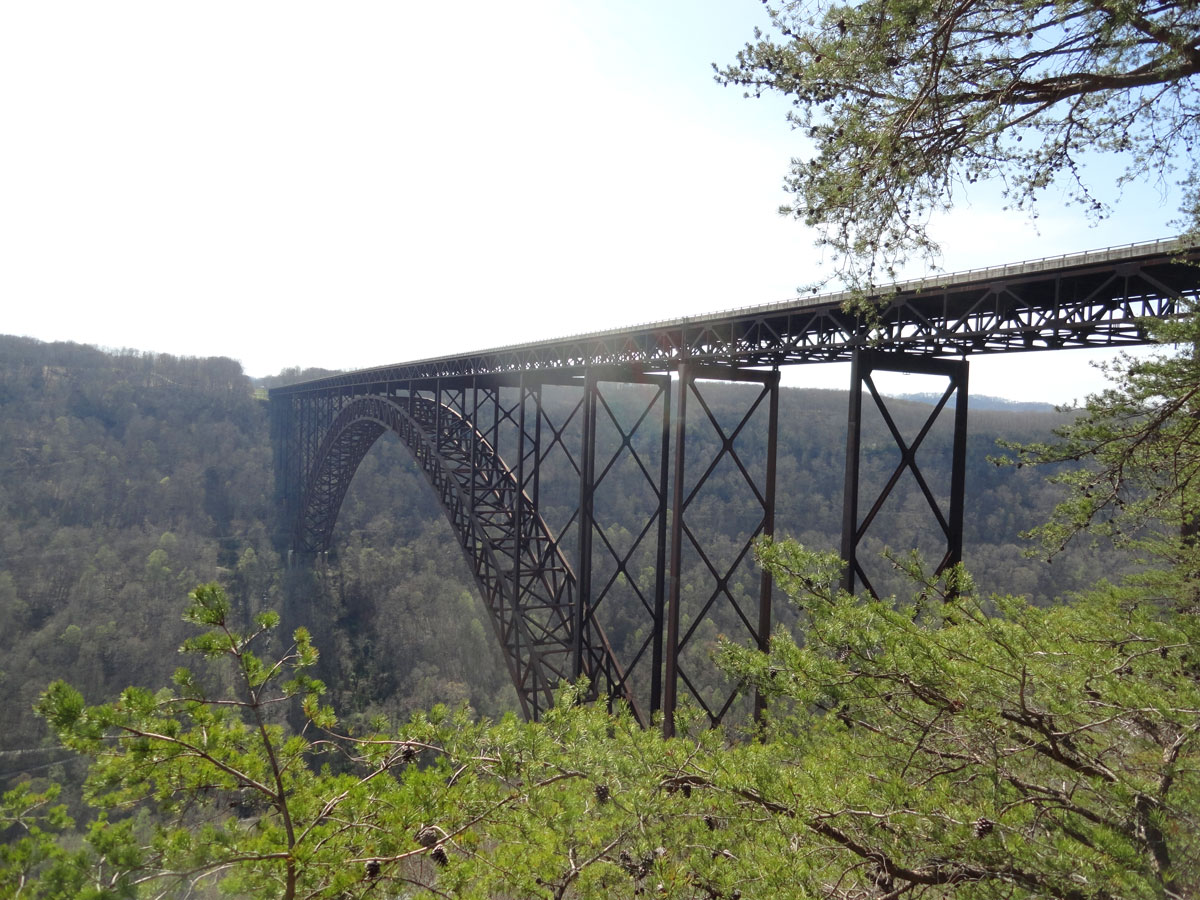
Any good road-tripper has some nerdy things they want to see “just because”. One of mine has been the New River Gorge Bridge in West Virginia. Some might recognize it from the back of the West Virginia state quarter. Completed in 1977, the bridge carries US Highway 19 across the deep gorge carved by the New River (which counterintuitively, is one of the oldest known rivers in the world). It reduced the time it took to cross the gorge from 45 minutes to 45 seconds. The bridge currently ranks as the longest steel arch span in the western hemisphere and the third highest bridge in the United States. I had thought of the bridge as just a quick stop to snap a couple pictures from a viewpoint, but one day while prowling Google Maps, I randomly came across a business marker labeled “Bridge Walk”. Turns out, this company will take you on a guided bridge tour on the tiny maintenance catwalk underneath the structure. We had to do it. We made advance reservations and upon arrival were fitted with a harness and tether rope and driven to the foot of the bridge.
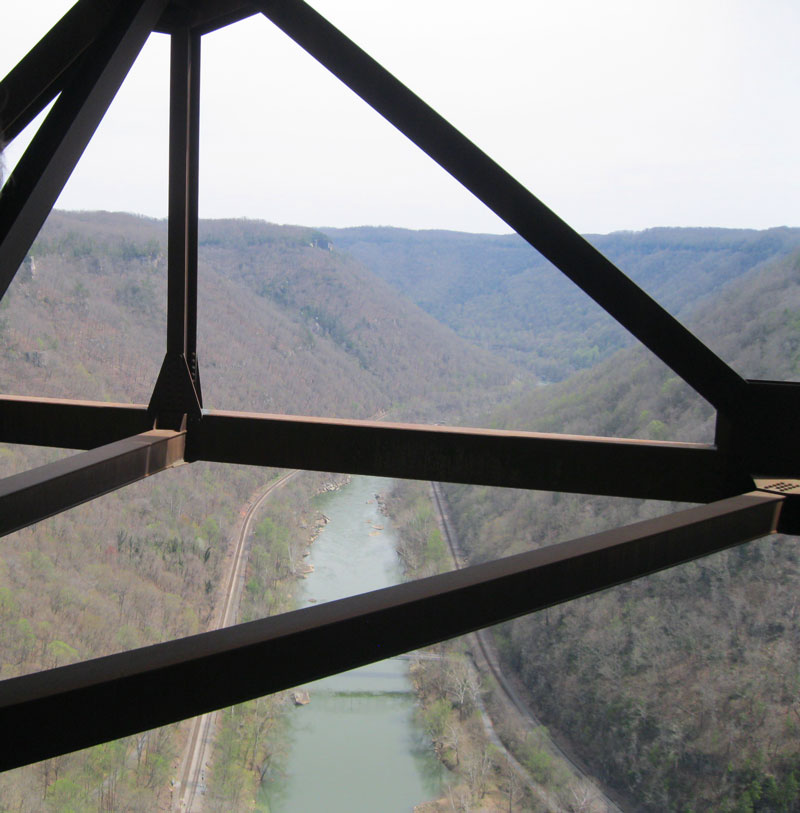
New River Gorge as seen from the catwalk.

Looking straight down.
The whole experience lasted about 3 hours and includes a lot of cool information on the bridge’s engineering and construction, local history and ecology of the New River Gorge National River park it passes through. Guides move along at a leisurely pace, pausing often to allow guests to soak in the views and watch tiny kayaks and rafts run the rapids below. Speaking of below, the catwalk is 851 feet above the river and you’re basically looking straight down through thin air and a few steel beams. Traffic above can be heard rumbling and heavy trucks make the bridge tremble. People with a fear of heights might be freaked out at the thought, but you never feel unsafe. Bridge Walk has a 99.7% completion rate, with only a handful of people ever backing out. Overall a highly entertaining and worthwhile $70 spent on a very unique experience (It is the only such attraction in North America). Another great reminder to always dig a little deeper to find activities along the route of what would have been just another day of driving.
 highkicktravel
You must be logged in to post a comment.