Summer 2015 Road Trip Plans

Summer2015_Header

This summer we’re returning to our road trip roots and making our travels exclusively by car for the first time since our spring 2014 DC trip. While flying is a great way to cover long distances quickly, spending a day dealing with the fiasco of air travel can erase some of the enjoyment of time away. Plus there are too many side trips on the ground that you miss in the air, Great Platte River Road Archway Monument anyone? Another side benefit of car-only travel is that we’re only limited by the amount of space in the car, so we can way overpack or pick up a case (or three) of craft beer to bring home. The options are endless.

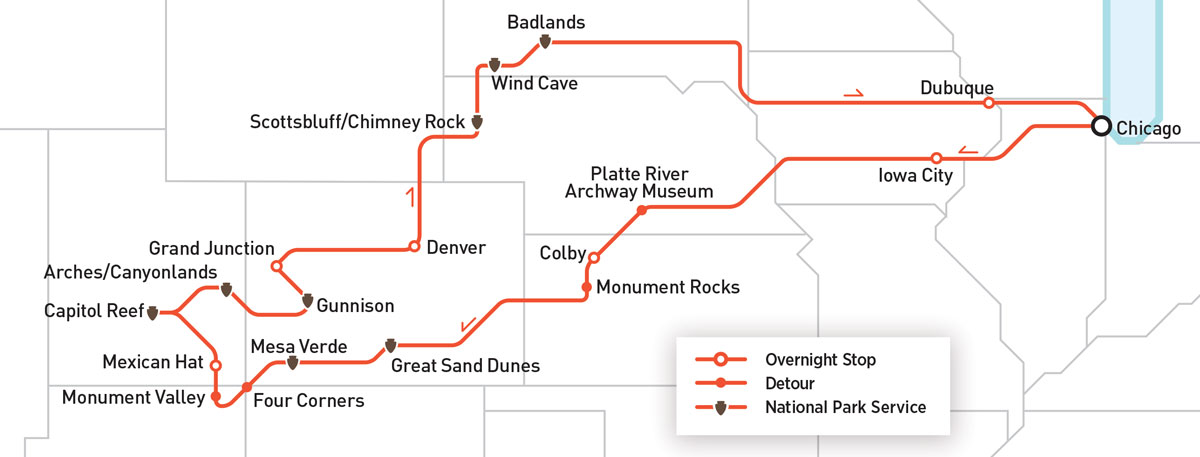
Having been to southwestern Utah and the Denver area extensively, there was a gap in our map that we’ve been wanting to fill in. We thought about a few different ways to make it happen, but settled a few months ago on making it an epic 3-week summer loop. This route length will break our previous record set by Seattle to Chicago in 2013 (3,624 miles). This one should easily crack 4,000. We’ll pass through 10 states, even touching four at the same time at the four corners marker. Here is the route:

Summer2015_Route

In the Colorado Plateau region there is an incredible number of Park Service sites relatively close to each other. The National Parks we’ll visit in order are: Great Sand Dunes, Mesa Verde, Capitol Reef, Arches, Canyonlands, Black Canyon of the Gunnison, Wind Cave and Badlands (our first park re-visit). By mid-July we’ll have been to 38 of the total 59. In addition, we’ll visit or pass through five National Monuments, one National Natural Landmark and one National Historic Site. Upon entering Everglades National Park in April, we purchased the America The Beautiful pass, which grants entrance to all National Park Service sites for a full year for $80. Ours will be valid through the end of April 2016. All we’ll have to do is flash our pass at the entrance gates, definitely a good value in a multi-park year.

Our lodging is reserved for the whole trip and our route is planned and continuing to be refined through additional findings. The National Geographic Scenic Highways and Byways book is coming in handy for that. Since special tours and events in National Parks tend to book up quickly in the summer, we always check what can be reserved ahead of time. We currently have booked the Twilight Tour at Mesa Verde and will reserve a cave tour at Wind Cave when the tickets go on sale for that time period. We’ll also be celebrating Independence Day in style with a daily-rental Jeep Wrangler from Thousand Lakes R.V. Park at Capitol Reef, how appropriate.

Go West indeed.

Posted in Maps, Upcoming Travel | Tagged , , , , , , , , , , | Leave a comment

Destination: Cayman Islands

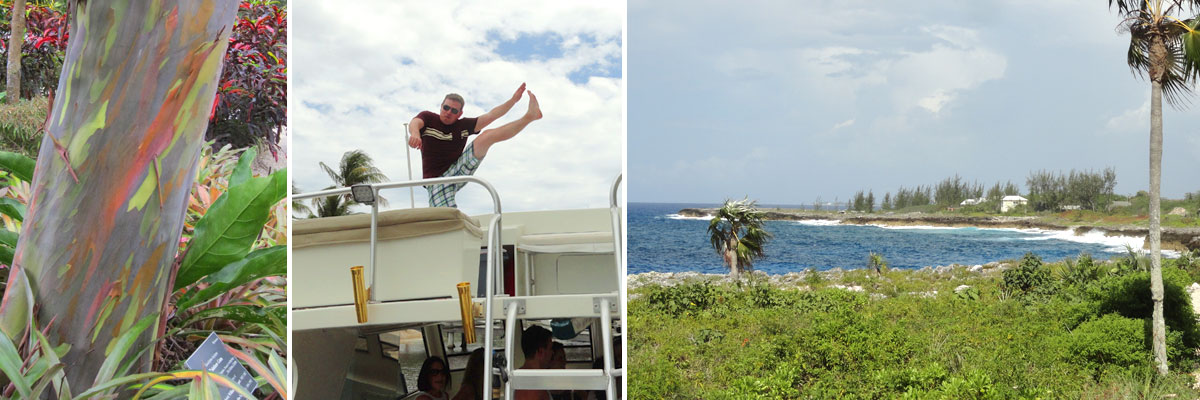
Colorful bark of the rainbow gum tree, kicking on board the Double Trouble, coastal Grand Cayman.

Colorful bark of the rainbow gum tree, kicking on board the Double Trouble, coastal Grand Cayman beauty.

When our friend and world traveler Sarah moved to the Cayman Islands last summer for work, we knew it wouldn’t be long before we were invited to the tropics. Direct flights are available from many major North American airports like Chicago, New York, Toronto and Atlanta, but since we were also planning a Florida portion of the trip, we flew down on the short one-hour flight from Miami. Grand Cayman’s Owen Roberts International Airport is about an hour flight south of Miami. It’s one of those little tropical deals where there’s no jet bridge, passengers just walk down the stairs from the plane onto the tarmac, we love that. We also loved the live band that struck up some Caribbean tunes while we walked from the plane to the terminal, what a great welcome. The other thing that welcomed us was the temperature. Even after spending 5 days in Florida, the heat and humidity hit us like a smack in the face.

The Cayman Islands are an overseas territory of the United Kingdom located south of Cuba and west of Jamaica. It is governed mainly by the United Kingdom, but there is an elected legislative assembly to handle domestic issues. The result is some fun British quirks like driving on the left side of the road and Queen Elizabeth’s photo on the Cayman Island Dollar. There are also strong American influences due to the tourism industry and American Investments in the country. Pretty much all businesses will accept either Cayman Island or American dollars in cash. The vast majority of the 58,000 residents live on Grand Cayman, with small amounts about 90 miles to the northeast on the tiny “sister islands”, Cayman Brac and Little Cayman. Development is mostly on the western end of Grand Cayman with the capital and largest city of George Town located on the southwestern shore. That’s where cruise ship passengers arrive and local government is located. North of there is the famous Seven Mile Beach, recently named best beach in the world by US News & World Report. It is lined with resorts from end to end and full of people sunbathing, snorkeling, swimming, boating, parasailing, paddle boarding and any activity involving the bright blue water. Both the water and air temperatures are remarkably consistent throughout the year, making shorts, t-shirts and swimming suits standard attire year-round. The best time to visit is the same as Florida, in the November to April dry season. Hurricanes are a major threat to the low-lying islands in the wet season and have been known to cover almost the entire island with storm surges.

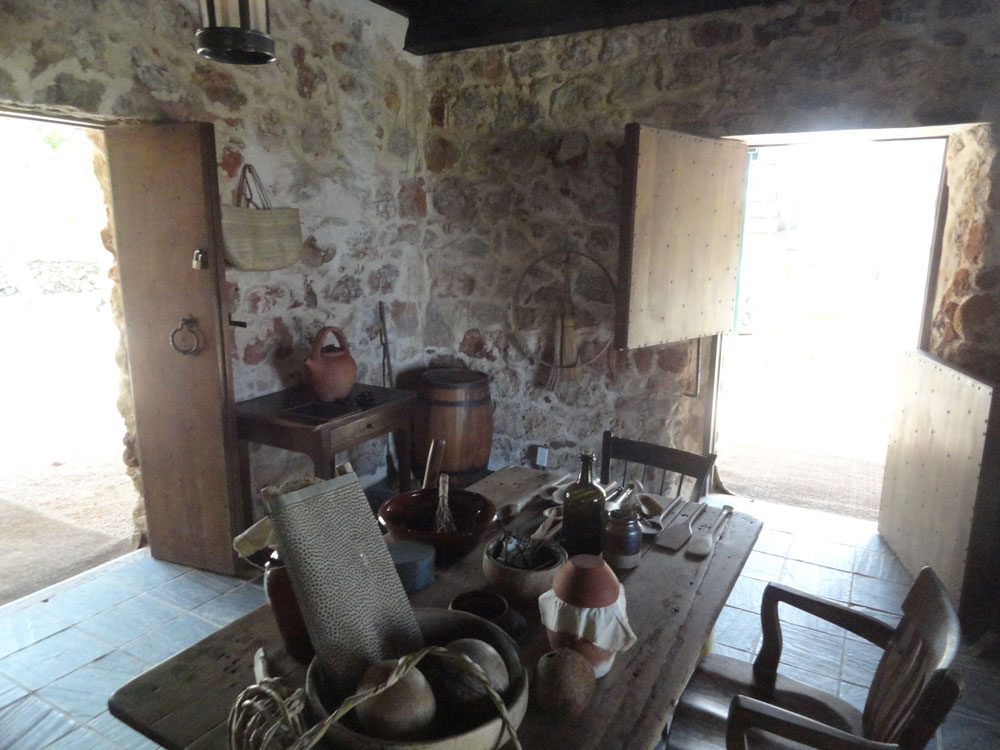
Interior room in Pedro St. James.

Interior room in Pedro St. James.

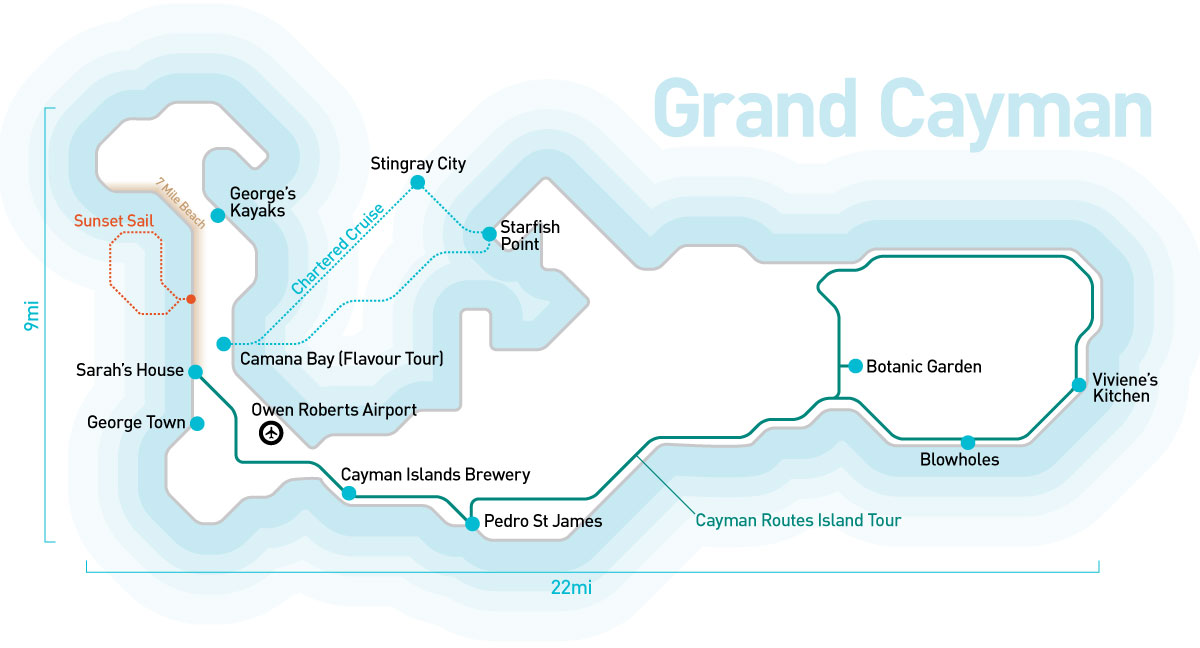
Our favorite Caymanian activity and a great way to get acquainted with Grand Cayman was our tour with Cayman Routes Island Tours. Shirley, the owner/guide is a native Caymanian who can trace her family tree to the first settlers, so she can answer any and all questions about island life. We selected the Eastern Route tour which began from our accommodations at Seven Mile Beach and took us the full length of the island. First stop was the oldest existing building on the island, Pedro St. James, a home built by a wealthy Englishman in 1780. A 4-D movie at the visitor center tells the history of the home with special effects including an artificial rainstorm. The building has been used as everything from a home to a courthouse to a jail, with many historic Cayman events taking place there. It was neglected for decades and was nearly a ruin in the 1990s when it underwent a 7-year restoration that brought it back to its former glory. It is now a National Historic Site of the Cayman Islands.

blueiguana

Iguanas don’t seem to mind curious travelers getting close.

After Pedro St. James we headed to the Queen Elizabeth II Botanic Park in the center of the Island. It features tropical flowering plants from around the world on a backdrop of native Caymanian vegetation, since the plants that grow there are “practical, not pretty”. The area is also one of the habitats for the blue iguana, found only on Grand Cayman. This endangered species was once down to only 12 known animals, but captive breeding and release programs have gotten their number up to approximately 750 as of 2012. We saw several sunning themselves on the lawn and they love to pose for photos. After that we rode around the north coast of the island to East End where we stopped for lunch (more on that below). Along the southern edge of the island we viewed the Blow Holes, formations in the rocky shore that funnel incoming waves, causing them to spray vertically up to 20 feet. A local named Allan is the unofficial ambassador of the Blow Holes and will share his knowledge of the attraction and take well-timed photos of visitors with the water spray in the background. He’ll also do a pretty spot-on impression of President Obama! Shirley’s tours are flexible, so the first thing she asked us in the morning was if we wanted to add any more sites. She suggested Cayman Islands Brewing, and since we’ve never turned down a brewery visit, we made it our last stop of the day. The brewery was founded in 2007 and has been providing a variety of quality beers to islanders ever since. As we always recommend: drink local.

Obviously when on a small island, boating is going to be a popular recreational activity. We managed to fit three excursions into our four days on Grand Cayman. The first was a nighttime bioluminescence tour in Governors Creek with George’s Kayaks. After meeting George at the Yacht Club and getting situated in our kayaks, he led our small group on a half-hour paddle to a secluded mangrove forest away from artificial lights. Small organisms in the water react with a flash of light when disturbed, so brushing your hand or paddle through the water creates a sparkling trail of flickers. It’s very cool, but be warned you have to paddle into an extremely tight space in pitch darkness with tangled mangrove roots all around, it’s pretty creepy. One of us (Sarah) managed to get the kayak jammed sideways amongst the trees, causing brief panic.

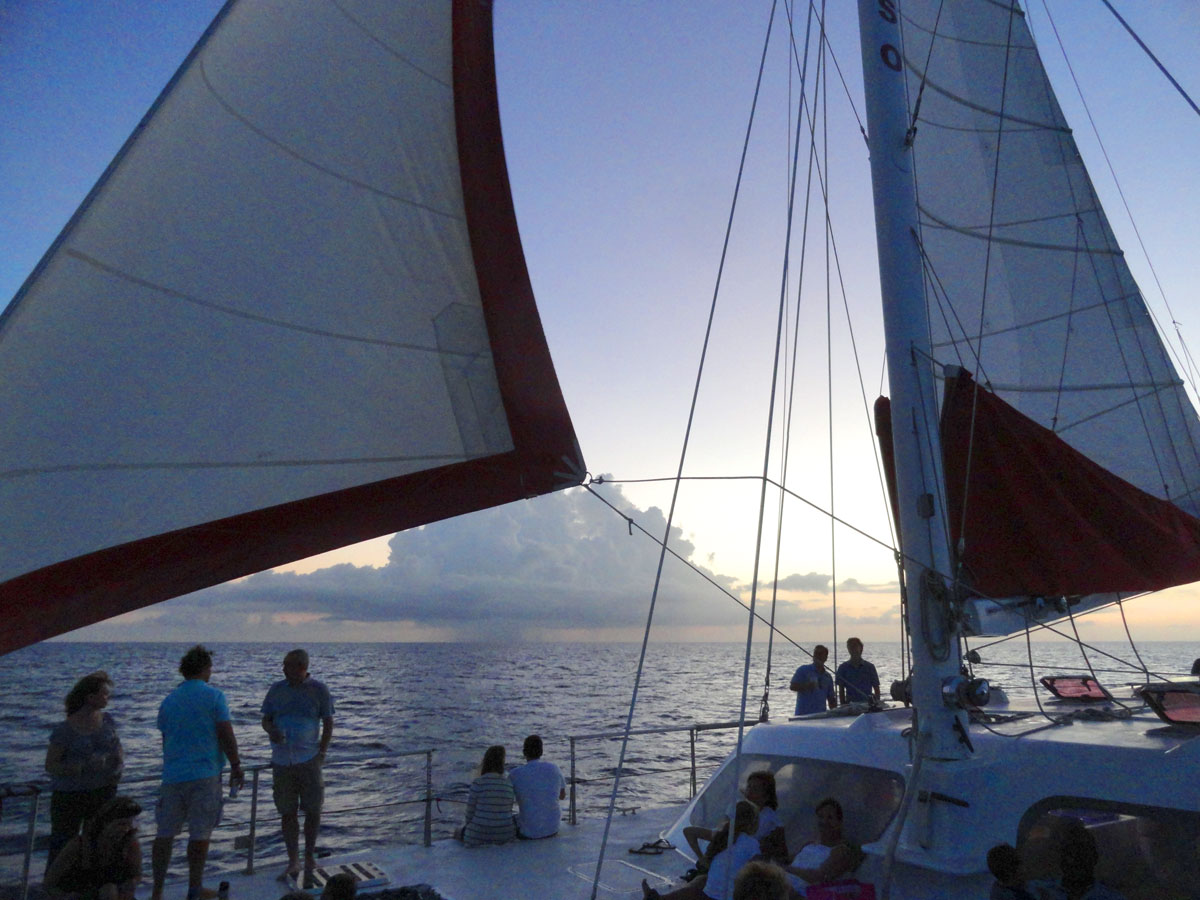
Sunset Sail.

Sunset Sail off Seven Mile Beach.

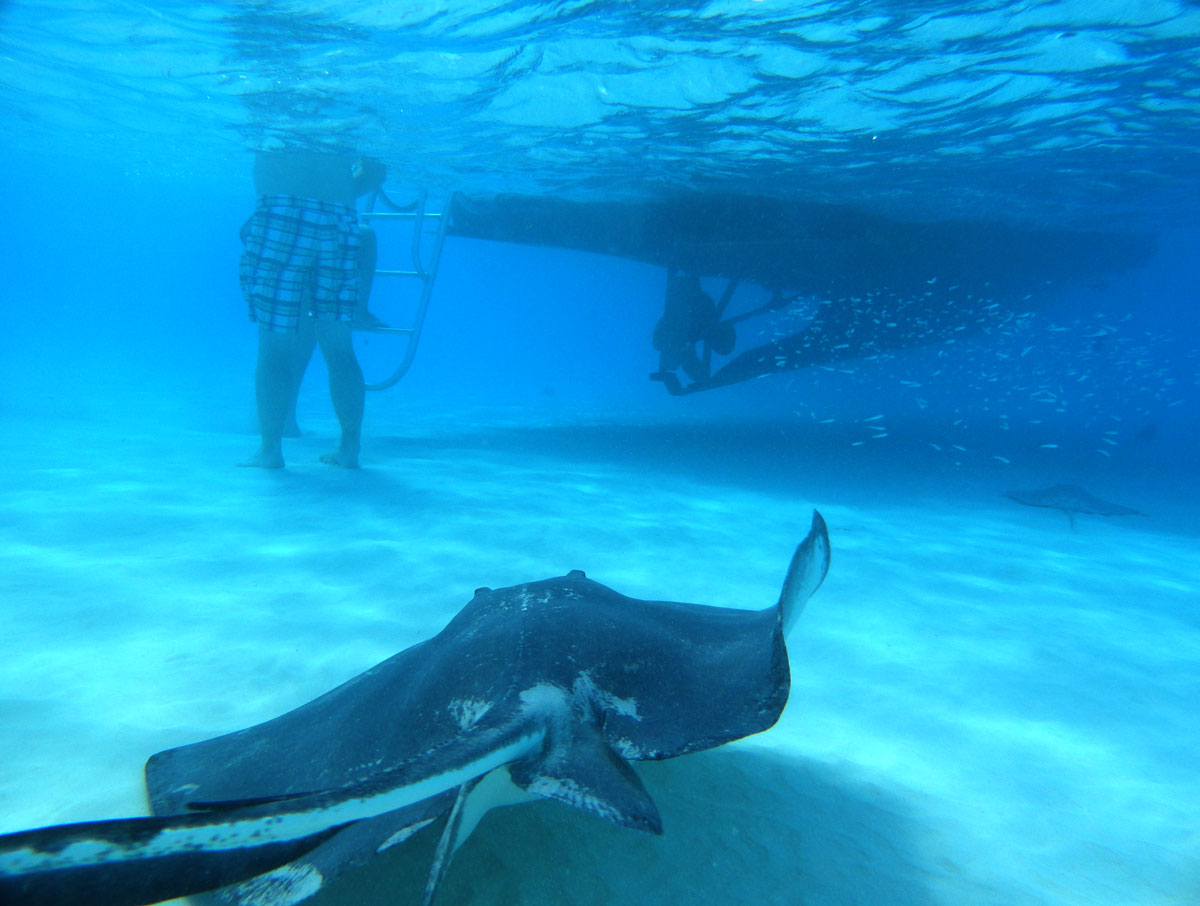
On Friday night we took a sunset catamaran sail with Red Sail Sports. They offer a variety of tours as well as private chartered cruises, so everyone should be able to find a tour that fits their schedule. Our boat left from the Westin Resort and Grand Cayman Beach Suites and sailed along Seven Mile Beach for two hours. When the crew is not raising the sails, they’re tending bar, so by the time the sun hits the horizon you’re sure to have a couple rum punches in you. Our final boating excursion was a chartered party boat in celebration of Sarah’s birthday. We were on board the Double Trouble with a capacity of around 30. Coolers are provided and the drink policy is BYO, so all you need to do is buy some beer or mix up a jug of something (Pimm’s Punch!). Our young captains picked us up in Camana Bay and steered us across North Sound to Stingray City. Back in the day, fishermen would hose off their boat decks in this area, washing food into the water. The rays have been coming ever since, attracted by the sound of boat motors and their promise of an easy meal. Visitors to Stingray City can get off their boats and stand inStingrays waist-deep water while rays swim around in every direction. If you’d like to hold a stingray, the boat captains will pull one up and put it in your arms. They’re up to 4-5 feet across and feel like wet velvet. After Stingray City, we cruised to Starfish Point to jump off the boat and swim around in the water (only saw one starfish). Then we headed to the nearby restaurant Kaibo for some early evening snacks before motoring back to Camana Bay after dark.

Cayman is known as a culinary capital of the Caribbean Region and our first night there we got a good overview by going on the “Flavour Tour” in the Camana Bay district. The tour meets every Wednesday at the West Indies Wine company and begins with a complimentary glass of champagne. After that the group walks around to four neighboring restaurants sampling a course at each. The route varies, so restaurants get a chance to prepare a different course on different evenings and diners can experience a different menu on a following visit. One of our favorites was the pan-seared lionfish at Michael’s Genuine. (Feel free to eat all the lionfish you want, because it’s an invasive species!) As part of our tour with Cayman Routes, we were treated to lunch at Vivine’s Kitchen, a small restaurant on the eastern coast of Grand Cayman. We selected the Cayman-Style Flounder, a local specialty generally prepared with catch-of-the-day fish, and featuring a tomato-based sauce with onions, peppers, carrots and rice. The fish was delicious and the setting is perfect. Another must-try local specialty is breadfruit. This fruit-bearing tree was discovered in the South Pacific region but has been introduced to many tropical regions around the world. It has a texture and consistency similar to potato. Apparently any cooking technique that works on a potato will translate to a breadfruit as well. We ate it as an appetizer, fried with a side of butter for dipping, yum.

We flew home to Chicago via Toronto after 4 nights in Cayman, and all it took was two flights and one trip through customs to make us wish we hadn’t left.

Read more about the Florida portion of the trip: Miami and Key West, National Parks
See the full gallery of images here.

Posted in Destinations | Tagged , , , , , , , | Leave a comment

Kick of the Week: Columbus, Ohio

Ohio Statehouse, Columbus, OH - April 2014

Ohio Statehouse, Columbus, OH – April 2014

Last Spring we spent a night in Columbus, OH on our way to Washington, DC. A 6-hour drive from Chicago, it made for a good overnight stop, and a city we had never visited. After checking in to our hotel on Capitol Square (book through Hotwire) we set off to enjoy some great culture, food, and drinks. After walking around the historical German Village we dined at Harvest Pizzeria – popular for its artisanal pizzas as well as Curio, the excellent craft cocktail bar it is connected to. We then explored the Short North neighborhood, ending the evening with additional cocktails at Mouton.

Posted in High Kick Photos | Tagged , , , , , , | Leave a comment

Florida National Parks

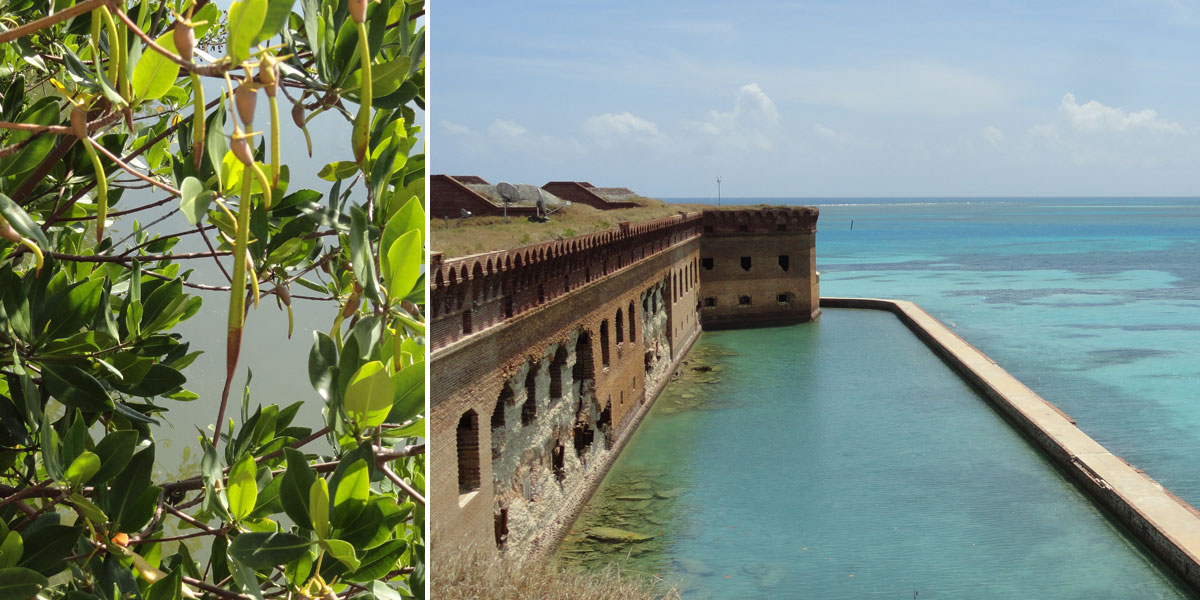
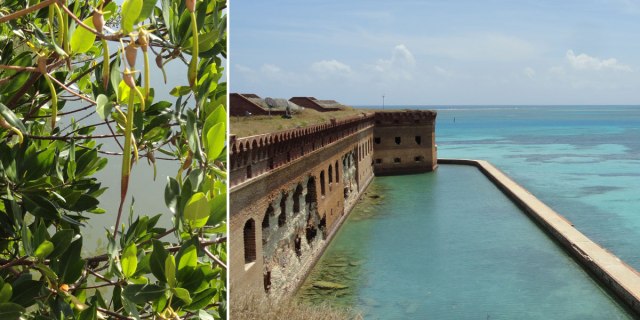
Closeup of Mangroves at Biscayne, View from the rampart of Fort Jefferson.

Closeup of Mangroves at Biscayne, View from the rampart of Fort Jefferson, Dry Tortugas.

Given their locations at the southern tip of the lowest and flattest state, it’s no surprise that all three of Florida’s national parks feature water prominently. Everglades is the largest wilderness area east of the Mississippi and is a UNESCO Biosphere Reserve. Biscayne displays five distinct tropical bioregions within sight of the Miami skyline. Dry Tortugas is one of the most inaccessible parks in the country and despite being almost entirely covered by water, contains the largest masonry structure in the Western Hemisphere. None of these parks poke up much above sea level, with the highest point in any of them being the 8 foot maximum in Everglades. (A recent article in National Geographic highlights the resulting danger of sea level rise in not only the parks, but the entire south Florida region.)

As with all Florida visits, but especially with these outdoor activities, the best time to visit is from November through April. This is Florida’s “dry season” when temperatures are somewhat tolerable and humidity is within reason. In the wet season, mosquitos and heat become unbearable and there’s always the threat of those pesky hurricanes rearranging the landscape.
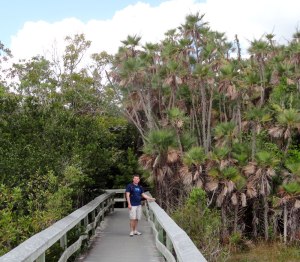
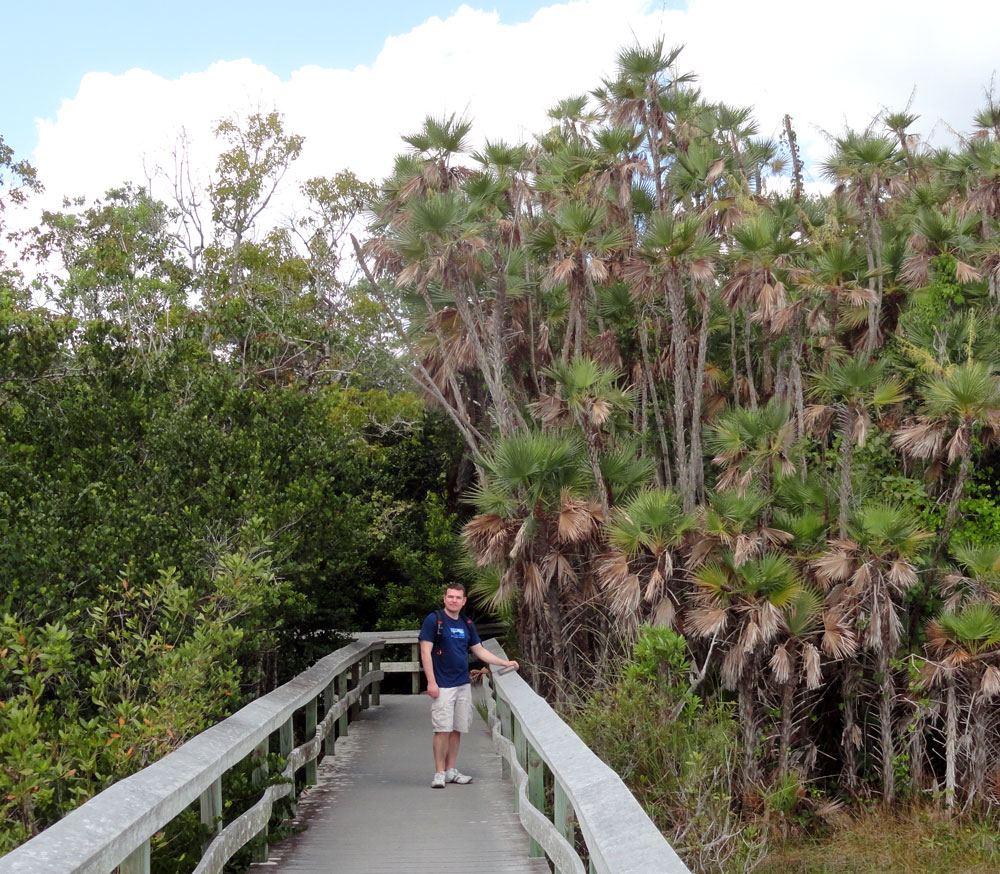
Entering Mahogany Hammock

Entering Mahogany Hammock

We traveled to Everglades by car the morning after our Miami arrival. Alamo rental car in Miami Beach had the best rates in the area, and gave us a free upgrade to a compact crossover at pick up. It’s an easy hour and a half drive to the Ernest Coe visitor center at the park’s eastern entrance. There are also visitor facilities at Shark Valley and Everglades City, but for a one-day visit, the road from the Coe Visitor Center to Flamingo provides the most opportunities for exploration. We made our first stop at Royal Palm where the Anhinga Trail and the Gumbo Limbo Trail give a great introduction to Everglades animal and plant life. Along the Anhinga boardwalk, we saw alligators, vultures, herons, egrets, a turtle and of course lots of anhingas. It’s an easy 0.8 mile walk you can do on your own or on a ranger-led tour. The Gumbo Limbo trail is named after the tree that grows in the tropics of the Americas (this is its northernmost location). The trail winds through a thick grove of trees known as a hardwood hammock that forms an important habitat for a diverse range of life. 15 miles further into the park is Mahogany Hammock, home to the largest living Mahogany tree in the country. Another short boardwalk loops through for closeup views of dense foliage.

Dolphin fin poking out of the water.

Dolphin fin poking out of the water in Tarpon Creek.

Flamingo is located on the southern coast of the Florida peninsula 38 miles from the park entrance. It contains another visitor center, a campground and a small cafe where you can eat fried alligator right after viewing them in their natural habitat, yum. The area used to have a larger restaurant and lodging, but hurricane Wilma had other plans and wiped them out with a 9-foot storm surge in 2005. Flamingo is also where we booked the backcountry ranger-led boat tour that we highly recommend. Morning and afternoon trips depart hourly (seasonally) on pontoon boats that take guests up Buttonwood Canal, across Coot Bay, through Tarpon Creek and into Whitewater Bay. Rangers give information on area wildlife while cruising alongside thick mangrove forests. The highlight of the ride was following two dolphins as they swam into Whitewater Bay. If non-motorized boating is more your style, you can rent a canoe and paddle up the canal yourself. After our boat tour, we looked for manatees in Florida Bay (didn’t see any) and then retraced our driving route back through the park. The Pa-hay-okee overlook gives a fantastic view of the seemingly never ending “river of grass” of Shark River Slough.

The Everglades’ environment is considered endangered due to threats by suburban development, intense agriculture and rising seas, and therefore a major pillar of the park’s mission is to restore and promote the natural health of the region. In a good sign, recently a few miles of U.S. Highway 41 were elevated onto a bridge so water can pass underneath, restoring natural flow to a portion of the park for the first time since 1928. More of these bridges are planned to be constructed, ensuring a healthier future for these important wetlands.

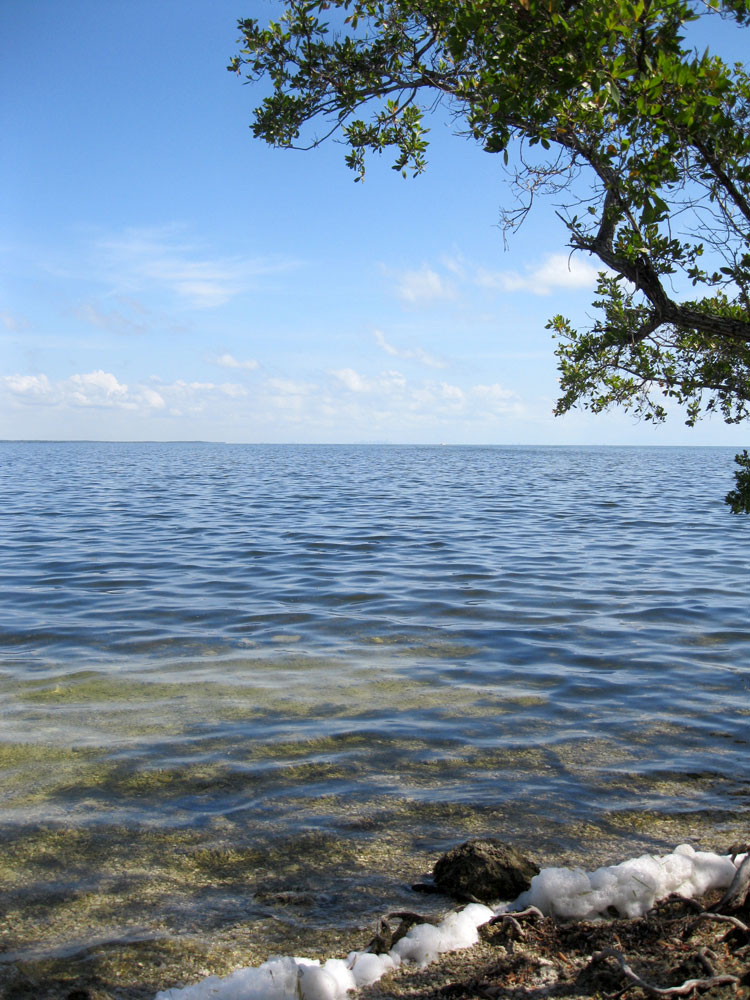
BiscayneView

Biscayne Bay.

On the day of our drive from Miami to Key West we made a stop at Biscayne National Park. It is located about an hour’s drive south of Miami Beach on the coast. Biscayne protects the waters of Biscayne Bay, mangrove forest coastline, low-lying barrier islands and living coral reefs. 95% of the park is covered by water. Unfortunately for visitors, there is currently no concessioner operating within the park to provide the glass-bottom boat tours and paddle boat rentals that provide the best look at the park. As a result, we knew it would be a fairly brief visit for us. We looked at a schedule of events and found a Sunday 10:00am jetty walk tour, so we made sure to get there in time. Our guide, Summer, took us around the water’s edge near the visitor center Convoy Point and out along a thin jetty poking into the bay. We learned about the history of the area as well as the plant and animal life in the 5 ecological zones that make up the park. There are boat tours into the park available from companies in the Miami area, but our timeframe did not allow that option.

The final Florida park we explored was probably the most spectacular of the three. We had known about Dry Tortugas National Park for some time, but thought it was one of those we might never reach. When our travel plans turned to southern Florida, we made it a priority. It’s not a heavily visited park, for the simple reason that it is located 70 miles west of Key West, and the only way to get there is by ferry, chartered seaplane or private boat. The vast majority of visitors arrive on the Yankee Freedom III ferry, the easy and economical choice. The price of $170 for adults ($125 for kids) sounds steep at first, but with it you receive passage from Key West to Fort Jefferson, breakfast, lunch, access to ranger-led tours and complimentary use of snorkeling gear. The ferry makes one round-trip voyage daily, leaving from the ferry terminal on the north side of the island at 8:00am. It takes about 2.5 hours to get to the park.

JeffersonYard

View of the 47-acre inner yard of Fort Jefferson.

Dry Tortugas includes the seven Dry Tortugas Islands that make up the westernmost extent of the Florida Keys island chain. They were named the Tortugas by explorer Ponce de León because of the sea turtles that nest on the low-lying, sandy islands. “Dry” was added to the name on maps to indicate to passersby that there is no fresh water available there. More than 99% of the 100 square miles that make up the current park is covered by water. It primarily protects the marine ecosystem including the most pristine of the coral reefs in the Keys region. In addition to the natural habitats, it also preserves a historic fort.
In 1822, after Florida became part of the United States, it was determined that military fortification was needed in the Gulf of Mexico to protect American shipping routes between the Mississippi River and markets on the eastern seaboard and Europe. The Dry Tortugas were found to be ideal because of their position and the natural deep harbor that could shelter many navy ships. One of the keys, Garden Key, became the base of the enormous Fort Jefferson, a 430-gun “keep out” sign. Work was begun in 1847 and continued through the Civil War while it remained in Union Hands. It was never fully completed, and only 130 of the planned 430 guns were installed, but what exists is still an enormous construction of 16 million bricks. Nobody ever dared fire upon it, but it served as an important strategic defense and a wartime prison.
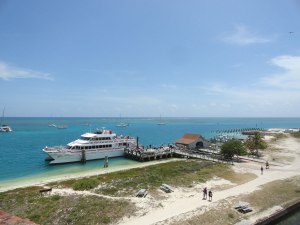
Yankee Freedom III preparing for departure.

Yankee Freedom III preparing for departure.

Approaching this massive structure by boat after 70 miles of open water is somewhat surreal, it just appears in the horizon smack in the middle of the Gulf. The Yankee Freedom III docks near the fort’s entrance and remains there until the 3:00 departure time. With those 4-5 hours, you are free to explore the site at your own pace. We started out by taking advantage of the free snorkeling gear, paddling around the small beach area and amongst the colorful coral formations around the former coaling dock pillars. After drying off, we returned to the boat where lunch was being served. It’s just a sandwich bar, but it hits the spot. We signed up for a 1:00 tour with ranger Bruce that took us all around the fort and gave a detailed view of its history and current state. Since he had a small, attentive group the tour lasted much longer than the planned 45 minutes. Visitors can walk the perimeter of the fort on the roof level or around the moat wall at the water level. The beach area to the south of the fort is also available for overnight camping if you bring your own equipment. Last call for boarding the ferry for the return trip is 2:45. We grabbed seats on the open upper deck and enjoyed the sunny and breezy cruise back to Key West. We added extra enjoyment by buying some booze from the on board bar. After our day at Dry Tortugas, we were already placing it among our favorite National Park experiences.

Of special note is that our entrance to Biscayne marked the halfway point in our National Park tally. We’ve now visited 31 of the total 59. This summer we’ll be taking that up to 38 with our soon-to-be-detailed road trip route.

See the full gallery of images from our trip here.

Posted in Destinations, Travel Resources | Tagged , , , , , , , | 2 Comments

Spring Break: Miami and Key West

FloridaHeader

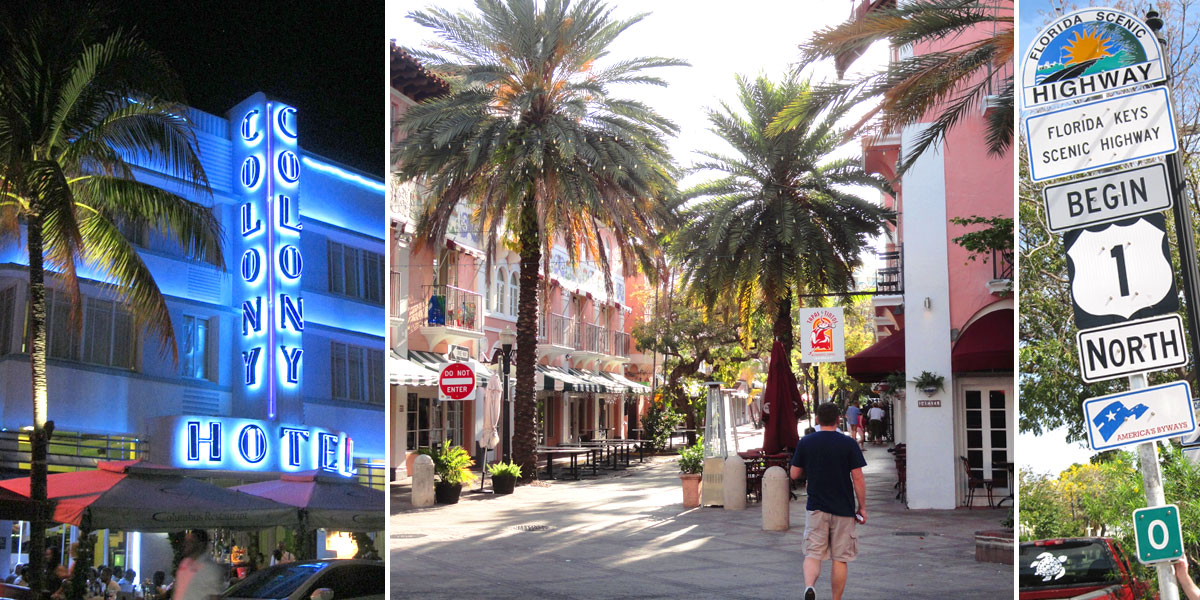
Neon along Ocean Drive in Miami Beach, Española Way and Clay Hotel, Mile Marker 0 in Key West.


Arriving in Miami is like stepping into Latin America without ever leaving the States. Its location on the far southern tip of the U.S. mainland, dangling into the Caribbean region makes it a multicultural crossroads of the Western Hemisphere. Latin music, food and art is everywhere, and Spanish is heard more often than English in South Beach.

Miami International Airport is one of North America’s major passenger hubs, so finding flights there is simple. From Miami Airport Station, we caught the #150 Miami Beach Airport Flyer bus. It makes a non-stop trip to Mid Beach by way of the Tuttle Causeway and then makes local stops on its southward route along Washington Avenue. It only costs $5 and less than an hour after stepping out of the airport, we were standing at the front door of our hotel. We spent two nights at the historic Clay Hotel at the corner of Washington Avenue and lively, pedestrian-only Española Way. The rooms are simple, but they have everything you really need and the location is perfect. We walked everywhere in town from the hotel. A nice breakfast is also included each morning. People looking for luxurious options will probably be happier at one of the countless resort hotels lining the beach, but we don’t travel to spend time in hotels, we prefer to get out and explore.
Our first stop was the Wolfsonian museum a few blocks south. The Miami Beach art scene is better known for the popular Bass Museum of art, but we were in the mood for oceandrivenightsomething a little less traditional. The Wolfsonian has a large collection of 20th century industrial design items, housewares, furniture and architectural artifacts as well as rotating exhibits. A collection of World War I posters and propaganda was on display during our April visit. Our favorite aspect of Miami Beach was the architecture of the Art Deco District. Strolling in any direction around South Beach takes you past tons of well-kept examples of the style. During the day it’s all “Golden Girls” pastel colors, but nighttime is even better with buildings featuring vivid neon signs and accent lighting. Night is also when Ocean Drive becomes loud and crowded with a perpetual traffic jam of really expensive cars. The people-watching potential is excellent.

On the food front, Havana 1957 provided wonderful Cuban flavor right across the street from the Clay (they also have a location on the Lincoln Road Mall). The house specialty chicken is delicious, as were the complimentary plantain chips given to us at the bar while we waited for our table. The following night we had a great dinner at the much quieter Local House further south. One dining fact to remember when visiting Miami is that unlike the rest of the U.S., the tip is usually already included in the bill. Also, Miamians love their rum-based drinks, so prepare for lots of mojitos, daiquiris and general tropical sweetness.

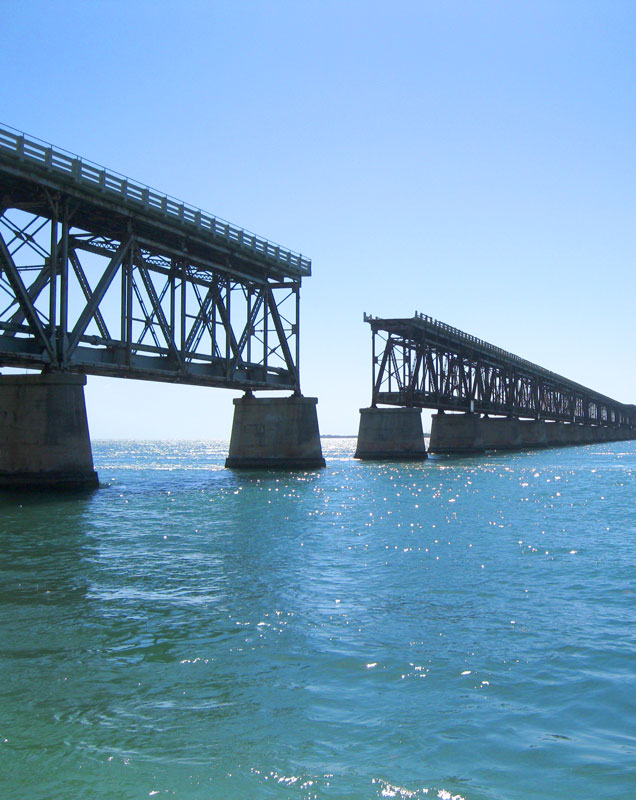
Former road/rail span at Bahia Honda State Park.

Former road/rail span at Bahia Honda State Park.

The road trip portion of the vacation involved driving from Miami Beach all the way down Highway 1 to Key West. This portion of the road is known as the Overseas Highway because of the 42 bridges that link the islands of the archipelago. It was originally completed as the Overseas Railroad in 1912 but when large portions of it were destroyed during the 1935 Labor Day Hurricane, the rail route was cut off at Florida City and the state built a roadway over the surviving viaducts and trestles. The drive is fascinating, with island after island passing by and nothing but bright blue water beyond the railing for long stretches. The longest of those is the accurately named Seven Mile Bridge, which connects Knights Key to Little Duck Key about 40 miles from Key West. It’s amazing to think that people originally envisioned and built this engineering work around the turn of the 20th Century. The whole route can be heavily trafficked and speed limits are fairly slow, so just relax and plan on it being a leisurely drive. On the road we checked our National Geographic Highways and Byways book for restaurant recommendations and ended up at Snappers in Key Largo. It turned out to be the perfect brunch spot with great eggs benedict, shrimp & grits and bloody caesars, all overlooking a small boat harbor. The next stop we made was at Bahia Honda State Park, just a couple keys beyond Seven Mile Bridge. The park features beaches, campsites and a section of the original Overseas Highway you can walk onto for a good viewpoint of the area. After that we took a detour onto Big Pine Key to see the National Key Deer Refuge. This species of deer is found only on a few islands and is strictly protected by law and low speed limits. They look similar to white tailed deer in miniature, only about 25-30 inches high at the shoulder. Just a few miles off Highway 1 on Key Deer Boulevard are the best places to view them, the Blue Hole and the Jack Watson and Fred Mannillo Trails. We hiked both short trails and came across one little guy foraging in the brush, but we also saw two preparing to cross the highway by the Winn-Dixie, so your odds of seeing them are about the same no matter where you are on Big Pine Key.

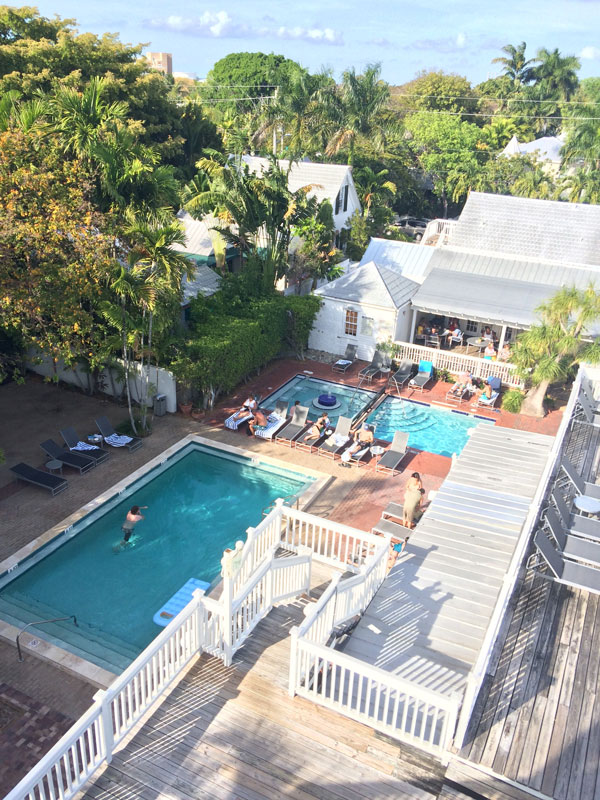
nyahdecks

NYAH hotel decks and pools.

By late afternoon we rolled into Key West and were greeted by wild chickens crossing the road. We stayed three nights at NYAH (Not Your Average Hotel) and found the name to be fitting. It has affordable rates, flexible rooms and while it’s centrally located, it’s enough off the beaten path to be quiet. They also don’t allow children, which is a big plus if you ask us, but an annoyance to families seeking lodging. The hotel encompasses 5 former houses and the yard space in between has been transformed into a series of pools and patios. Multiple layers of sun decks and private balconies are stacked up overlooking the pools, very cool. We ended up in a room that could sleep up to six for just the two of us. Street parking is difficult because most spaces in the old town area are reserved for local residents, but we found a large garage just a couple blocks from our hotel (James and Grinnell) that has reasonable rates and easy access. We only needed to stash the rental car for one night because you can walk, bike or taxi everywhere. We returned the car to Alamo the next morning.

View of Key West from the top of the lighthouse.

View of Key West from the top of the lighthouse.

There are enough historic sites in Key West to spend an entire day exploring on foot. We got the lay of the land by following portions of the self-guided Pelican Path Walking Tour. Pick up a guide brochure at the Key West Chamber of Commerce office on Greene Street, or download one here. It’s a good way to get some history at your own pace. Most of the nightlife and touristy shops line Duvall Street. It’s lively, but most of our favorite things were off the main drag. One of our favorite finds was President Truman’s Little White House, which is where he lived and worked during his many visits to Key West. He originally arrived due to doctor’s orders for relaxation, but eventually began bringing his Cabinet members with him so he could continue running the country while away from Washington. The best part of the house is that almost every piece of furnishing is original. A highlight is the custom Navy-built poker table where the president and his cabinet would gather for nightly low-stakes card games.

Hemingway's study.

Hemingway’s study.

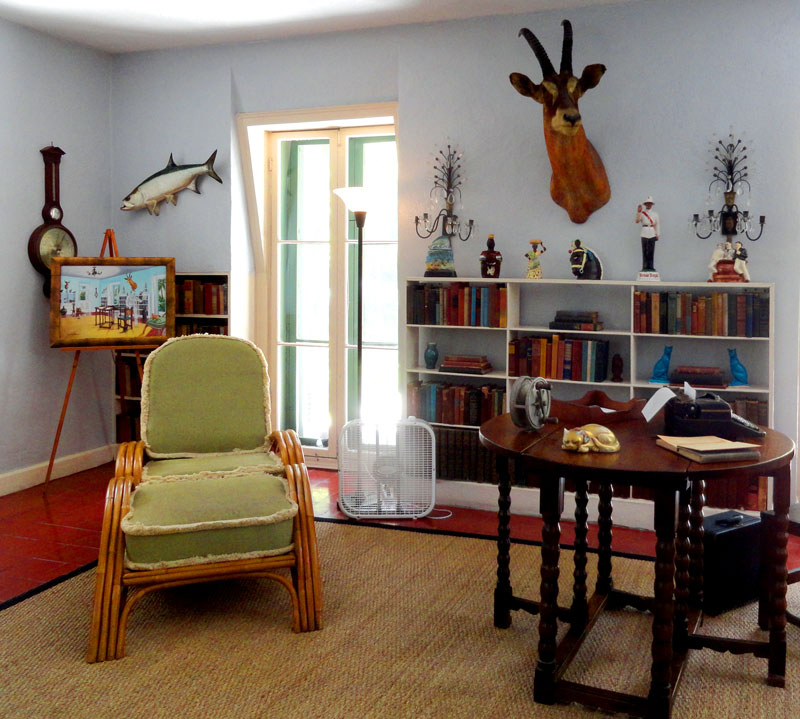
Several blocks south on Whitehead street is the home where Ernest Hemingway lived from 1931 through 1939 with his second wife Pauline. The $13 admission allows access to the house and grounds, visitors can walk through at their own pace or join one of the guided tours that begins periodically in the living room. Hemingway’s furniture and art are on display as well as descendants of his famous six-toed cats. Don’t miss his study in the rear building, the spectacular backyard pool and the lawn that makes you feel like you’re in a botanic garden. Across the street from the Hemingway home is the Key West lighthouse, built in 1848 to mark the island for passing ships. A small museum in the old keeper’s house displays artifacts and tells the history of lighthouses around the Keys. Climb the 88 spiraling stairs to the top for a 360 degree view over the entire island. Further south where Whitehead Street runs into the ocean stands the buoy painted with “Southernmost Point”, which makes for a great vacation photo op. Another random thing to check out if you happen to be passing by is the 0 mile marker of U.S. Highway 1 where it begins its 2,369 mile journey up the east coast to the Canadian border at Fort Kent, Maine.

Toward evening, hundreds of tourists gather on Mallory Square to watch the sun set. The sunset here is no different than any other sunset you’ve seen, but you can also take in some kitschy street performances featuring juggled flaming objects, ill-advised climbing of unstable structures and maybe a trained pig, perhaps all three at once. Don’t feel the need to linger too long, instead, use this time to find somewhere to eat and/or drink.

Grilled octopus at Azur.

Grilled octopus at Azur.

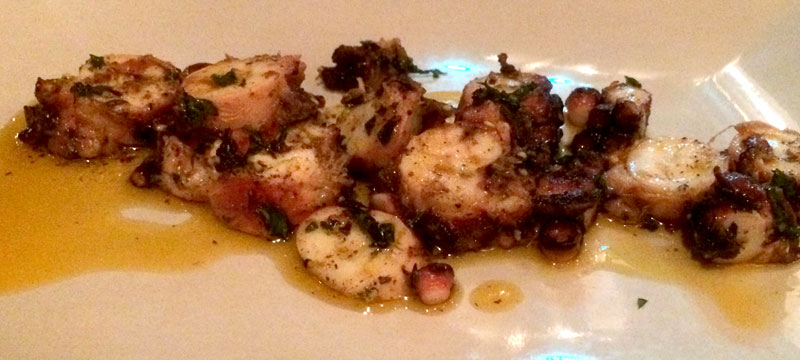
Our concensus for favorite meal of the entire week was at Azur, located just a couple blocks from NYAH. The grilled octopus appetizer was amazing as were the entrees of seafood risotto and the special fish of the day. We also enjoyed a meal of inventive tapas at Santiago’s Bodega, a favorite recommended by locals. Fried risotto and scallops were our favorites there. On the drinking side of things, our pre-trip research pointed us to 2 Cents restaurant & bar. This gem tucked away on narrow Applerouth Lane west of Duvall was recommended as the best place in town to get an adult cocktail, (we returned the following evening for food as well). We ordered a couple cocktails off the menu and then left it up to dealer’s choice for the next. The great bartender made us a “proper pimm’s cup” and it was muddled deliciousness. He even provided a “key west koozie” (two plastic cups with a layer of insulating napkins in between) so we could take our second one on the road and not suffer chilled hands or a warm drink. FYI, It’s not technically legal to carry open containers by Key West law, but I think they generally look the other way if you’re behaving. Another fun cocktail experience was at the 8-seat Orchid Bar at the super retro Orchid Key Inn. Bartender Teri infuses her own spirits and can tell a great hurricane story. If you’re more in a beer mood, head to The Porch for a great tap and bottle selection and awesome porch seating to enjoy them. The only thing we forgot to indulge in during our stay was key lime pie. Damn, guess we have to go back.

If you follow us you already know the main reason we visited southern Florida was for its three national parks, Everglades, Biscayne and Dry Tortugas. Read about that portion of the trip here.

See the full gallery of images from our trip here.
Posted in Destinations, Travel Resources | Tagged , , , , , , , | 1 Comment

National Park Kick: Redwood

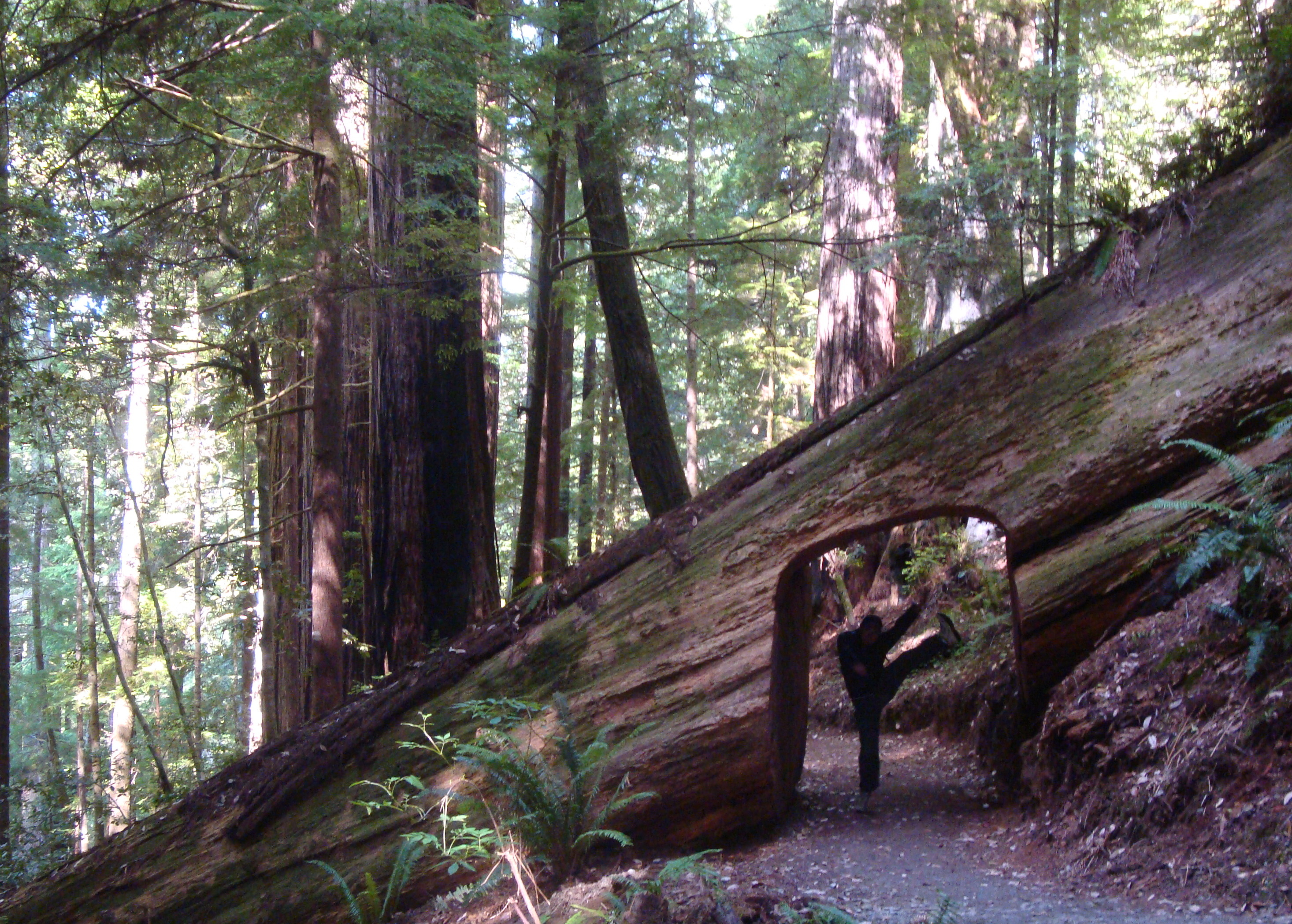
Tall Trees Grove trail, Redwood National Park, CA - August 2011

Tall Trees Grove trail, Redwood National Park, CA – August 2011

Redwood National Park was established in 1968 to protect its namesake trees, the tallest on Earth. Designated a UNESCO World Heritage Site in 1980, the park and adjoining state parks protect almost half of the remaining California Redwoods. Easily accessible  – right off US Highway 101 – this park is a must for anyone traveling through Northern California.

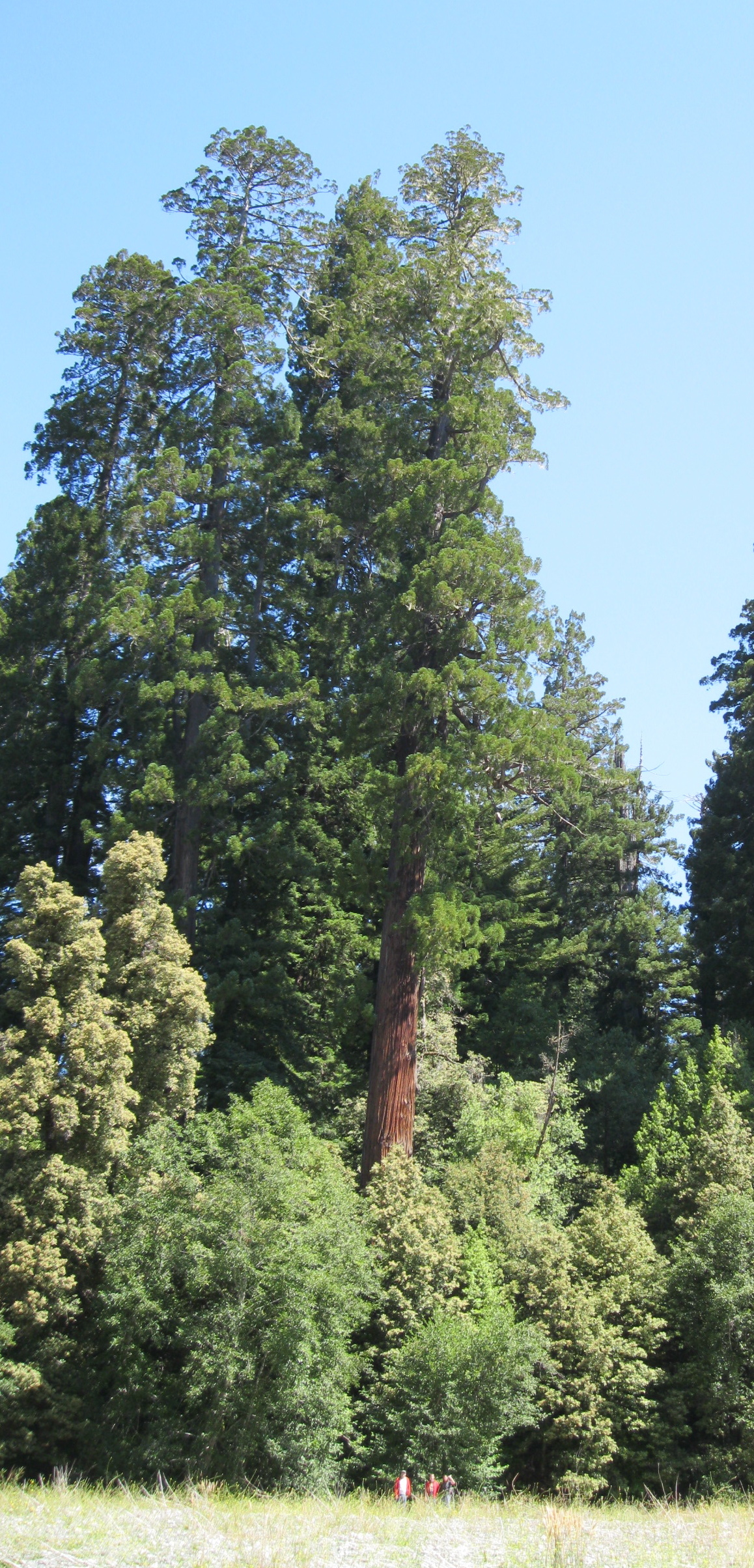
To get a true sense of how tall the redwoods really are, hike one of the many trails offered in the area. On our visit to the park, we chose to hike the Tall Trees Grove trail, a moderate 4-mile loop that takes you to Tall Tree. Also known as Libby Tree, it held the record for world’s tallest tree until 1994, when its top died back. It still stands today at an impressive 363 ft!
Tip: Vehicle access to the Tall Trees Grove trailhead is limited. Obtain a permit from the Prairie Creek Visitor Center before heading into the park.

Tall tree (center) - can you find us?

Tall Tree – can you find us?

The park also offers 40 miles of coastline to explore. A short hike to Hidden Beach at low-tide is a great way to experience this aspect of the park. Access to the trail is located next to Motel Trees, which was our accommodation for our night in the park.

Posted in High Kick Photos | Tagged , , , , , | Leave a comment

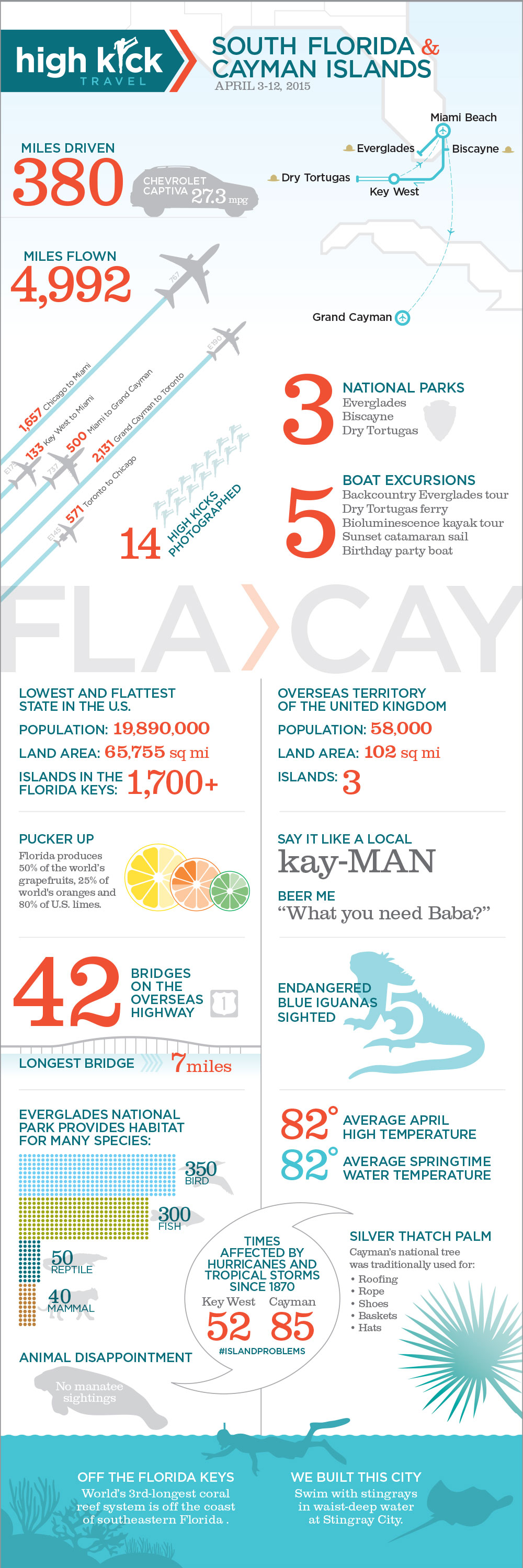
Florida & Cayman Statistics

Click for larger version.

Posted in Destinations, Maps, News | Tagged , , , , , | Leave a comment

Florida & Cayman Islands Gallery

Images from our visit to Florida and the Cayman Islands, April 3-12, 2015.
Click to enlarge, read captions and view slideshow.

Posted in Destinations, High Kick Photos | 3 Comments

National Park Kick: Everglades

Pa-hay-okee Overlook, Everglades National Park - April 2015

Pa-hay-okee Overlook, Everglades National Park – April 2015

Just an hour’s drive from Miami, Everglades National Park offers the perfect opportunity for a day trip to enjoy nature. Most people visit the Everglades during the dry season – November to April – to enjoy a relatively mosquito-free experience. The easiest way to explore this vast park – 3rd largest in the Lower 48 – is to drive the 38-mile park road from the East entrance to Flamingo. A stop at the Coe Visitor Center allows for a brief overview of the park and its history. Hiking in the park is done mostly on boardwalks, accessible to all. For wildlife viewing, your best bet is the Anhinga trail at Royal Palm – alligators, turtles, anhinga, and vultures abound. For a reprieve from the sun, the Gumbo Limbo and Mahogany Hammock trails are perfect. The Pa-hay-okee Overlook trail gives you a sense of the huge expanse of this river of grass.
Any further exploration has to be done by boat, either on your own or by guided tour. We opted for the Backcountry Tour offered a Flamingo visitor center. The relaxing 2-hour trip through Buttonwood Canal and Coot Bay is a great way to learn about the plants and animals indigenous to the area – we even sighted crocodiles and dolphins swimming amongst the mangrove.
Fun fact: The Everglades is the only place in the world where both American Alligator and Crocodile co-exist.

Posted in High Kick Photos | Tagged , , | Leave a comment

Southern Florida: The National Parks

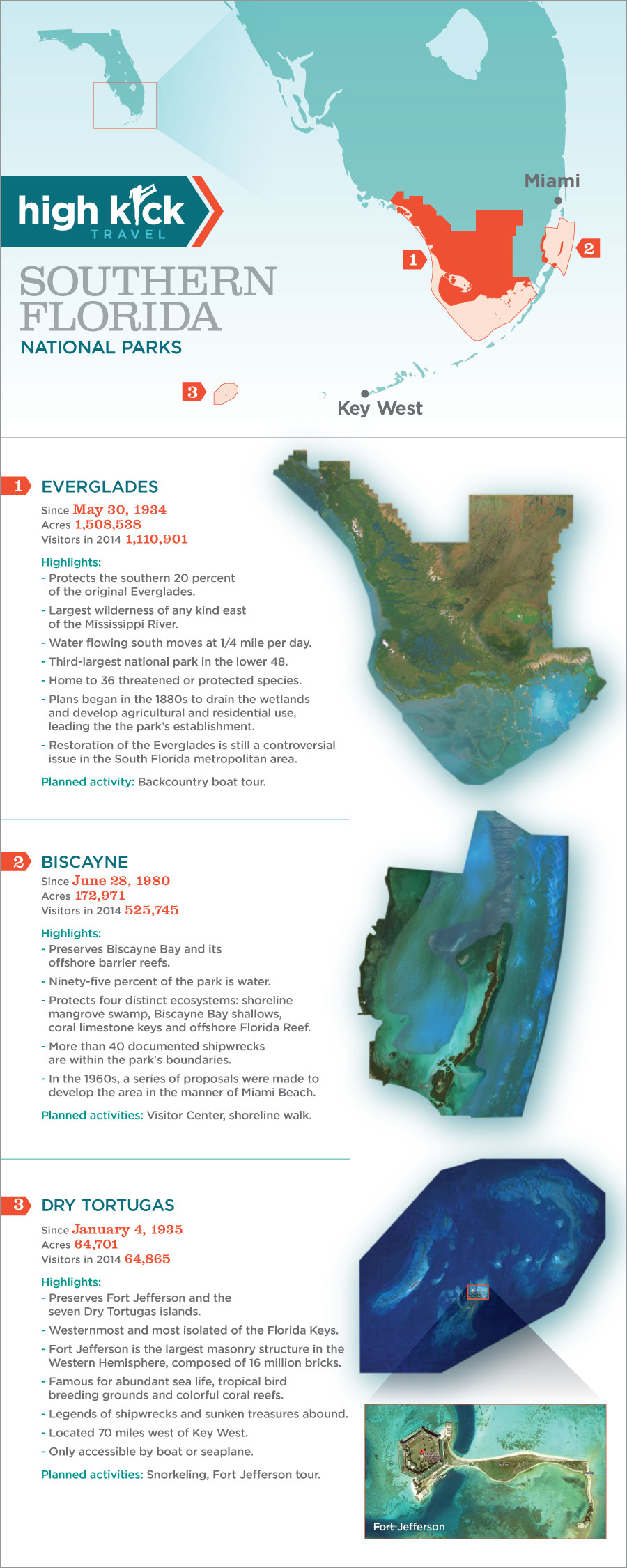
Here are a few fun facts about the national parks we’ll be visiting next week.

Florida_Parks

Posted in Destinations, Maps, Upcoming Travel | Tagged , , , | Leave a comment