Spring Break 2015

SouthFloridaHeader

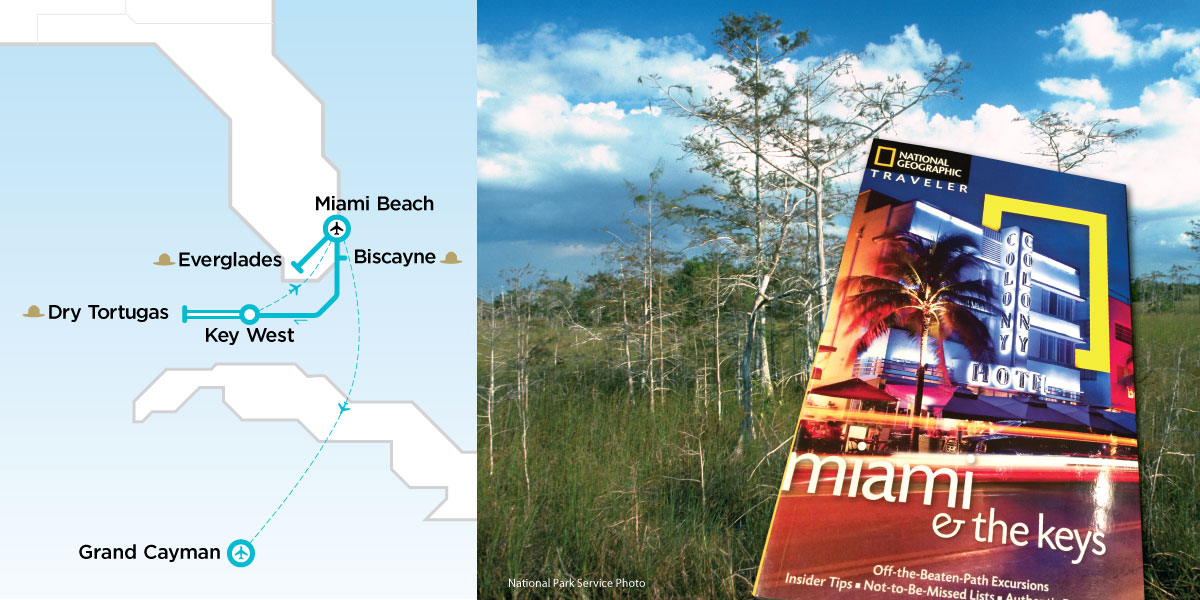
Now that it’s officially spring, it’s time to introduce our next travel plan. On Friday, April 3, we take off for Miami, the Florida Keys and Grand Cayman Island. A friend’s recent move to Georgetown, Grand Cayman was the original inspiration, but we figured as long as we’re going that direction, we might as well throw a few national parks into the itinerary, right? So our trip will begin by flying into Miami and spending two nights in the Art Deco District in South Beach. Normally we would use Hotwire to book lodging in a major city, but an Orbitz coupon proved to be the better deal and we made reservations at the Clay Hotel. It’s in the perfect location for exploring Miami Beach and is easily accessible from the airport via the Miami Beach Airport Flyer bus route. Tip: Always check public transportation options from airport to city as we’ve found car rental rates to be much higher when picking up from an airport location as opposed to a central city office. Also, we won’t need a car that first evening, so it saves us a day’s rental fee.

The following morning we’ve reserved a car in Miami Beach and we’ll drive west and spend the day visiting Everglades National Park. The Flamingo Visitor center on the Gulf Coast is just a two-hour drive from Miami and other areas of the park are even closer. Everglades National Park protects a fragile ecosystem of wetlands and forests fed by a slow moving river flowing from Lake Okechobee to Florida Bay. It has an amazing diversity of plant and animal life and is an International Biosphere Reserve, World Heritage Site and a Wetland of International Importance. Major activities include hiking and biking as well as the expected boat tours and wildlife watching. We’ve reserved a backcountry pontoon boat tour but will play the rest by ear. Back in Miami Beach for the evening, we’re looking forward to partaking in the restaurant and bar scene around town. We haven’t decided just where we’ll go yet, but our options look promising.

The next day will be spent leisurely making our way down the Florida Keys. Biscayne National Park is located just south of Miami, but disappointingly has no current vendor to offer tours or rentals, so our stop will mostly be limited to the visitor center and shore. Since 95% of the park lies underwater, that’s a major buzzkill. Hopefully they’ll get the issue resolved soon. Key West is 140 miles from Biscayne National Park, and we’ll spend the rest of our day making our way there by way of the Overseas Highway and its 42 bridges. On the way we’ll make stops at state parks and the National Key Deer Refuge on Big Pine Key.
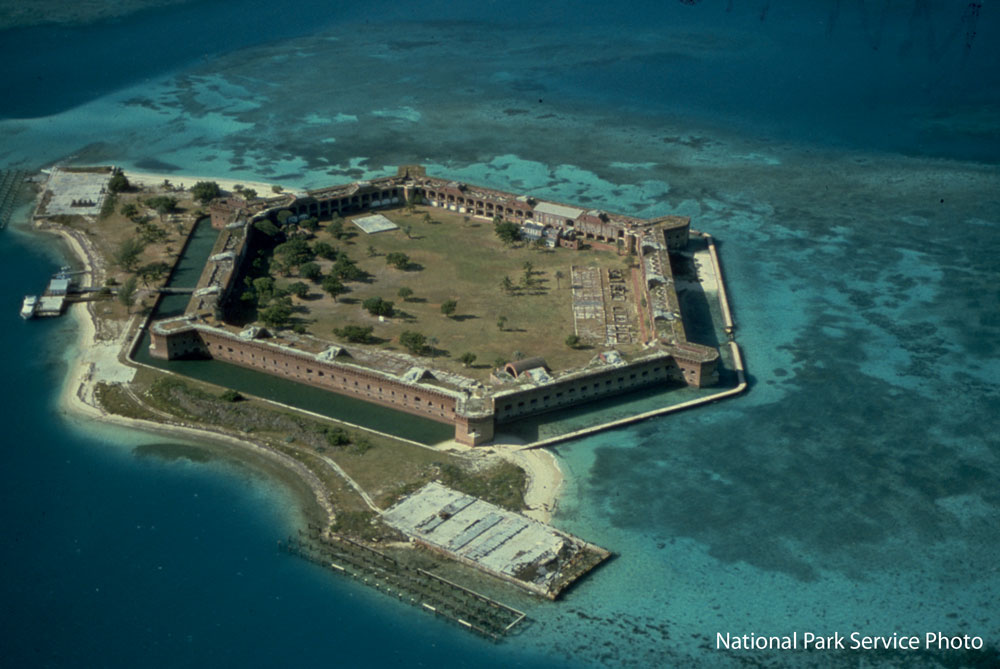
Fort Jefferson at Dry Tortugas National Park.

Fort Jefferson at Dry Tortugas National Park.

Finding affordable lodging in Key West was one of the biggest challenges in planning this trip. April is their high season so rates are at their peak. We stumbled upon NYAH (Not Your Average Hotel) on TripAdvisor and found the rates to be reasonable, the location great and the facilities new and clean. We’ll spend the next three nights there’s exploring the wonders and weirdness of Key West. One day will be spent on a full-day visit to Dry Tortugas National Park. This is one of the most difficult of all the national parks to get to as it is located 70 miles directly west of Key West in open ocean; the only way to get there is by boat or seaplane. It contains the historic Fort Jefferson, some small, uninhabited keys and lots of underwater wildlife habitat. We pre-booked our travel through drytortugas.com on board the Yankee Freedom III. It takes 2.5 hours to reach Fort Jefferson. Upon arrival there is a fort tour, lunch and complimentary snorkeling equipment provided. After about 5 hours at the park it’s time to board the boat and head back to Key West in time for dinner. Adventurous types can stay behind and camp overnight on the beach, but that seems a bit extreme.

The next portion of the trip is a flight from Key West to the British Overseas Territory of the Cayman Islands. We’ll spend 4 nights in George Town, Grand Cayman with a lucky friend who recently relocated there for work. If you want friends to visit, move to a tropical island. The Islands are probably best known as a tourism destination, with pristine beaches, snorkeling, boat trips and beachside resorts and bars. Secondly it is known for being one of the world’s largest offshore financial centers and a major tax haven. It is the world’s fifth largest banking center, despite having a population of only around 60,000. The Cayman Islands have been affected by more tropical storms and hurricanes than any other place in the Atlantic basin, but weather in April should be ideal. High temperatures are consistently in the mid-80s throughout the year and early spring months are the driest.

So far we’ve planned (with some local help) a sunset cruise along 7 mile beach, a daylong party boat cruise (happy birthday), a historical island tour, an evening bioluminescence kayak tour (the stuff in the water glows in the dark), and a four-course, four-restaurant “flavor tour” dinner. Obviously there will be significant time allotted to laying on the beach, because every once in a while we like to relax too.

This trip will add three national parks to our visited list, bringing the total to 31.
Keep an eye on our page while we travel April 3-12.
Posted in Destinations, Upcoming Travel | Tagged , , , , , , , , | 2 Comments

Chile Part 3: San Pedro de Atacama

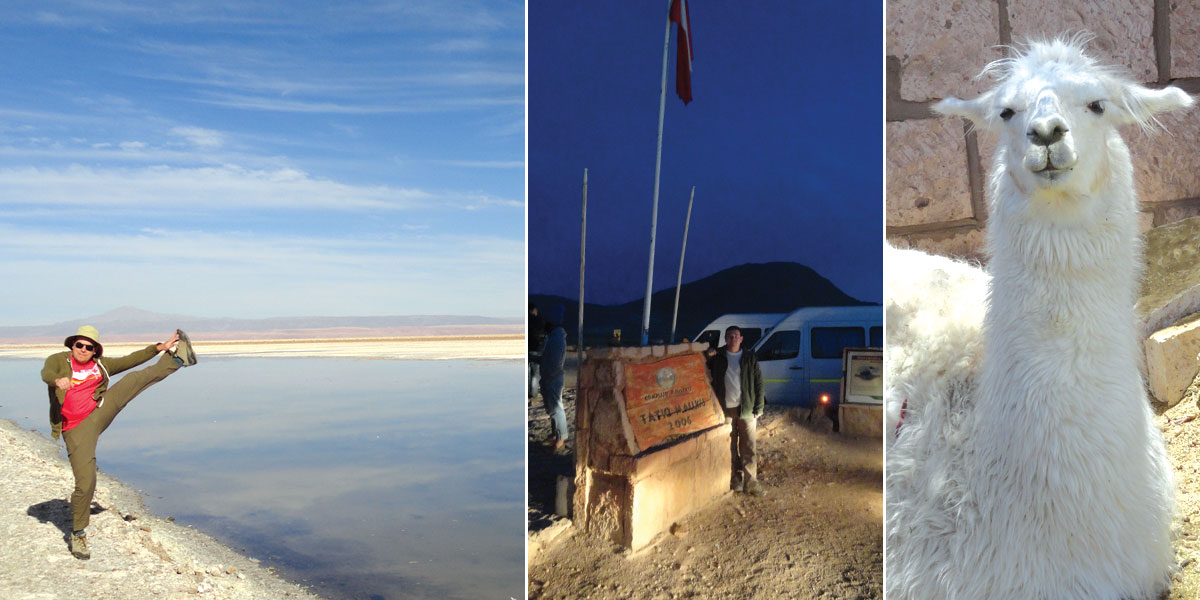
Left: Salar de Atacama high kick. Center: Arriving at El Tatio at 6:30am. Right: What an idiot.

Left: Salar de Atacama high kick. Center: Arriving at El Tatio at 6:30am. Right: What an idiot.

For the final segment of our South American adventure, we flew to the far Northern reaches of Chile to visit the Atacama Desert and its namesake town, San Pedro de Atacama. Getting there requires a 2-hour flight from Santiago to Calama, and then a shuttle bus for the hour and a half drive from Calama to San Pedro. The Calama airport is a single runway plopped in the middle of the desert, upon descent it appears you’re about to land on the moon. The shuttle service proved to be a bit leisurely in their departure time, but once we got going it was a fine drive to San Pedro and we were dropped off at the door of our hotel. Actually, everyone gets dropped off at the door of their hotel, so if you’re not one of the first few stops, you’re in for a long ride zigzagging all over town, kind of annoying since you can walk anywhere in town in 10 minutes. We selected Hotel Takha Takha (it’s what they call foosball) for our three night stay. The rooms are basic and a bit rugged with low ceilings but there is a nice pool area (although unheated) and free wifi near the office. Its central location was perfect as well.

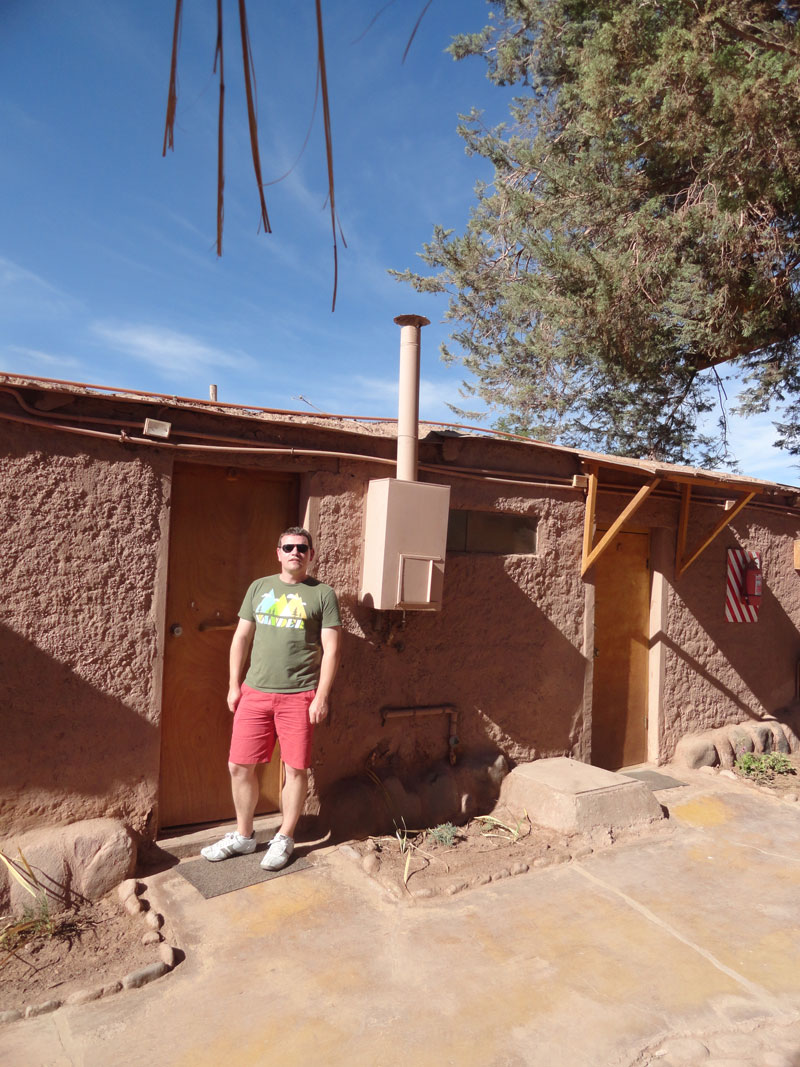
Our door at Hotel Takha Takha.

Our door at Hotel Takha Takha.

San Pedro itself is a town of about 4,000 nestled in an oasis of green trees surrounded by the vast Atacama Desert and towering Andean volcanoes to the east. It sits at an elevation of 7,900 feet above sea level, so altitude can be an issue for some people. Also, since it is within the driest desert in the world, you’ll go through liters and liters of water to stay hydrated, we bought 16.4 liters in our time there, as apparently you don’t want to consume what comes out of the faucet. Pretty much the entire town is within walking distance so there’s no need for a car. Most of the streets are just dirt paths separating rows of single-story adobe buildings. Three types of businesses dominate San Pedro’s commercial area: restaurants, tour guide offices and artisanal souvenir shops, but somehow the overall vibe manages to not be tacky.

What brings most people to San Pedro de Atacama are the incredible natural sites surrounding the town. The way almost everyone visits the sites is to buy passage on board large vans or buses from a tour guide agency. Basically you choose what you’d like to see, find a tour guide with available seats and then be ready to be picked up at your hotel at the appropriate time. Except for more specialized excursions there isn’t any need to buy tickets ahead of your arrival, just show up and see what looks good. We had one special trip booked ahead of time and arranged three more while we were in town. If you find a good tour guide company you like, buy everything from them and make it easy.

lagunasaltiplanicas2

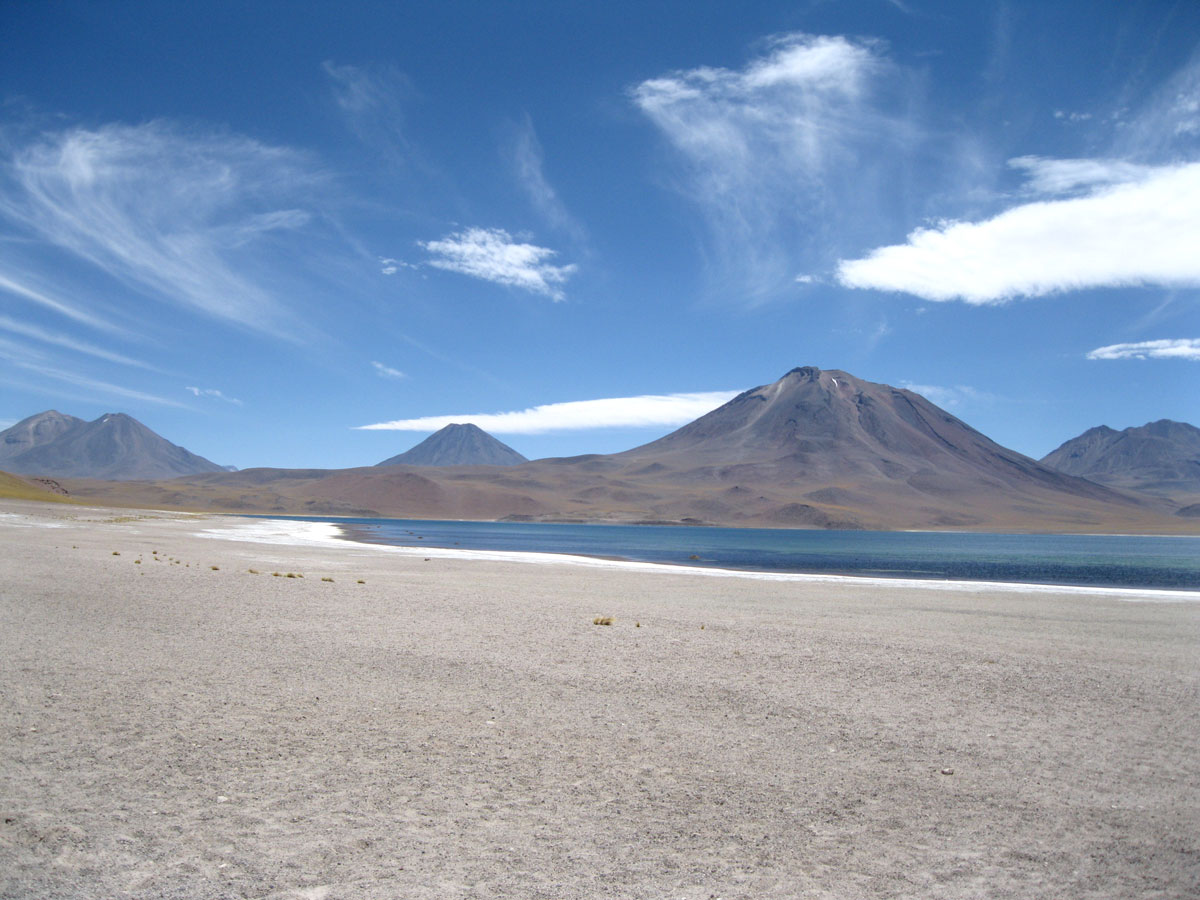
Lagunas Altiplanicas

valledelalunaview

Valle de la Luna

Our first was a half day trip to see the Salar de Atacama and Lagunas Altiplanicas. The Salar de Atacama is the third largest salt flat in the world, with white deposits of salt and minerals stretching out in a flat, 1,200 square mile expanse. Also in the Salar is a section of the national Flamingo reserve, where you can see the pink birds in their natural habitat. Lagunas Altiplanicas is a duo of high altitude (13,500ft) alpine lakes that reflect the brilliant sky and mountains. The road there was extremely rough, but the guides are used to it and just take it in stride while everyone bounces around. The tour was a great introduction to the region. When we returned to town in mid-afternoon we realized we had plenty of time to have lunch and then do another tour. A guide company found us last-minute seats and we headed off to the Valle de la Luna and Valle de la Muerte. The adjacent valleys contain wind and water eroded formations that resemble otherworldly landscapes. They were originally intended to be named after the Moon (Luna) and Mars (Marte) but a misspelling back in the day meant that Mars got renamed for death (Muerte), oops. Our guide began by taking us to some great viewpoints for photographs, and then drove us into the heart of the Valle de la Luna, where we climbed through some narrow salt caves and viewed more crazy rock formations. Excursions to this area generally leave San Pedro in late afternoon so that the end of the tour coincides with sunset in the valley. The last stop was at Great Sand Dune, where the van parked at the bottom and we all climbed up a trail and sat along a ridge with a fantastic view as the sun dipped below the horizon.

climbingdown

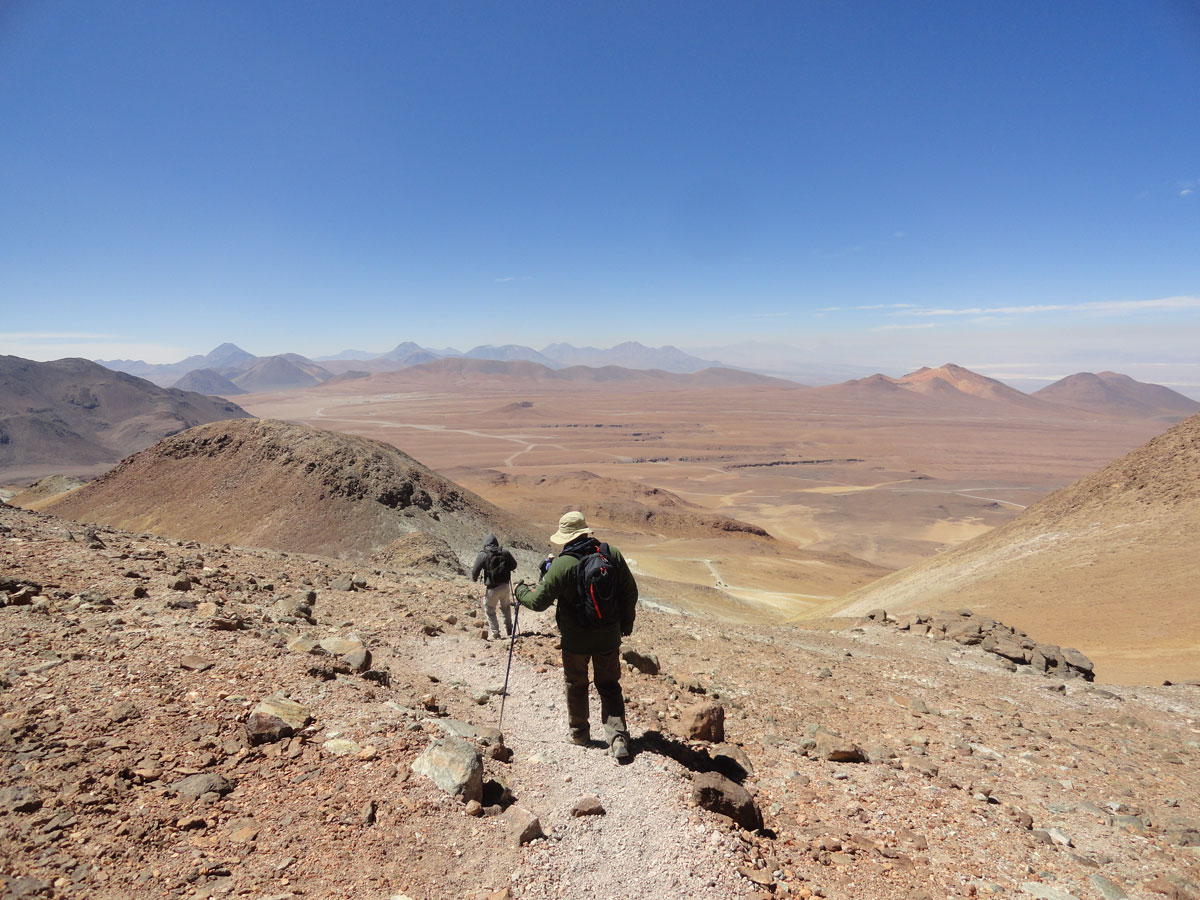
Returning down Cerro Toco volcano.

The following day we had pre-booked an excursion to climb a nearby volcano, Cerro Toco. Of the numerous volcanoes in the region, this one is the most accessible to non-professional mountain climbers. We booked through Turismo MiTampi, for a small group tour that included just the two of us, the guide and one other guest. We were picked up at our hotel at 7:00am for the hour-long drive to the mountain. When we were off the main highway, our driver and our guide Juan Pablo set up breakfast at the side of the trail and we ate a simple traditional Chilean breakfast of avocado, bread, cheese, ham and coffee from the tailgate of the Jeep. After a bit more rugged driving we passed a large telescope and arrived at the start of the trail to the summit. For future reference, when you’re higher than the observatory telescopes, you’re in seriously high elevation. The trail started just over 17,000 feet in elevation and climbed to the peak at 18,386 feet. For comparison, the summit of Mt. McKinley, the highest point in North America, is only about 2,000 feet higher and we were viewing that from a comfortable elevation of 3,300 feet last summer. At this extreme elevation there is only 45% of normal oxygen available for breathing and we were repeatedly warned to inform our guide of any ill feelings. Juan Pablo gave us a rundown of the dangers and set the pace for the climb, which is basically slow, smooth 8-inch steps the whole way up. The lack of oxygen makes even this slow pace feel extremely tiring. Every once in a while we stopped and Juan would check our eyes and pinch our fingertips to make sure we weren’t developing severe altitude sickness. Even though the trail is just over a mile in length with 1,000 feet in elevation gain, it took just over two hours to go up. The view from the summit is indescribable, with a 360 degree view of the Atacama, the conical Licancabur volcano, Bolivia and a seemingly endless string of volcanoes and mountain peaks to the south. There were high fives and hugs all around to celebrate our arrival. We spent 20 minutes taking photos and resting before turning back to the bottom. The way down was faster, at about an hour and fifteen minutes, but upon arriving at the Jeep, we found it sitting with its hood open refusing to start. Not the sight you want to see waiting for you. Our guides hitched us a ride down the mountain with another climbing group and in an hour we were back in the (relatively) oxygen-rich air of San Pedro. We spent the rest of the day doing lower-key activities like eating, drinking water, and browsing the artisanal markets. We also visited the Museo Arqueológico RP Gustavo Le Paige, which tells a detailed story of the history and culture of the Atacama Desert region and its people through a huge collection of artifacts. We highly recommend a visit.

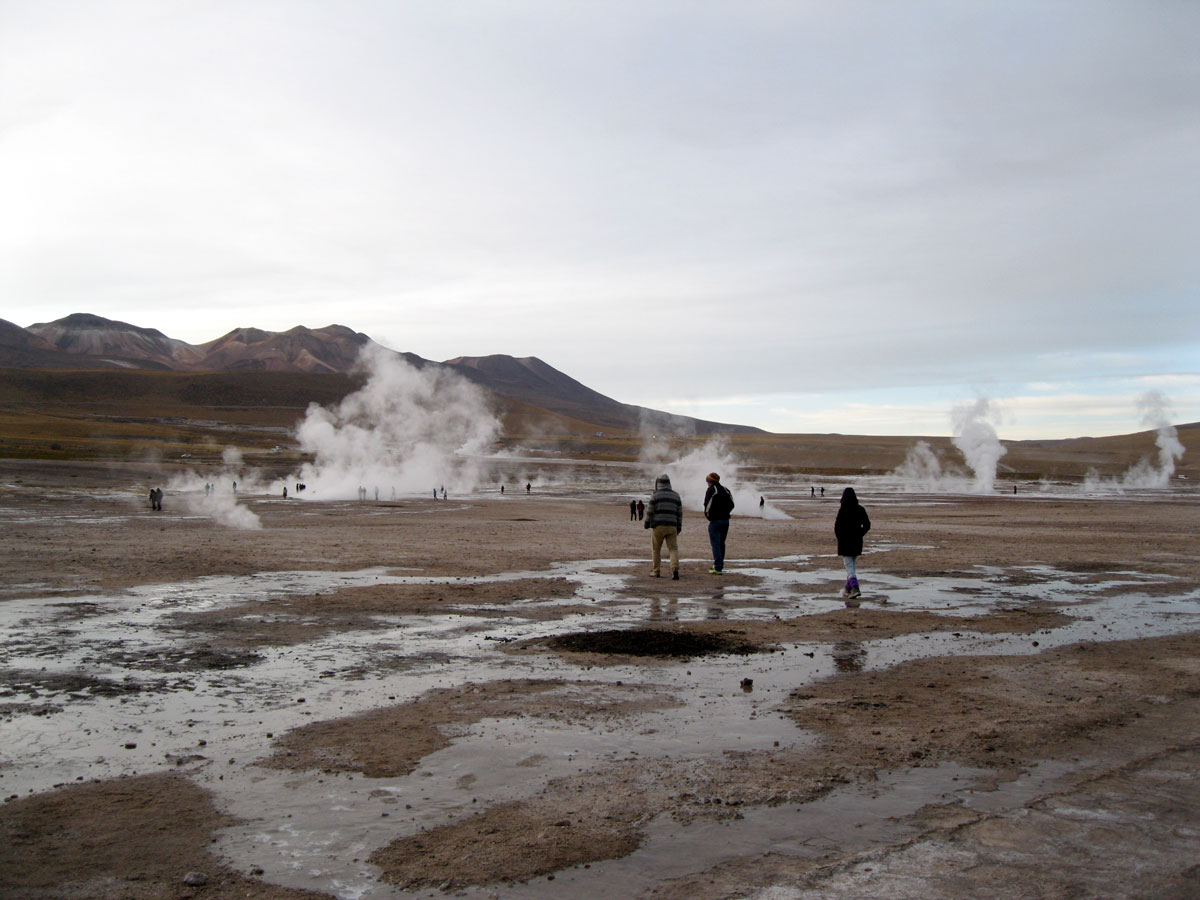
El Tatio geyser field just after the crack of dawn.

El Tatio geyser field just after the crack of dawn.

MachucaVillage

Village of Machuca

We had one more full day to spend in town, so we booked a trip to one of the most famous sites, the geyser field of El Tatio. This excursion is one of the more demanding as it requires a 4:00am wakeup to get picked up at 4:30. Visitors are wandering the dark streets like zombies at that hour, but it is necessary to leave early to arrive at the geyser field in the cold morning hours while the steam is still visible. Our guide Cristóbal gave us an awesome example of crazy South American driving, careening down a narrow, curving highway, passing other giant vans like they were standing still. So many excursions head toward El Tatio every morning that looking behind us on the road was reminiscent of the final scene in the movie Field of Dreams. We arrived to the steaming landscape just as the sun was coming up at 6:30. With over 80 active geysers his is the third largest field in the world after Yellowstone National Park in the U.S. and the Kamchatka Valley in Russia. We parked and were told to come back in a half hour for breakfast but otherwise were free to wander the area as we pleased. In such a remote location and without much tourism infrastructure, guests are allowed to just walk right up to the pools of scalding water. I even saw one man stick his GoPro camera into a geyser on a selfie stick. It’s cool to be able to view the features up so close, but at the same time it seems like the hundreds of people trampling all over are spoiling the natural beauty for future visitors. After breakfast we visited a hot spring where we were two of only about 5 in our group to enjoy a swim (how can you pass that up?). Then we stopped at a few wildlife viewing areas where we saw fancy ducks, vicuñas, flamingoes and llamas before making visits to the tiny village of Machuca and the Puritama River Gorge.

As remote as San Pedro is, the dining is rather impressive. We found nice lunch quiche at Salon de Té, and great salads at La Plaza Cafe. Our favorite dinner experiences were at Blanco, where we enjoyed wood-fired pizza and pasta in the company of a friendly Russian woman who kindly offered to share her table with us. The best overall was Adobe, where we had great traditional South American dishes with live entertainment from a band of pan pipes and drums. Maybe cheesy, but we loved it. As always delicious pisco sours are available everywhere.

If a visit to South America is in your future, put the beautiful, unique destination of San Pedro de Atacama, Chile on your must-see list.

Read more about our Chilean trip here:
Part 1: Santiago and Part 2: Colchagua Valley/Pichilemu.
See more photos of our entire visit  here.

Posted in Destinations, Travel Tips | Tagged , , , , , , , , , | Leave a comment

Chile Part 2: Colchagua Valley and Pichilemu

Chile2Header

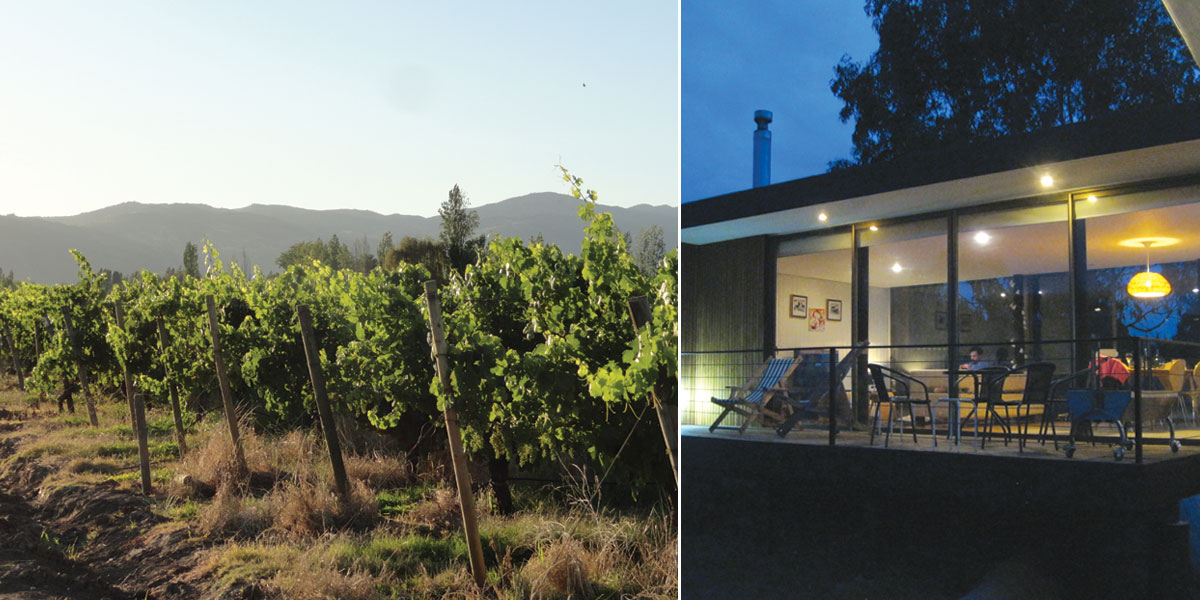
(L) Vineyards in the Colchagua Valley. (R) Loft Punta de Lobos in Pichilemu.

After starting our trip in Santiago, we headed south to enjoy some of the country’s famous wines. There are several viticultural regions in Chile, mostly in the central latitudes. Our destination was the Colchagua Wine Valley about 3 hours by car to the southwest. Heading south on the Autopista Central, the landscape gets increasingly green as you travel. To the right are the coastal range mountains and to the left rise the enormous Andes, a giant wall separating Chile from Argentina. The valley in between is a fertile agricultural region with fields of fruit production lining the highway. The next time you buy produce in the US in the winter check the label, there’s a good chance it came from this part of Chile.

LauraSamples

Sampling wine at Laura Hartwig Winery.

At San Fernando we exited the main highway and turned to the west, taking local roads through small towns on the way into the heart of the Colchagua. Our first destination was Montes Wines, they make some great wines that we purchase in Chicago and wanted to check it out at the source. After some finagling with a committed gatekeeper, we were allowed entry and were served tastings on an outdoor patio with a beautiful view of the vineyards that extend up into the hillsides. An on-site restaurant offers hors d’oeuvres and there’s a gift shop for buying some bottles to go. Our accommodations for the night were at Hotel TerraViña, just outside of Santa Cruz. The hotel was actually built on land purchased from one of the neighboring wineries, so the grounds are entirely surrounded by grapevines. After a dip in the pool we headed to a nearby Italian restaurant called Vino Bello that is accessed via a picturesque path through the grapes. The second winery we visited was the family-owned Laura Hartwig, located just around the corner from Hotel TerraViña. Like many vineyards in the Colchagua Valley, they offer free horse and carriage rides around the property. It’s a fun way to check out the area and the kids love it. Since it was a light day for visitors we ended up getting a private tour from guide Cesar. It was probably the most informative wine tour we’ve ever taken and we got to sample some wine right from a tap of an aging barrel. After the tour Cesar set a table and we all got to enjoy four sample pours. Because of the wine shop on-site there’s a nice bottle of Laura in our wine cabinet waiting for a special occasion. Another good touring/sampling/dining option in the area is Viu Manent. We stopped there a few days later for lunch on the way back to Santiago. They also offer tastings, tours, horse and carriage rides and some seriously huge cuts of meat at Restaurant Rayuela. The great thing about the Colchagua Valley is that it is fairly new to the tourism scene. You don’t have to deal with crowds or traffic or schedules, it all has a very laid back vibe … much like Chile itself.

PuntaDeLobos

Punta de Lobos.

Speaking of laid back vibes, after our stay at Hotel TerraViña, we drive another hour and a half through the beautiful Coastal Ranges to the seaside town of Pichilemu, South America’s surf capital. What makes the area famous is a site just south of town known as Punta de Lobos that creates consistent world-class surfing waves 2-3 meters high. This area is also experiencing an explosion in tourism, with tons of new beachfront and hillside vacation homes under construction. Many houses can be rented, like the one we stayed in, Loft Punta de Lobos. The ultra-modern three bedroom house can sleep up to 10 people, has a deck with a grill and views of the Pacific and Punta de Lobos from walls almost entirely made of glass. Just a short walk downhill led to the wide, black sand beach that lines the coast from Pichilemu to Punta de Lobos. It’s a great place to go for a stroll, build a sand castle or just lay in the late afternoon sun (it’s typically foggy in the morning) but those hoping to swim will be disappointed. With ocean temperatures in the 50s a dip makes for a rather invigorating experience. Since we don’t know when or if we’ll make it back to Pichilemu we dove into the huge waves just so we can say we did it. Crazy gringos.
We had great luck dining in Pichilemu, enjoying some of our most memorable Chilean dishes while in town. From traditional machas a la parmesana at El Secreto to risotto in squid ink at La Loba to fresh fish at Puente Holandes, we loved every bite, and of course, pisco sours were always the start of each great meal.

Up next I’ll give more details of our visit to San Pedro de Atacama in northern Chile. See more photos of our entire visit to here.

Posted in Maps | 1 Comment

National Park Kick: Happy Birthday Yellowstone!

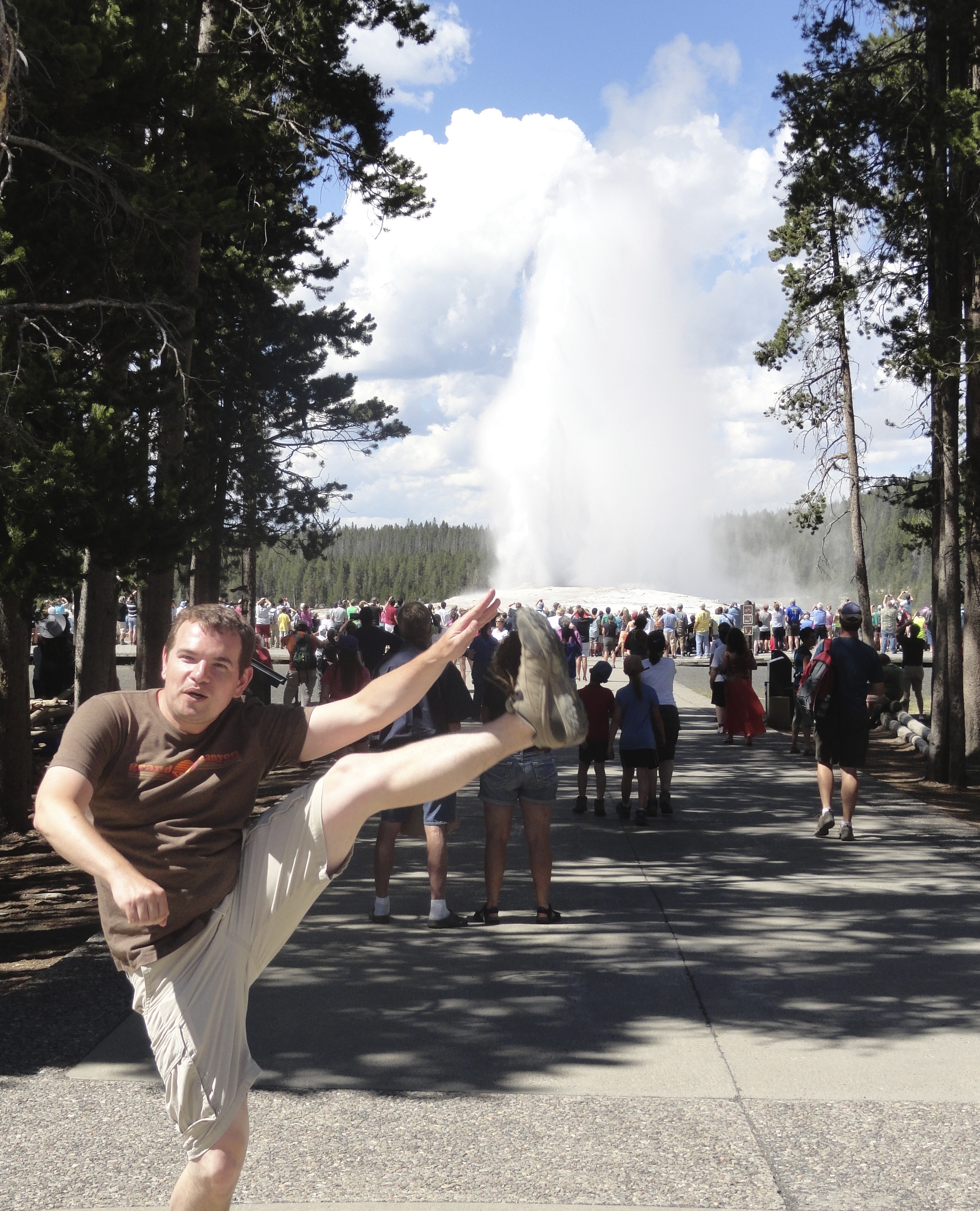
Old Faithful, Yellowstone National Park - July 2013

Old Faithful Geyser, Yellowstone National Park – July 2013

The world’s first national park turns 143 today.
On March 1, 1872, President Ulysses S. Grant signed a congressional act setting aside a “certain tract of land lying near the headwaters of the Yellowstone River” to be preserved as a “public park or pleasuring ground for the benefit and enjoyment of the people.”
There are now 59 national parks in the United States, and over 6,500 worldwide – go enjoy them!

Posted in High Kick Photos | Tagged , , | 1 Comment

Chile Part 1: Santiago

ChileHeader

Multi-faceted city. L: Parque Bicentenario in modern Vitacura. R: Historic central Santiago.

Nearly all visits to Chile begin in the capital city of Santiago. Most flights from the United States originate from either Atlanta or Miami, but New York, Houston and Dallas have direct service as well. Our Delta flight from Atlanta was 9 hours and 18 minutes overnight. The trip got off to a rough start due to weather. The Chicago to Atlanta leg of the flight was so bumpy that the flight attendants were not able to serve drinks and the landing was a roller coaster ride that ended with a touchdown in near zero visibility. Then our Atlanta to Santiago flight was delayed while a lightning storm passed, then upon receiving clearance to leave, we flew directly into that very thunderstorm, thanks Delta! Let’s just say if you’ve never been on a plane that’s been struck by lightning, consider yourself lucky. If you have been on one, I don’t need to tell you it doesn’t make for a relaxing flight. Much wine was consumed with dinner. One nice travel aspect is that since Chile is only 3 hours ahead in winter (2 in summer) there is not much of a jet lag factor. Santiago’s airport is manageably sized enough that we were through customs and out of the terminal just a half hour from landing. The throngs of people waiting at the international arrival gates holding signs with names on them made for an amusing entry into the country as well.

SantaLuciaView

View from the top of Santa Lucía Hill. Funicular de Santiago can be seen at the right edge.

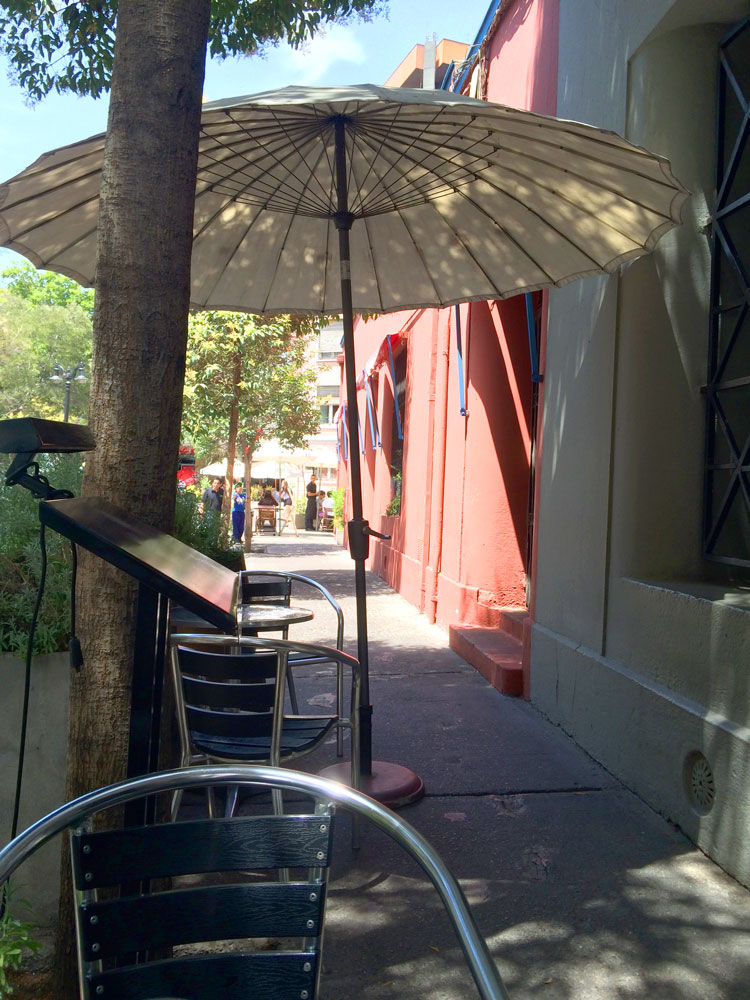
The city of Santiago is a metropolis of about 5 million people and is the cultural, commercial and transportation center of the country. Its location about ninety minutes from the coast and at the foot of the Andes mountains means you’re never far from a change in scenery. Most of the city occupies a broad basin between the Andes and the Chilean Coast Range, so whatever direction you face, your view ends in a series of jagged peaks. Smog trapped in the basin can spoil the view, but on clear days it is beautiful. The older, central district of Santiago is somewhat reminiscent of European cities with its narrow streets and low to mid rise buildings. Towering above it is San Cristóbal Hill with its iconic statue of the virgin Mary looking out over the city. To reach the summit, ride the Santiago Funicular, an inclined railway that travels 550 yards up the hill at a 45 degree angle. From there you can see nearly the entire city stretching out before you. Back down below the trendy neighborhoods of Bellavista and Lastarria contain long stretches of restaurantswith outdoor cafes, creating active street life and providing lots of options for food and

Sidewalk dining at Cafe Geometrico in Lastarria.

Sidewalk dining at Cafe Geometrico in Lastarria.

drink stops. One of the best-known attractions in Bellavista is La Chascona, one of the homes of the famous Chilean poet, Pablo Neruda. An audioguide tour leads visitors through the eclectic house and narrates important events that occurred there. A short walk south, flanking one side of the Lastarria neighborhood is Santa Lucia Hill, another great place to climb up and check out the view. The hill stands 225 feet above the surrounding bustling neighborhoods and is a maze of fountains, paths, staircases, gardens and viewpoints. Well worth the climb. A short walk away is the Palacio de la Moneda, Chile’s governmental center. These sites are all easily accessible by taxi or by public transit, thanks to Santiago’s rapidly expanding Metro system.

ParqueBicentenario

Parque Bicentenario greenery. Mestizo restaurant is in the background.

Farther from the city center toward the northeast are the high rises of the more modern business districts of Providencia and Las Condes, including the 984 foot Gran Torre de Santiago, the tallest building in Latin America and second-tallest in the Southern Hemisphere. These areas don’t have the quaintness of the downtown area but they do have a high concentration of great shopping and some amazing restaurants. We especially enjoyed Köök and Mestizo in the Vitacura neighborhood. Mestizo sits at the northern end of another great Vitacura location, the Parque Bicentenario. Construction of this 78 acre park began in 2007 and contains multiple playground areas, umbrellas to lounge under, a lagoon habitat for flamingos and a civic center. It’s a great place to walk, bike or just people watch. We rode bikes from Parque Bicentenary, across a bridge and up a hill to Parque Metropolitano where nice bike routes wind through the forest and offer views over the city in both directions.

Up next I’ll give some more details of our time spent on the Pacific coast at Pichelemu and Punta de Lobos. See more photos of our entire visit to Chile here.

Posted in Destinations, Travel Resources | Tagged , , , , , | 1 Comment

Kick of the Week: Colchagua Wine Valley, Chile

Montes Winery, Santa Cruz, Colchagua, Chile - December 2014

Montes Winery, Santa Cruz, Colchagua, Chile – December 2014

Known for its world-class red wines, the Colchagua Wine Valley in central Chile is home to over 30 wineries. Tourism is relatively new to the area, giving the experience an authentic feel, with most dining and hotel options in and around the town of Santa Cruz. The wineries along the Ruta del Vino offer a variety of tours and tastings along with exquisite views of Chile’s Central Valley – a perfect weekend destination from Santiago or stop on the way to the coast.

Our favorites:
Stay: Hotel Terra Viña (relaxing accommodations set in the middle of the vineyards)
Do
: Tour/tasting at Laura Hartwig winery (This is boutique winery was recommended to us by the hotel staff and was well worth the visit. César gave us a very informative private tour and tasting. We also enjoyed the horse and carriage ride around the property.)
Eat (lunch): Rayuela Wine & Grill at Viu Manent winery (traditional Chilean steakhouse in a beautiful setting)
Eat
 (dinner): Vino Bello (Italian food in a relaxed setting. Our hotel provided us with flashlights so we could find our way back through the vineyards after dark!)
Drink: Wine tasting at Montes winery (We frequently purchase Montes products in Chicago so had to check out the source.)

Posted in High Kick Photos | Tagged , , , , , , , | Leave a comment

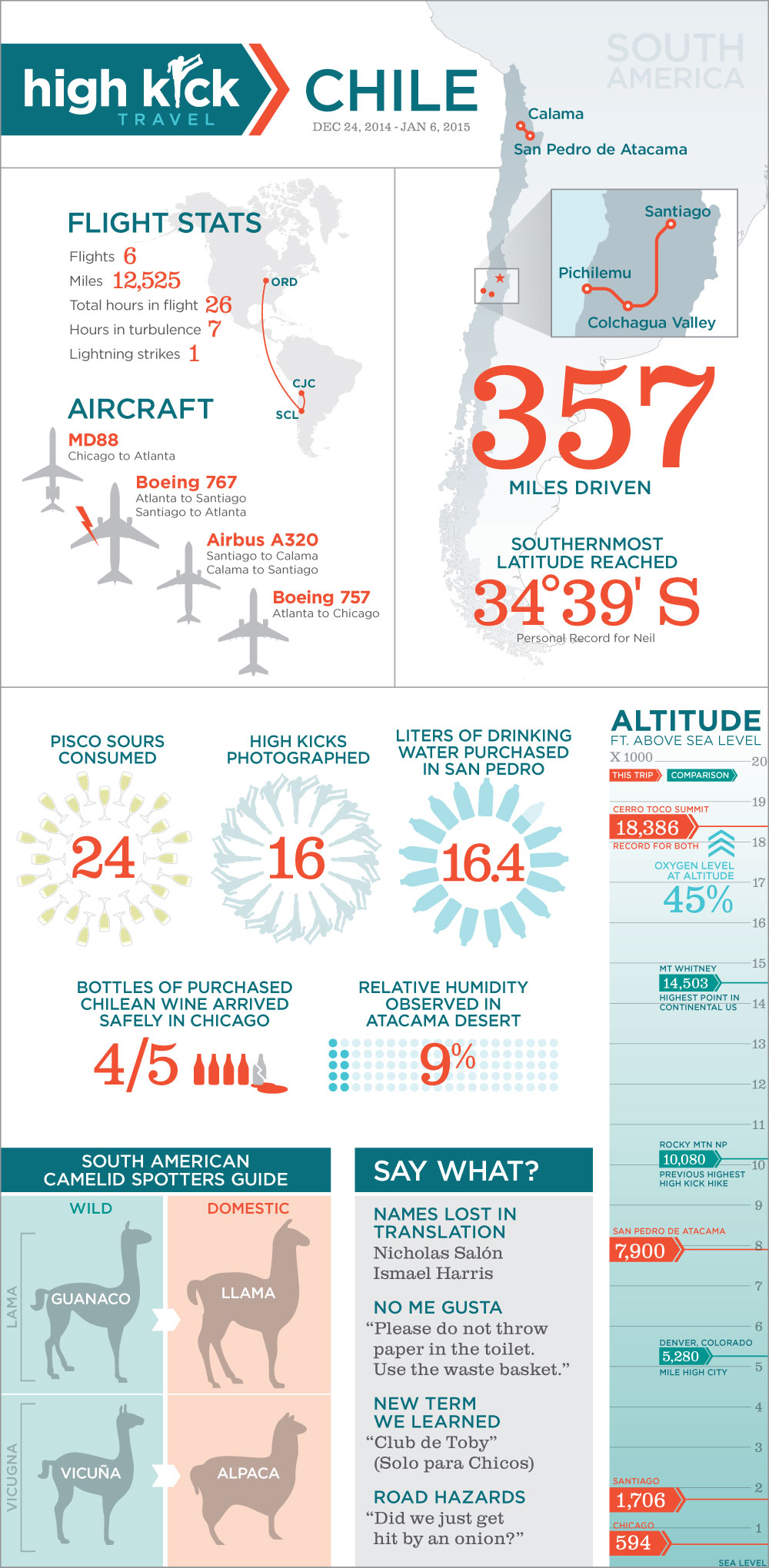
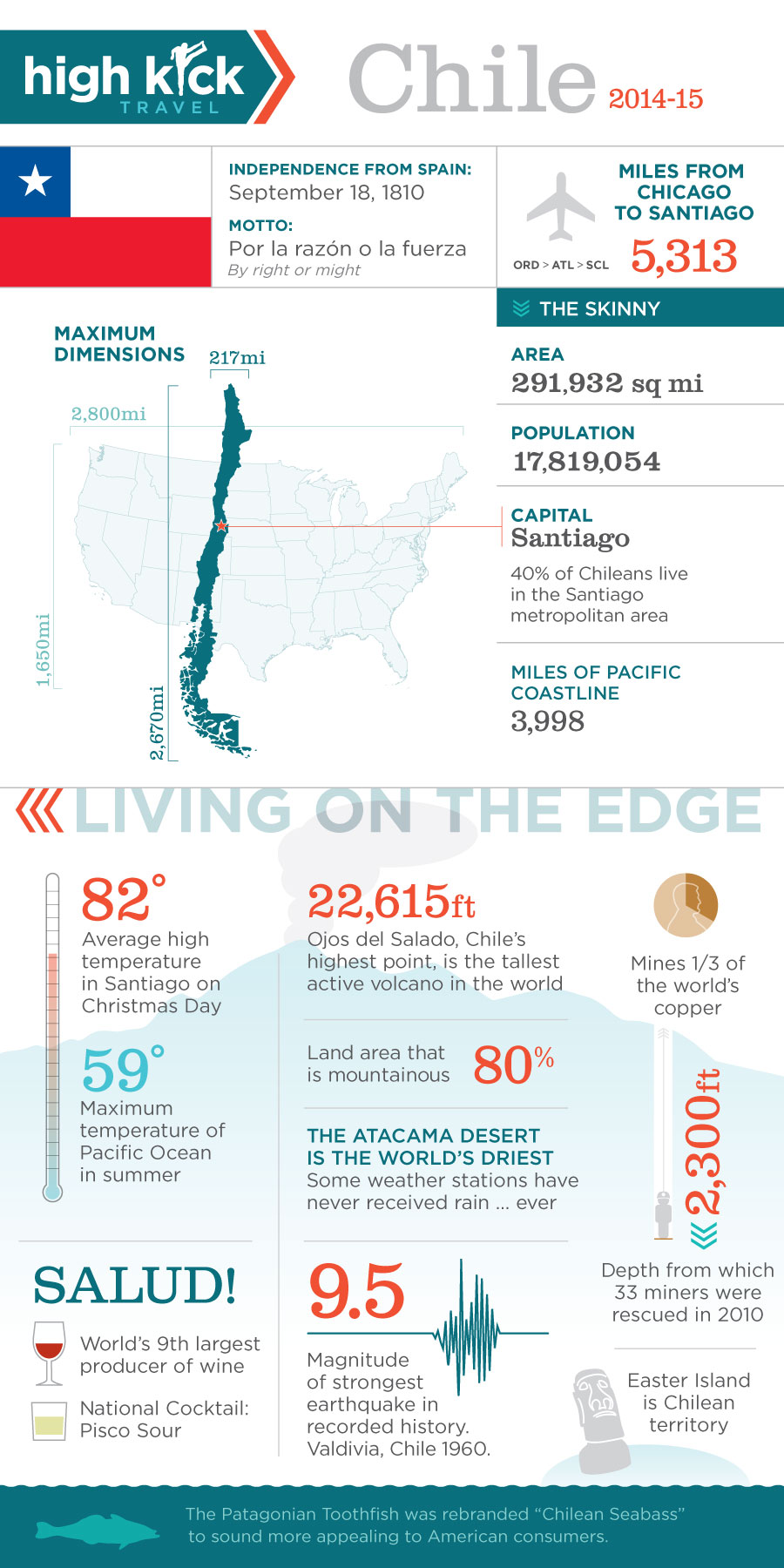
Chile Statistics

Click for larger version.

Chile_Stats

Posted in Destinations, Maps, News | Tagged , , , | Leave a comment

Chile in Photos

A gallery of images from our holiday visit to Chile, December 24 – January 6.
Click to enlarge, read captions and view slideshow.

Posted in Destinations | Tagged , , , , , , , , , | 4 Comments

Best Food & Drink: 2014 Travels

FoodMap2014

From as far north as Alaska and as far south as Chile, we took eating and drinking as seriously as ever last year. Here’s a look at the most memorable items we sampled:

Neil Eat:
1. Shrimp & Grits – Bluegrass Kitchen, Charleston, WV
2. Fried Chicken – Market Garden Brewery, Cleveland, OH
3. Copper River Salmon – McCarthy Lodge, McCarthy, AK
4. Swordfish – Salt, Juneau, AK
5. Theo Chocolate – Seattle, WA
6. Breakfast Casserole – Honeypie Cafe, Milwaukee, WI
7. Risotto in Squid Ink with Calamari – La Loba, Pichilemu, Chile

Nick Eat:
8. Sticky Balls – Sticky Rice, Washington, DC
9. Poutine – Greenhouse Tavern, Cleveland, OH
10. Lamb Mac Daddy – Seward Brewing Co, Seward, AK
11. Spinach, Egg & Reindeer Sausage Crepe – Le Barn Appetit, Seward, AK
12. Bacon Wrapped Elk Medallions – Olivia’s, Skagway, AK
13. Machas a la Parmesana – El Secreto, Pichilemu, Chile
14. Pulpo Grillado – Mestizo, Santiago, Chile

Neil Drink:
15. Spruce Tip Blonde Beer – Skagway Brewing, Skagway, AK
16. Gin – Blaum Bros. Distilling, Galena, IL
17. Pink Squirrel – Bryant’s Cocktail Lounge, Milwaukee, WI
18. Morris & Co – Goodkind, Milwaukee, WI
19. Pisco sour – Mestizo, Santiago, Chile

Nick Drink:
20. Mint Julep – The Whiskey Jar, Charlottesville, VA
21. Smoked Porter – Alaskan Brewing, Juneau, Alaska
22. Bloody Mary – Honeypie Cafe, Milwaukee, WI
23. Montes Wines – Colchagua Valley, Chile

FoodPhotos

Posted in Maps, Travel Tips | Tagged , , , , | 1 Comment

Holiday Travel: Chile

Our next adventure will take us on a holiday visit to South America. We take off December 23rd for two weeks south of the Equator. We’ll spend Christmas with some of Nick’s family in Santiago and also explore the Colchagua Valley wine region and stay beachside at Punta de Lobos. Afterwards the two of us will head to San Pedro de Atacama for a few days touring the nature of the driest non-polar desert on Earth, before returning to Chicago. We’ll soon share stories and photos of us drinking Pisco Sours, climbing a volcano and riding horses in the desert (maybe not in that order), but in the meantime, here is a collection of fun facts I’ve learned while researching our destination:

Click for larger view.

Click for larger view.

Posted in Upcoming Travel | Tagged , | Leave a comment